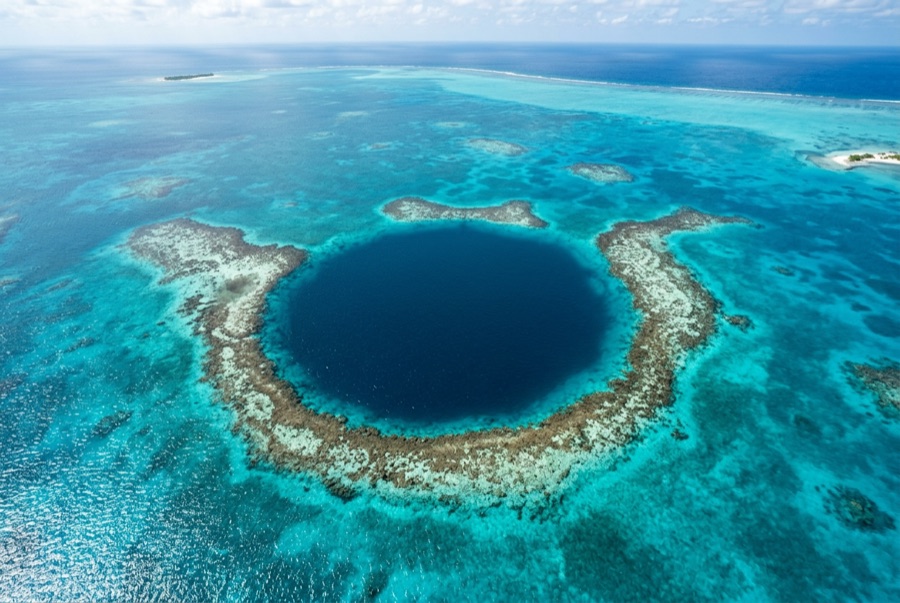
Blue Holes
Depth is the range from the top of the site to its usual maximum; "recommended cert" is the mainstream-agency level operators usually ask for, not a legal rule. Currents and visibility change daily, so treat everything here as planning ranges.
Four openings in the reef top drop into a single vaulted chamber the size of a cathedral nave, where descending divers watch their own bubbles rise through columns of blue light. The cavern's windows exit onto the outer wall around 25–30 m, and most dives drift from there along the reef toward Blue Corner, collecting sharks and turtles on the way. A side chamber known as the Temple of Doom holds the bones of turtles that lost their way; it is a genuine cave, silty and dark, and belongs only to trained cave divers with local guides.
The moment you come for: Light shafts through the skylights; the arched exits onto the wall; the drift continuation to Blue Corner on the right tide.
Topography: Limestone cavern with sand and rubble floor, opening through arches onto the outer wall
Current: Sheltered inside; current picks up on exiting the wall toward Blue Corner.
Entry: Drop through one of four skylights in the reef flat, a few meters deep, into the shared cavern below.
Know before you splash
Hazards: Overhead environment by geometry even where light remains visible; do not enter the Temple of Doom side cave without cave training and a guide.
Conservation: Buoyancy discipline protects both the cavern walls and the divers below you in the light column.
Nitrox: Worth it here: profiles sit in the range where enriched air meaningfully extends no-stop time (with the training to use it).
Who you'll meet
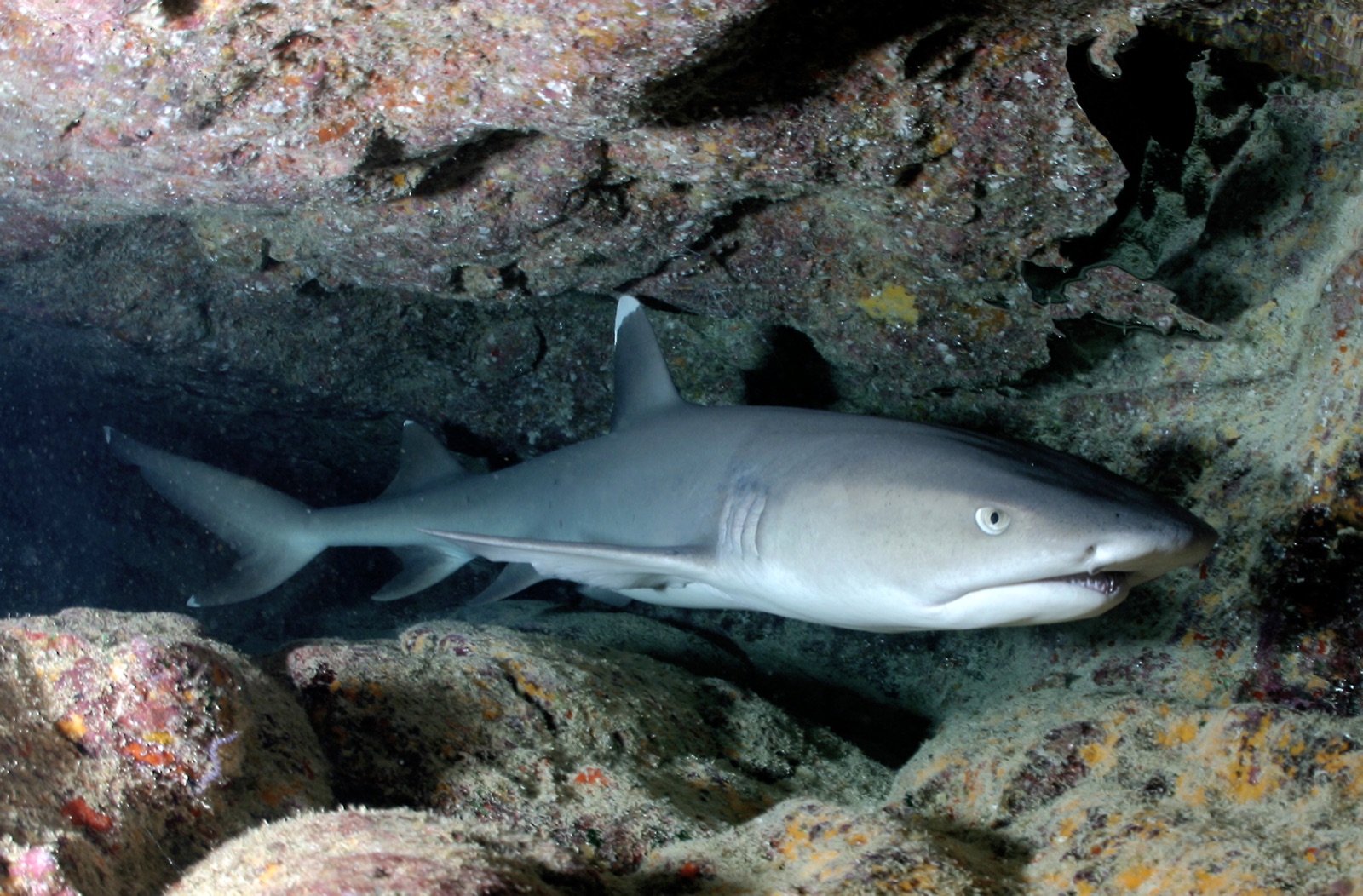
Whitetip Reef Shark
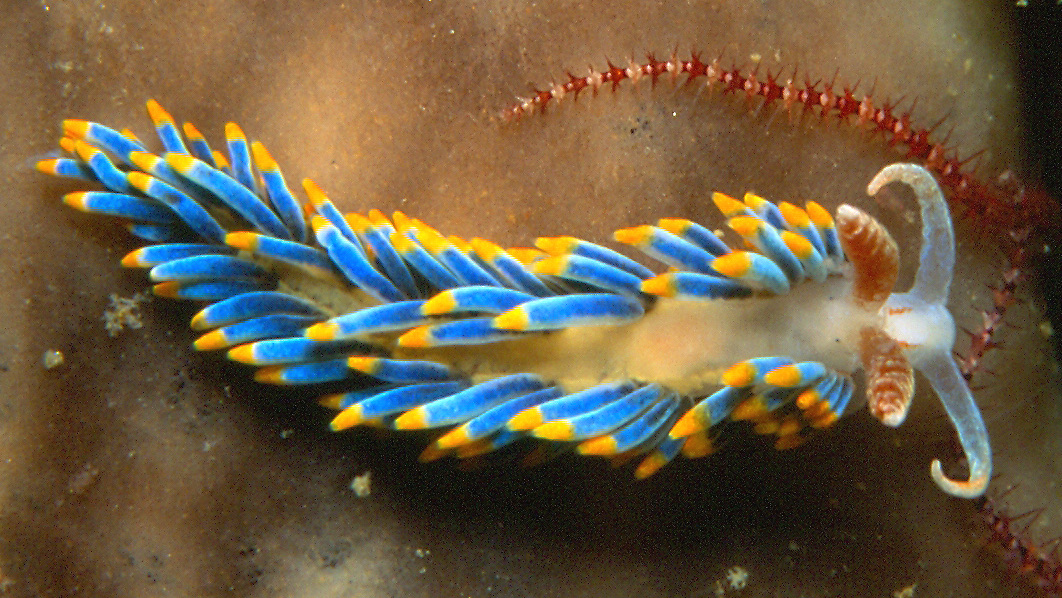
Nudibranchs
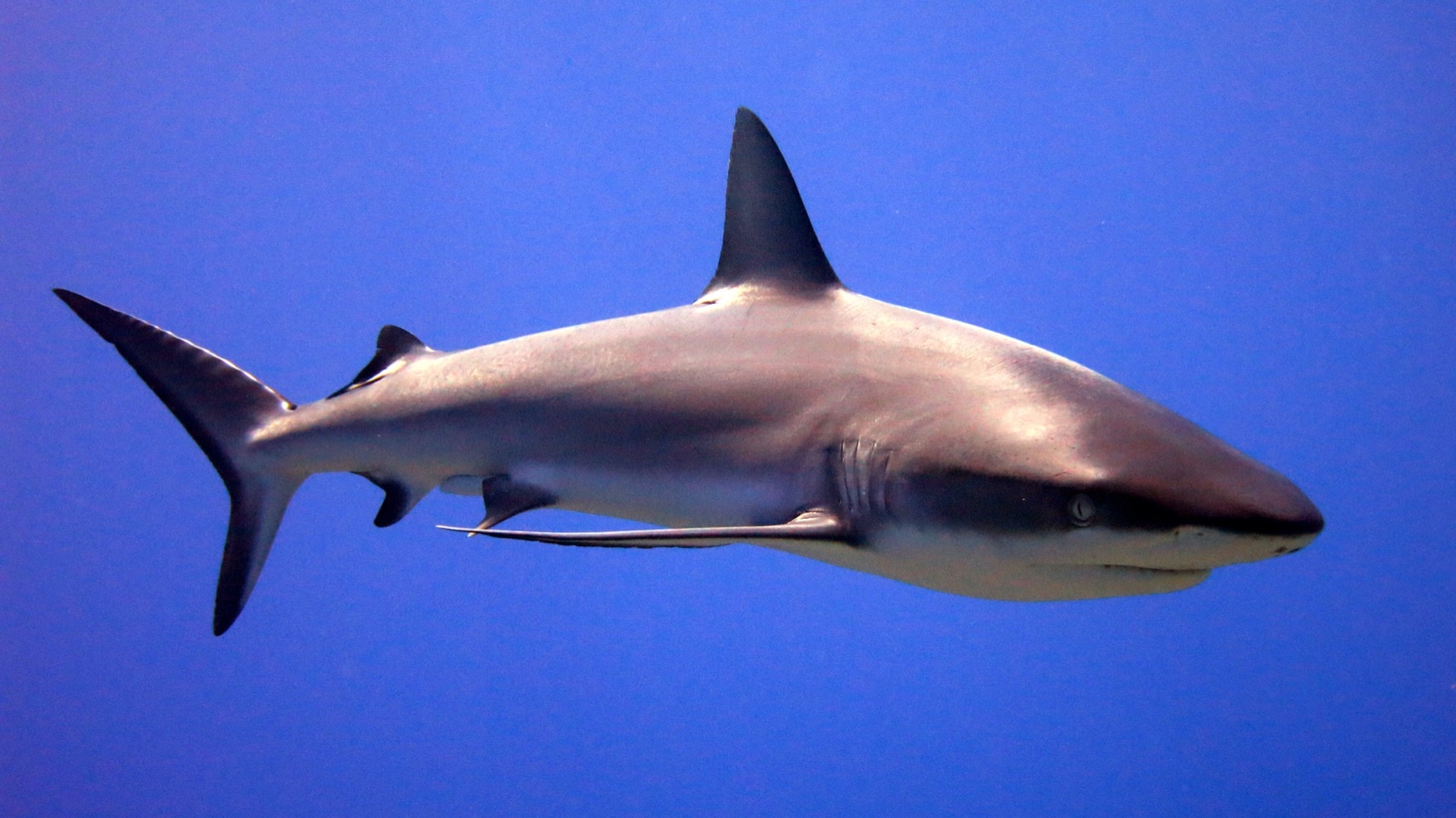
Grey Reef Shark
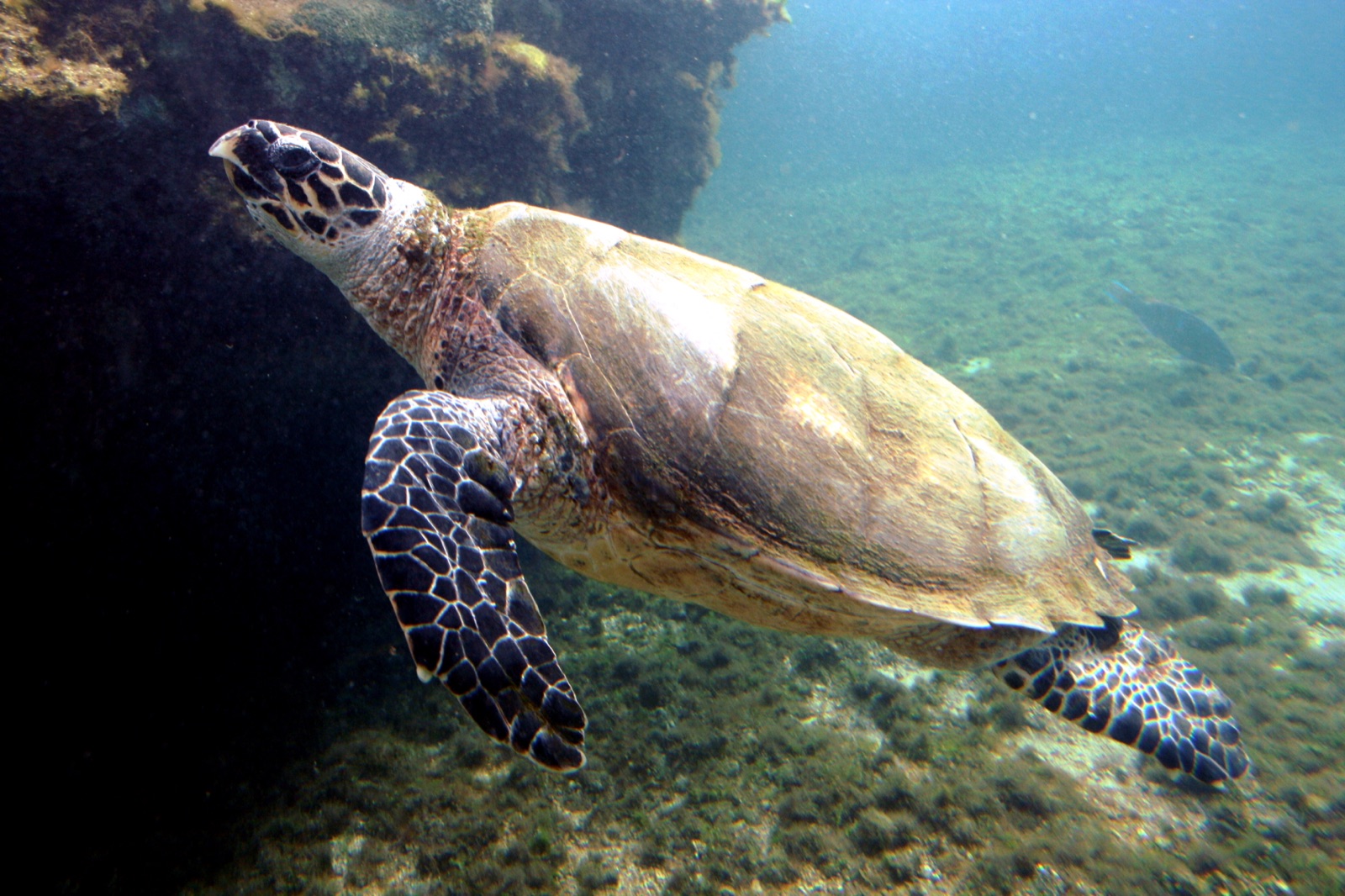
Hawksbill Turtle
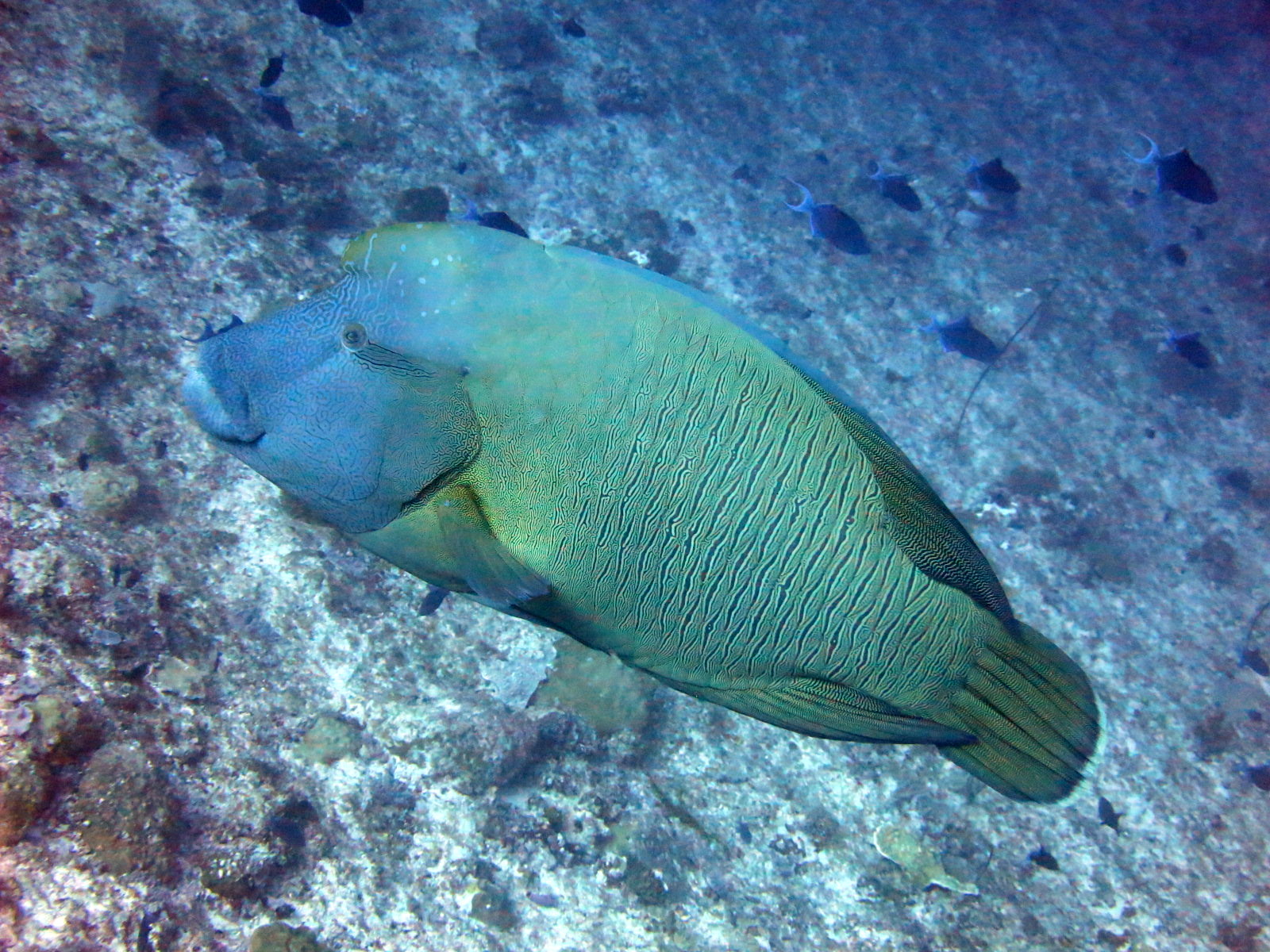
Napoleon (Humphead) Wrasse
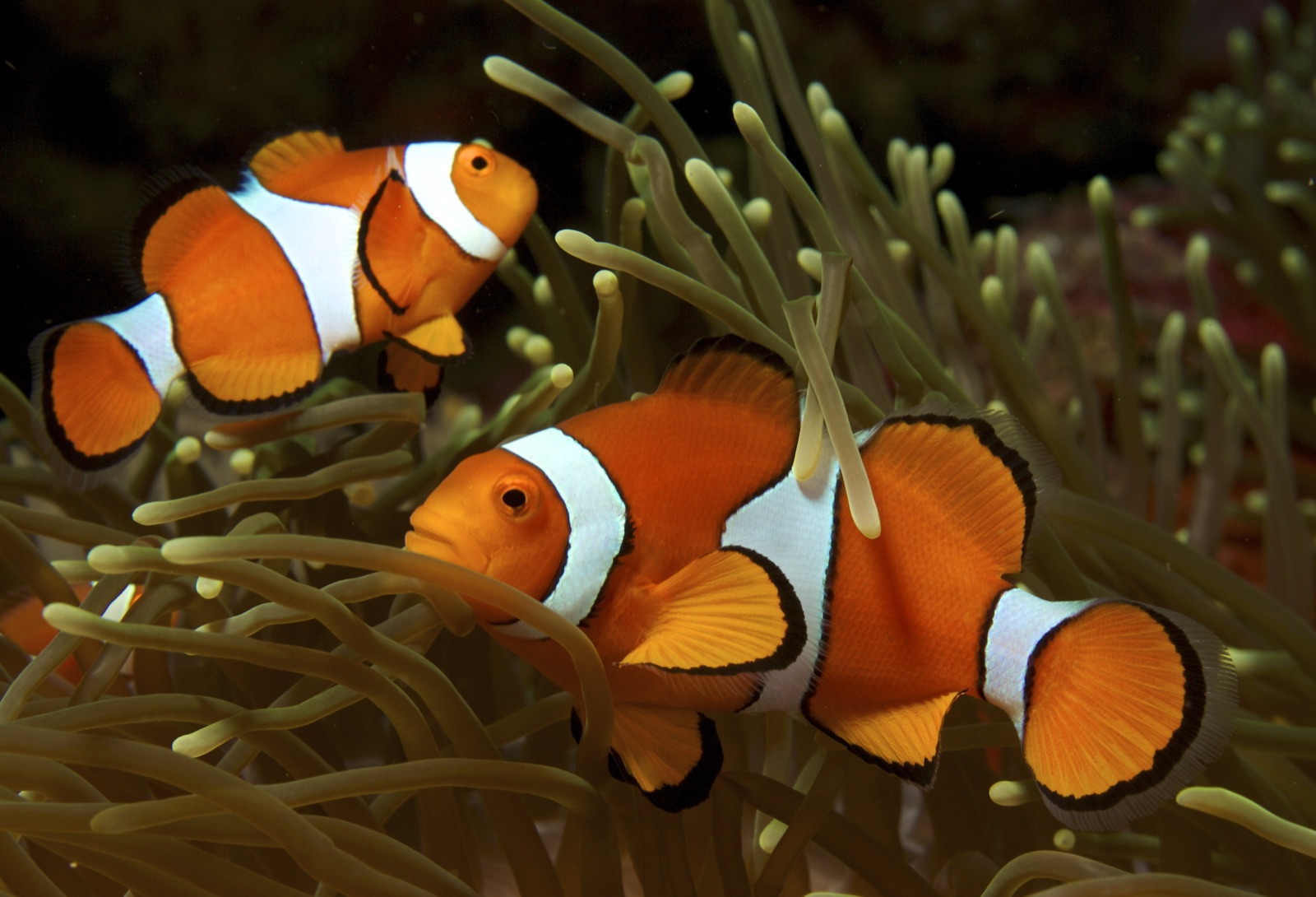
Clownfish & Anemonefish
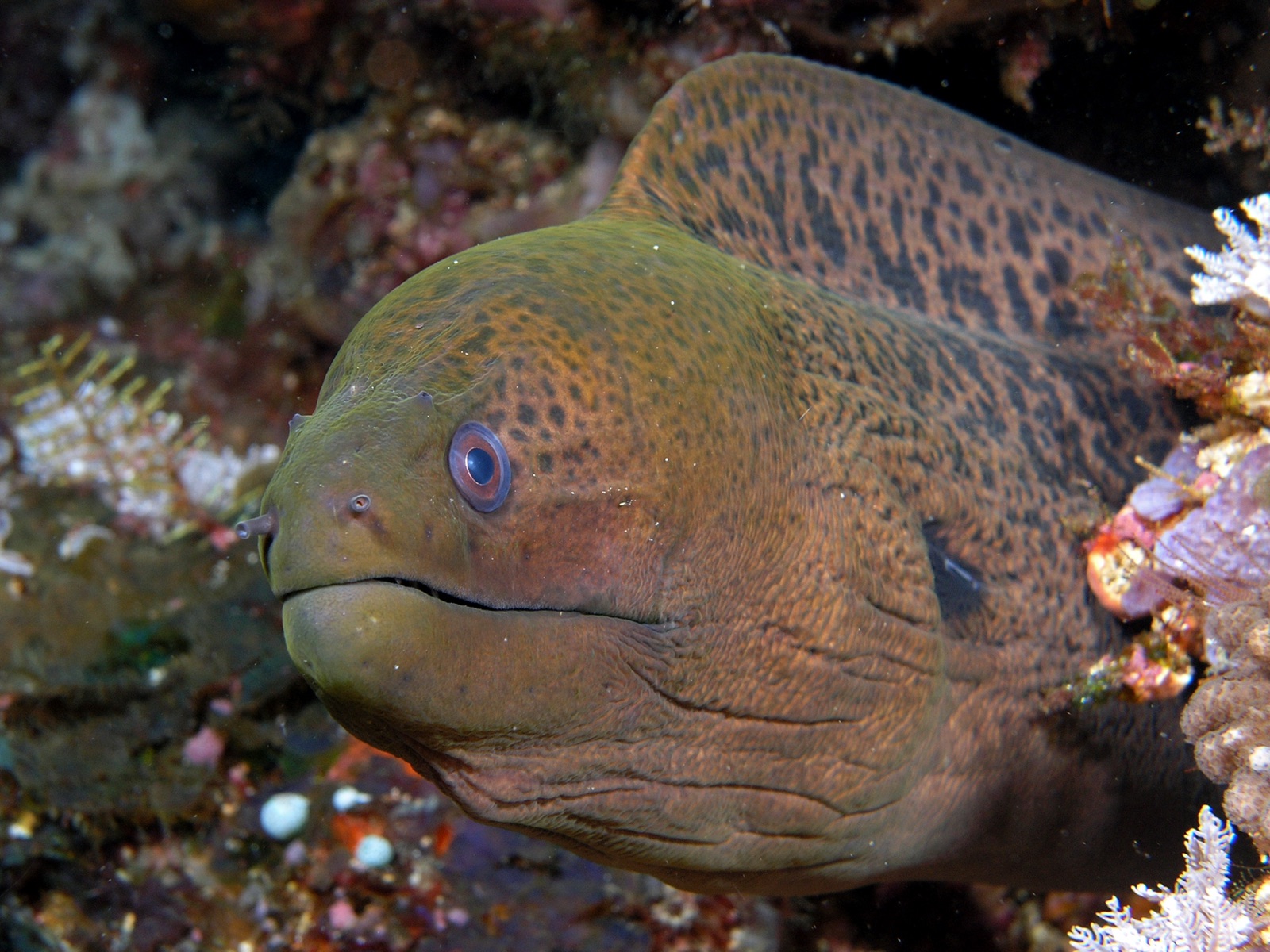
Giant Moray Eel
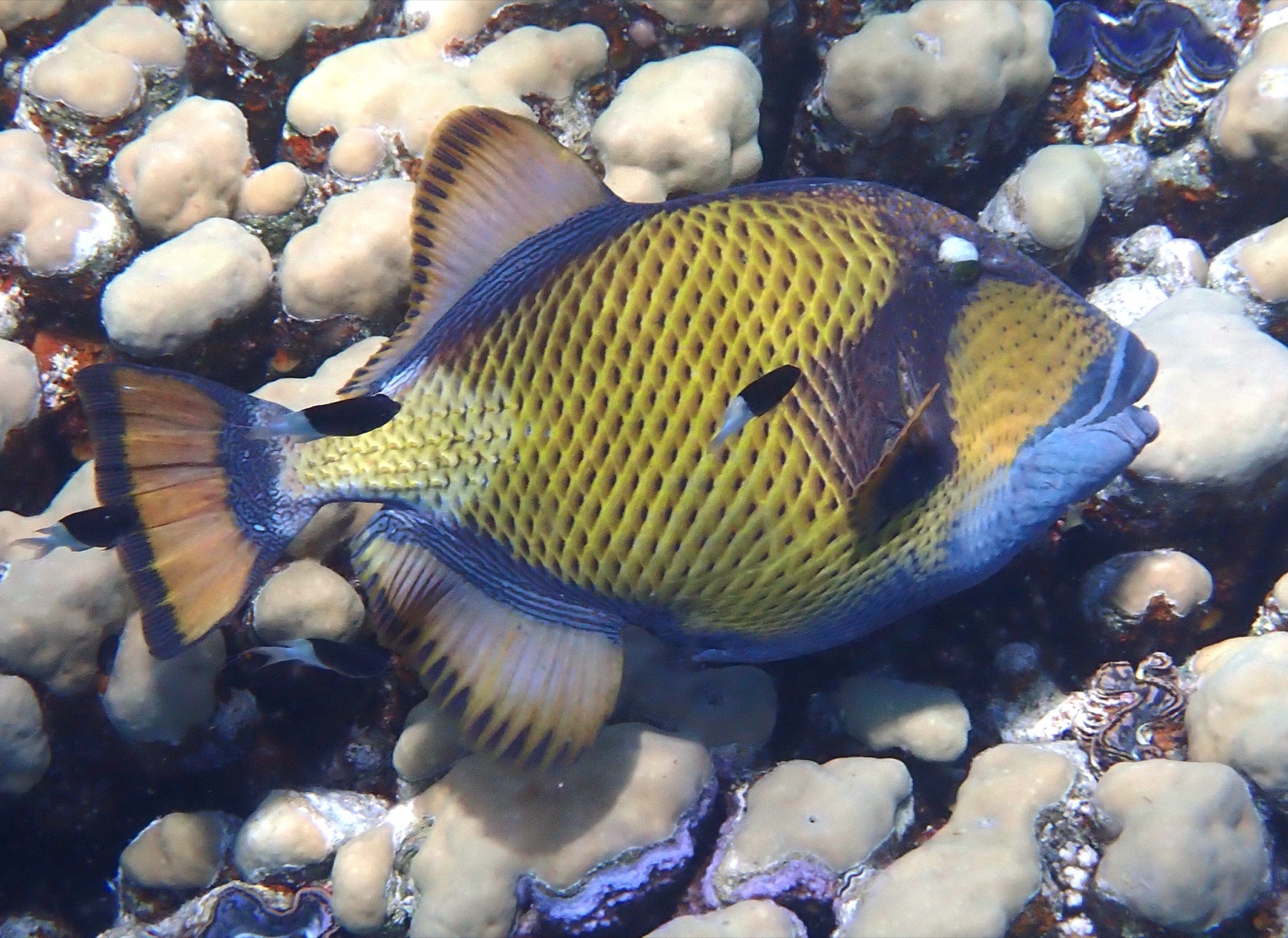
Titan Triggerfish
Also recorded nearby
"Charted here" species were listed by our editors from the sources on this page. Counts are GBIF occurrence records: observations logged within about 5 km of the charted position since 1990, matched only against the species in our catalogue. They show what has been seen there, not a promise of what you will see.
For photographers
Wide angle: ★★★★★ · Macro: ★★☆☆☆ (editors' 1–5 rating of what this site gives each style of shooting)