Yonaguni Monument
La profondeur correspond à la plage allant du sommet du site jusqu'à son maximum habituel ; le « niveau recommandé » est le niveau demandé en général par les opérateurs auprès des grandes agences, pas une règle légale. Les courants et la visibilité varient chaque jour, traitez donc tout cela comme des plages indicatives de planification.
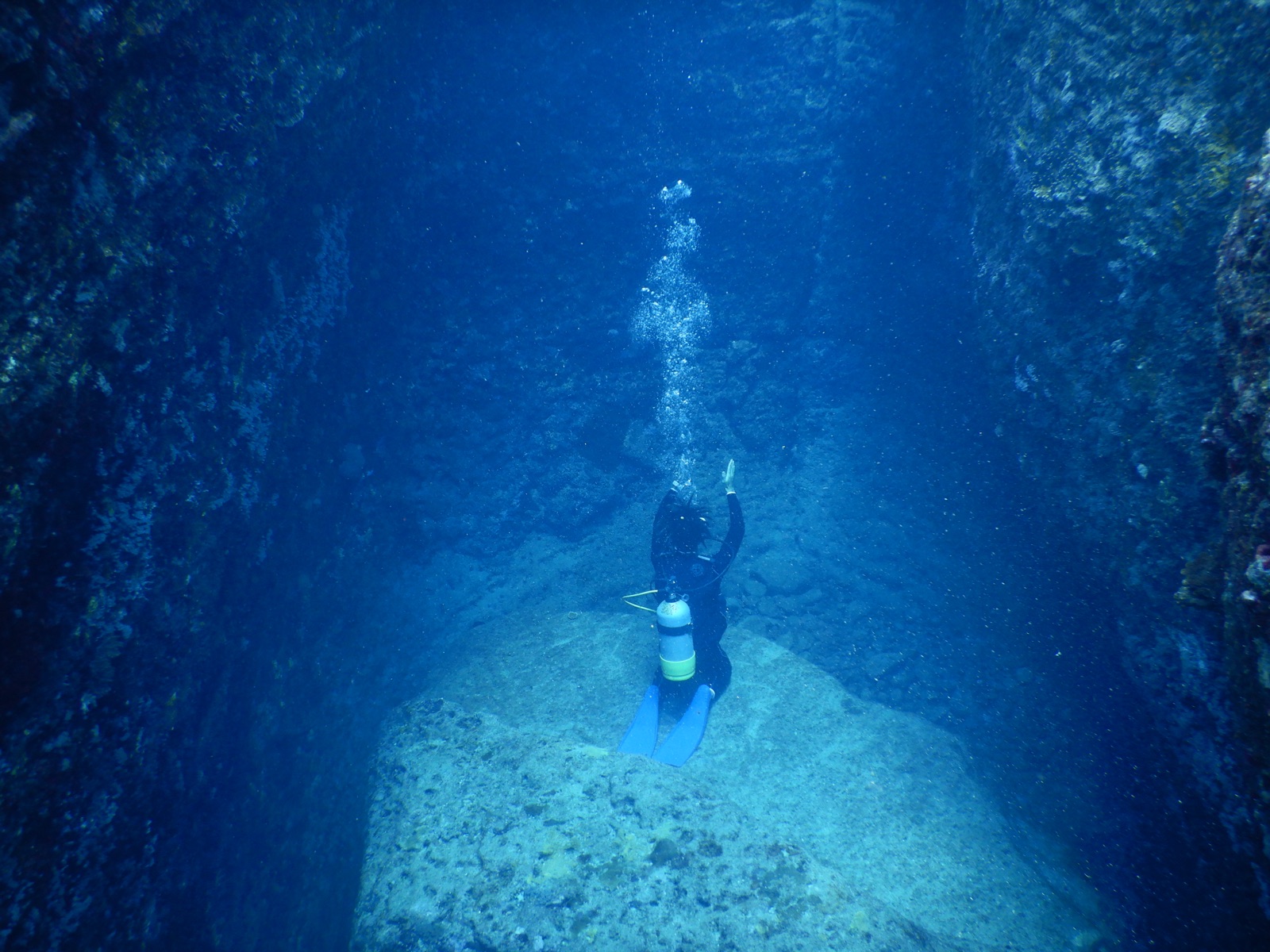
The Monument is a mass of layered sandstone the size of a building, cut into flat terraces, straight edges, and stark right angles, found in 1986 by local diver Kihachiro Aratake while scouting hammerhead grounds. Whether people shaped it is a genuine, unresolved argument. Marine geologist Masaaki Kimura spent years cataloguing what he interpreted as tool marks, drainage channels, and even carvings; most geologists respond that this sandstone naturally fractures along horizontal bedding and vertical joints, producing staircase forms without any hands involved, and that similar geometry appears on the island's shoreline. Diving it, you sweep across the main terrace, duck the surge behind the prow-like corner, and understand why both camps sound so sure of themselves.
Le moment pour lequel vous venez: The terraces and right angles themselves, the natural-versus-carved debate, big Kuroshio visibility
Topographie: Massive stepped sandstone formation rising from about 26 m toward the surface
Courant: Kuroshio-driven flow and surge over the terraces are routine; calm days are the exception to plan for.
Entrée: Short boat runs from the island's harbors; entries are timed around surge and the current wrapping the south coast.
À savoir avant de plonger
Dangers: Surge over the terraces, current at the corners, and swell surface intervals; listen hard to the local briefing.
Nitrox: Pertinent ici : les profils se situent dans la plage où le nitrox prolonge significativement le temps sans palier (avec la formation pour l'utiliser).
Pour les photographes
Grand angle: ★★★★★ · Macro: ★☆☆☆☆ (note 1–5 des éditeurs sur ce que ce site offre à chaque style de prise de vue)