Cold Water
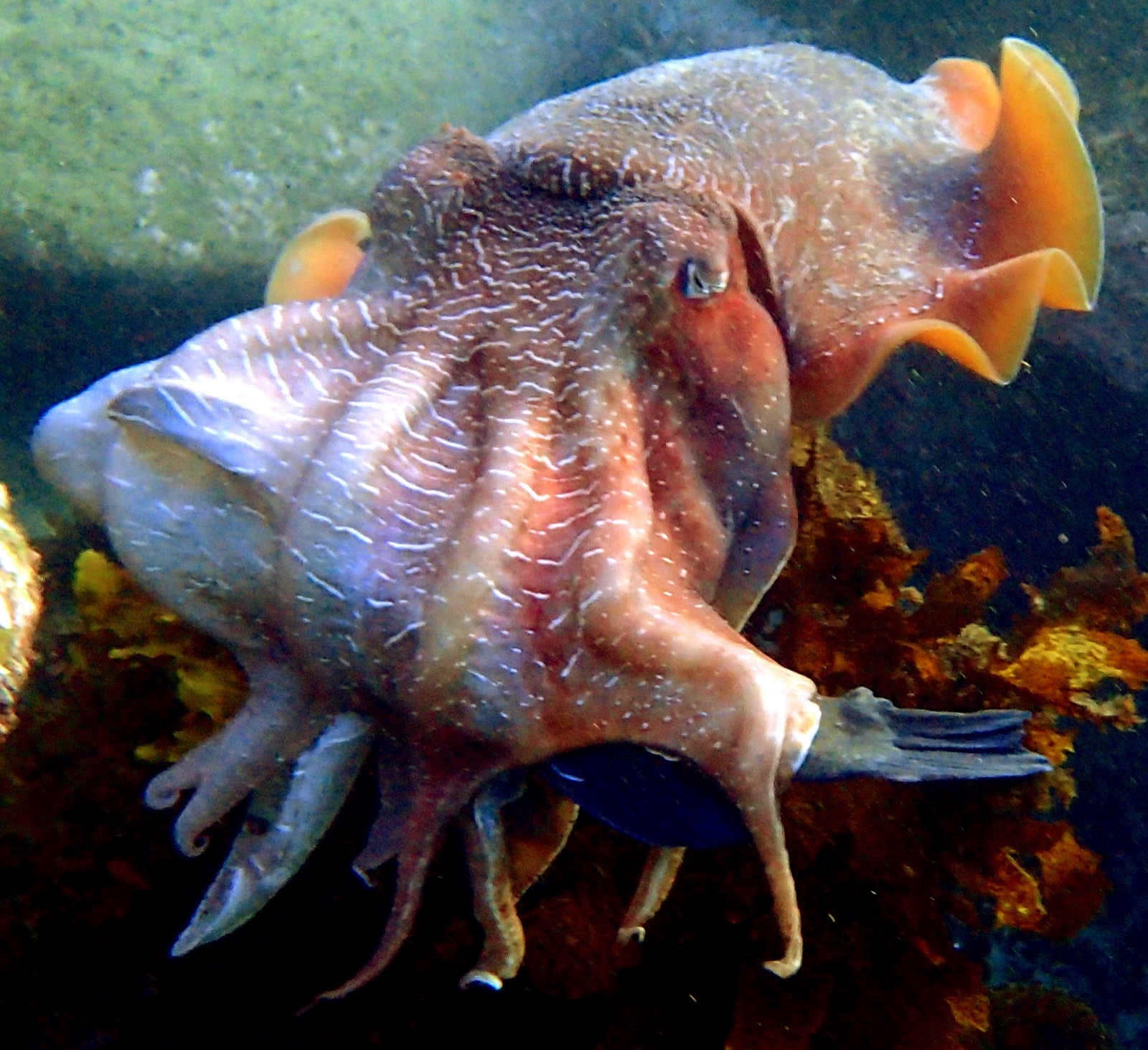
Australian Giant Cuttlefish
Sepia apama · Cephalopod mollusk, family Sepiidae; the largest cuttlefish species
Every austral winter the upper Spencer Gulf hosts the only known dense breeding aggregation of cuttlefish anywhere: tens of thousands of Sepia apama packed onto a few kilometers of shallow rocky reef near Whyalla, in green water that can drop below 12 °C. Males outnumber females several times over, so the reef becomes a tournament: meter-long heavyweights strobing zebra patterns at rivals while smaller sneaker males dim their colors, tuck their arms, and pass as females to slip through the cordon. It all happens in two to eight meters, snorkel-accessible, roughly May through August with a June–July peak. Across the rest of southern Australia the species lives as solitary, frankly curious reef residents that study divers as openly as they are studied. Bring drysuit-grade insulation, move slowly, and touch nothing: these animals breed once and die.
Dónde y cuándo ver uno
"Residente" significa que la mayoría de las inmersiones en ese destino tienen encuentros con ellos; "estacional" significa que su presencia es fiable en los meses indicados; cualquier otra cosa es un extra, no algo con lo que contar.
| Destino | Fiabilidad | Meses | Notas |
|---|---|---|---|
| South AustraliaAustralia | Seasonal: reliable in season | May–Aug |
El mejor mes, de un vistazo
| Mes | Destinos fiables |
|---|---|
| May | South Australia |
| June | South Australia |
| July | South Australia |
| August | South Australia |
Comprendiéndolos
Hábitat: Temperate rocky reef, kelp, and seagrass; the famous breeding aggregation packs onto a few kilometers of shallow stone reef in the upper Spencer Gulf.
Rango: Southern Australian coast from Queensland's border waters around to Western Australia, including Tasmania.
Comportamiento: Solitary and curious most of the year; each austral winter tens of thousands converge near Whyalla to breed, males dueling in color while smaller sneaker males dim their patterns and pass as females to reach mates.
Dieta: Crabs, shrimp, and fishes taken with ambush patience and tentacle strikes.
Tamaño: normalmente alrededor de 0.4 m; documentado hasta 0.5 m (mantle length; total length approaches 1 m and big males exceed 10 kg).
Cómo comportarse cerca de uno
Thick exposure protection, slow fins, and no touching at the aggregation: the animals die after breeding, and every disrupted pairing spends a genuine last chance. Follow local sanctuary-zone rules.
Conservación
Assessed Near Threatened; the Whyalla aggregation crashed in the early 2010s before rebounding under fishing closures and a sanctuary zone that remain load-bearing.
Puntos conocidos por avistamientos
Los puntos destacados fueron registrados para esta especie por nuestros editores; los números son registros de ocurrencia de GBIF anotados en un radio de unos 5 km de un punto desde 1990.
Ver
Desde los canales oficiales

Wildlife of Monterey | New film in our auditorium

Live Aviary Cam | Monterey Bay Aquarium

Live Aviary Cam | Monterey Bay Aquarium
Los vídeos son enlaces insertados a los canales de sus propios creadores. No alojamos nada y acreditamos todo.