Sharks
Blacktip Reef Shark
Carcharhinus melanopterus · Cartilaginous fish, family Carcharhinidae
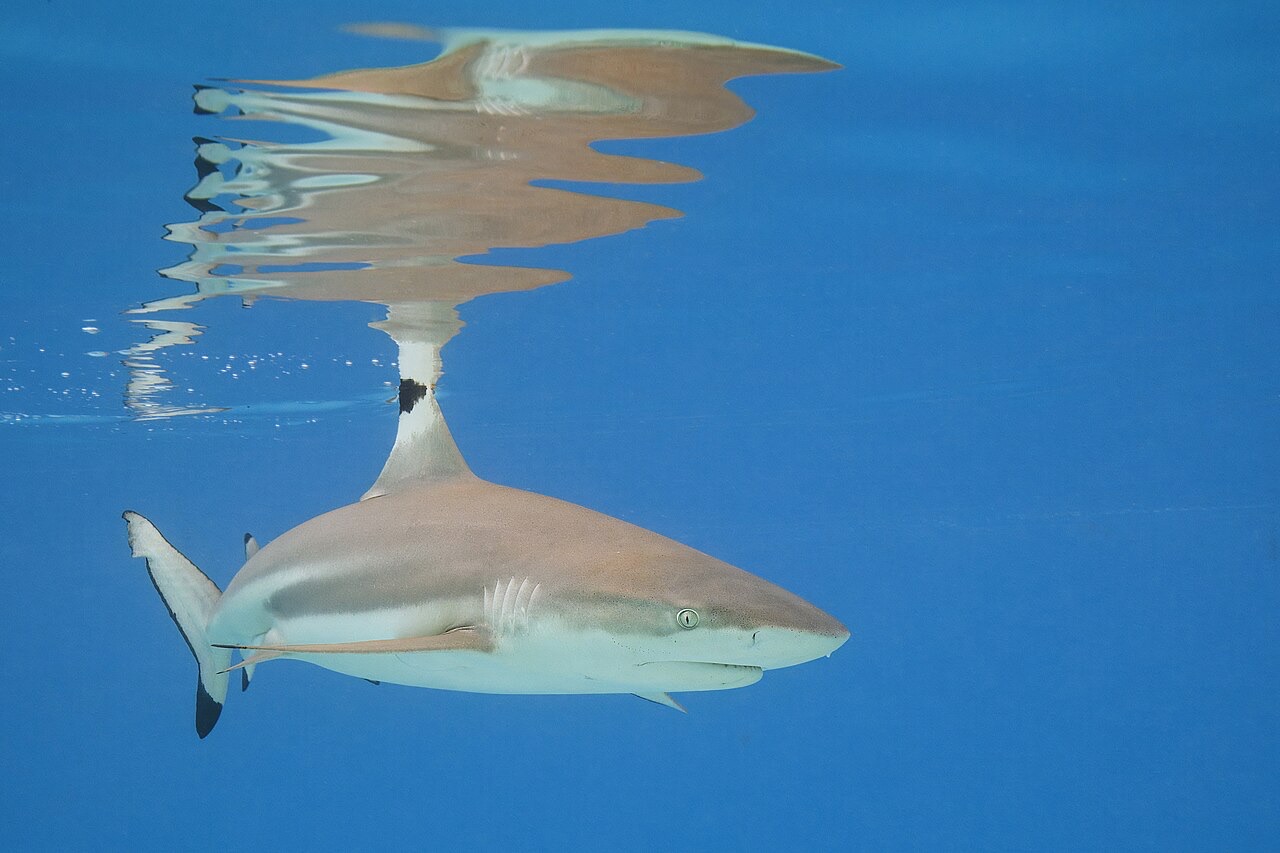
The blacktip reef shark is many divers' first shark, and it wears the role well: a trim, tan-bronze animal with every fin tipped in black, patrolling turquoise shallows like a wind-up toy set to wary. It rarely lets anyone closer than a few meters, which keeps the encounter honest: you watch a genuinely wild predator do its rounds through nursery lagoons and coral gardens. In French Polynesia and the Maldives they gather by the dozen in ankle-deep water at dusk. The species' devotion to shallow fringing reefs, its strength, is also its exposure: that habitat takes the brunt of coastal development and inshore netting.
Wo und wann man eines sieht
„Resident" bedeutet, dass die meisten Tauchgänge am jeweiligen Tauchziel eine Begegnung erwarten lassen; „saisonal" bedeutet, dass die Art in den genannten Monaten zuverlässig anzutreffen ist; alles andere ist ein Bonus, keine Planungsgrundlage.
| Ziel | Zuverlässigkeit | Monate | Hinweise |
|---|---|---|---|
| KomodoIndonesia | Resident: seen on most dives | Ganzjährig | |
| Sipadan & MabulMalaysia | Resident: seen on most dives | Ganzjährig | |
| PalauPalau | Resident: seen on most dives | Ganzjährig | |
| North & South Malé AtollsMaldives | Resident: seen on most dives | Ganzjährig | |
| Similan Islands & Richelieu RockThailand | Resident: seen on most dives | Oct–May |
Bester Monat auf einen Blick
Sie verstehen
Lebensraum: Shallow lagoons, reef flats, and fringing-reef edges, often in water that barely covers its dorsal fin
Verbreitung: Indo-Pacific from the Red Sea and East Africa through Southeast Asia to northern Australia and the central Pacific islands
Verhalten: Skittish and quick, patrolling the shallows in tight, nervous arcs. Small home ranges mean the same individuals work the same lagoon for years. Snorkelers see them more often than divers do, ink-dipped fins slicing the surface over sand flats at high tide.
Ernährung: Small reef fish, octopus, crustaceans, and the occasional sea snake
Größe: typischerweise rund 1.2 m; dokumentiert bis zu 1.8 m (total length; most lagoon animals are around a meter).
Wie man sich in ihrer Nähe verhält
Let them come to you: standing still in a lagoon channel works better than pursuit. No feeding outside long-established, regulated programs, and no cornering animals against the reef flat.
Naturschutz
Uplisted to Vulnerable in 2020: small litters, strong site fidelity, and intense inshore fishing pressure across Southeast Asia leave little buffer despite the species' visibility to tourists.
Bekannte Tauchplätze dafür
Hervorgehobene Tauchplätze wurden von unseren Redakteuren für diese Art kartiert; die Zahlen sind GBIF-Vorkommensdatensätze, die seit 1990 im Umkreis von etwa 5 km um einen Tauchplatz protokolliert wurden.
Ansehen
Aus den offiziellen Kanälen

Wildlife of Monterey | New film in our auditorium

Live Aviary Cam | Monterey Bay Aquarium

Live Aviary Cam | Monterey Bay Aquarium
Videos sind eingebettete Links zu den Kanälen der jeweiligen Ersteller – wir hosten nichts und geben für alles die Quelle an.