Cephalopods
Blue-Ringed Octopus
Hapalochlaena · Cephalopod mollusks, genus Hapalochlaena, family Octopodidae; genus-level overview of about four described species
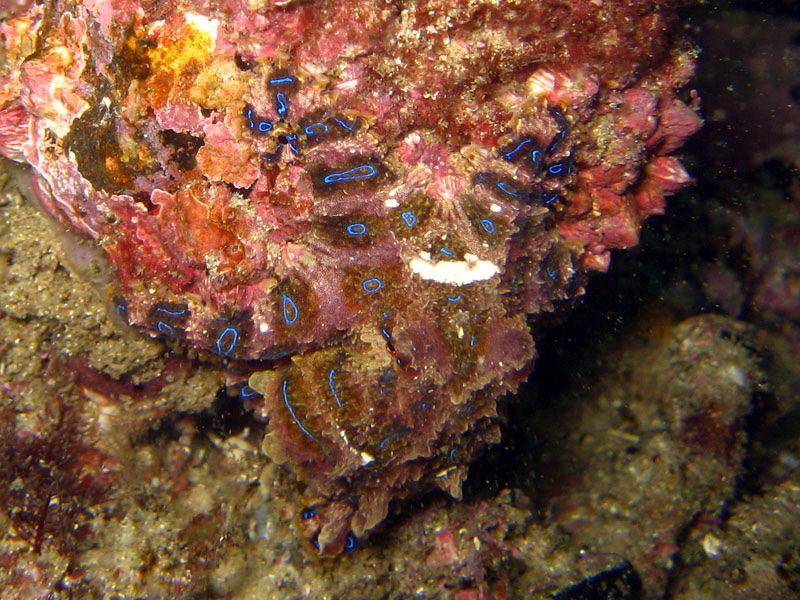
Everything about this encounter should be unhurried and hands-off. Blue-ringed octopuses are golf-ball-small, sand-colored, and easy to overlook until threatened, when iridescent blue rings pulse across the skin: a genuine warning, not a show for the camera. Their saliva carries tetrodotoxin produced by symbiotic bacteria; a bite is often painless, and there is no antivenom. Serious envenomation causes progressive paralysis while the victim remains conscious, and survival turns on immediate, sustained rescue breathing and rapid evacuation. Treated promptly, people recover fully. Bites on divers are extremely rare and essentially always involve handling. The animals themselves are shy hunters of crabs and shrimp across Indo-Pacific rubble, tide pools, and muck slopes, denning inside abandoned shells and bottles. Several species exist, from the Coral Triangle's greater blue-ring to southern Australia's jetty-dwelling species.
どこで・いつ見られるか
「常駐(Resident)」とは、そのダイビングスポットでのほとんどのダイブで遭遇できることを意味します。「季節限定(Seasonal)」とは、記載された月に確実に見られることを意味します。それ以外の出会いはボーナスであり、計画の前提にはなりません。
| 目的地 | 信頼性 | 月 | メモ |
|---|---|---|---|
| Bali & Nusa PenidaIndonesia | Occasional | 年間を通じて | |
| Lembeh StraitIndonesia | Occasional | 年間を通じて | |
| AnilaoPhilippines | Occasional | 年間を通じて | |
| Dumaguete, Dauin & Apo IslandPhilippines | Occasional | 年間を通じて | |
| South AustraliaAustralia | Occasional | 年間を通じて |
ベストな月、一目でわかる
理解を深める
ハビタット: Rubble, sand, tide pools, seagrass, and muck slopes; dens in shells, bottles, and cans as readily as in rock.
分布域: Indo-Pacific: the greater blue-ringed octopus through the Coral Triangle and western Pacific, with other species around southern Australia and the region's temperate fringes.
生態・行動: Shy and mostly cryptic; flashes iridescent blue rings only when threatened, a genuine last warning rather than a display. Hunts by day and dusk across open bottom between dens.
食性: Crabs and shrimp, subdued with venomous saliva.
サイズ: 目安は 0.1 m; 確認済みの最大記録 0.15 m (arm-span; the mantle is smaller than a golf ball).
出会ったときの正しいふるまい方
Hands off absolutely, including shells, bottles, and cans, which are favorite dens. Watch the hunt from a camera's length away and let the animal control the encounter.
保全
None of the species is considered threatened; the human story is education, since fatalities historically involved people picking the animal up.
目撃情報で知られるダイブサイト
ハイライト表示のサイトは編集部がこの生物種の記録地として登録したもので、数字は1990年以降にサイトから約5km以内で記録されたGBIFの出現件数です。
動画を見る
公式チャンネルより

Wildlife of Monterey | New film in our auditorium

Live Aviary Cam | Monterey Bay Aquarium

Live Aviary Cam | Monterey Bay Aquarium
動画はクリエイター自身のチャンネルへの埋め込みリンクです。当サイトはコンテンツをホストせず、すべての出典を明示しています。