Cephalopods
Blue-Ringed Octopus
Hapalochlaena · Cephalopod mollusks, genus Hapalochlaena, family Octopodidae; genus-level overview of about four described species
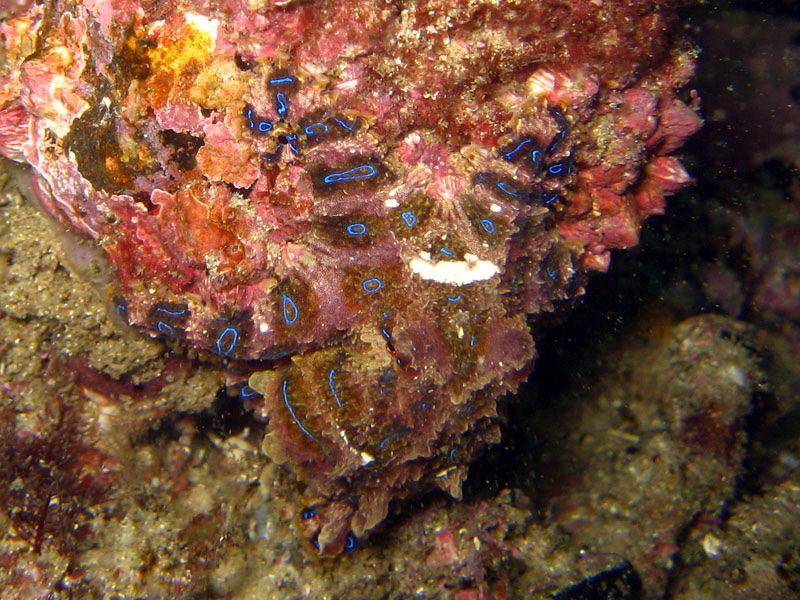
Everything about this encounter should be unhurried and hands-off. Blue-ringed octopuses are golf-ball-small, sand-colored, and easy to overlook until threatened, when iridescent blue rings pulse across the skin: a genuine warning, not a show for the camera. Their saliva carries tetrodotoxin produced by symbiotic bacteria; a bite is often painless, and there is no antivenom. Serious envenomation causes progressive paralysis while the victim remains conscious, and survival turns on immediate, sustained rescue breathing and rapid evacuation. Treated promptly, people recover fully. Bites on divers are extremely rare and essentially always involve handling. The animals themselves are shy hunters of crabs and shrimp across Indo-Pacific rubble, tide pools, and muck slopes, denning inside abandoned shells and bottles. Several species exist, from the Coral Triangle's greater blue-ring to southern Australia's jetty-dwelling species.
Où et quand en observer un
« Résident » signifie que la plupart des plongées sur ce site permettent de les observer ; « saisonnier » signifie qu'ils sont présents de manière fiable durant les mois indiqués ; tout le reste est un bonus, pas une certitude.
| Destination | Fiabilité | Mois | Notes |
|---|---|---|---|
| Bali & Nusa PenidaIndonesia | Occasional | Toute l'année | |
| Lembeh StraitIndonesia | Occasional | Toute l'année | |
| AnilaoPhilippines | Occasional | Toute l'année | |
| Dumaguete, Dauin & Apo IslandPhilippines | Occasional | Toute l'année | |
| South AustraliaAustralia | Occasional | Toute l'année |
Meilleur mois, en un coup d'œil
Les comprendre
Habitat: Rubble, sand, tide pools, seagrass, and muck slopes; dens in shells, bottles, and cans as readily as in rock.
Aire de répartition: Indo-Pacific: the greater blue-ringed octopus through the Coral Triangle and western Pacific, with other species around southern Australia and the region's temperate fringes.
Comportement: Shy and mostly cryptic; flashes iridescent blue rings only when threatened, a genuine last warning rather than a display. Hunts by day and dusk across open bottom between dens.
Régime alimentaire: Crabs and shrimp, subdued with venomous saliva.
Taille: généralement autour de 0.1 m; documenté jusqu'à 0.15 m (arm-span; the mantle is smaller than a golf ball).
Comment se comporter avec lui
Hands off absolutely, including shells, bottles, and cans, which are favorite dens. Watch the hunt from a camera's length away and let the animal control the encounter.
Conservation
None of the species is considered threatened; the human story is education, since fatalities historically involved people picking the animal up.
Sites répertoriés connus pour leur présence
Les sites mis en évidence ont été cartographiés pour cette espèce par nos éditeurs ; les chiffres correspondent aux occurrences GBIF enregistrées dans un rayon d'environ 5 km d'un site depuis 1990.
Regarder
Depuis les canaux officiels

Wildlife of Monterey | New film in our auditorium

Live Aviary Cam | Monterey Bay Aquarium

Live Aviary Cam | Monterey Bay Aquarium
Les vidéos sont des liens intégrés vers les chaînes de leurs créateurs. Nous n'hébergeons rien et créditons tout.