Cephalopods
Blue-Ringed Octopus
Hapalochlaena · Cephalopod mollusks, genus Hapalochlaena, family Octopodidae; genus-level overview of about four described species
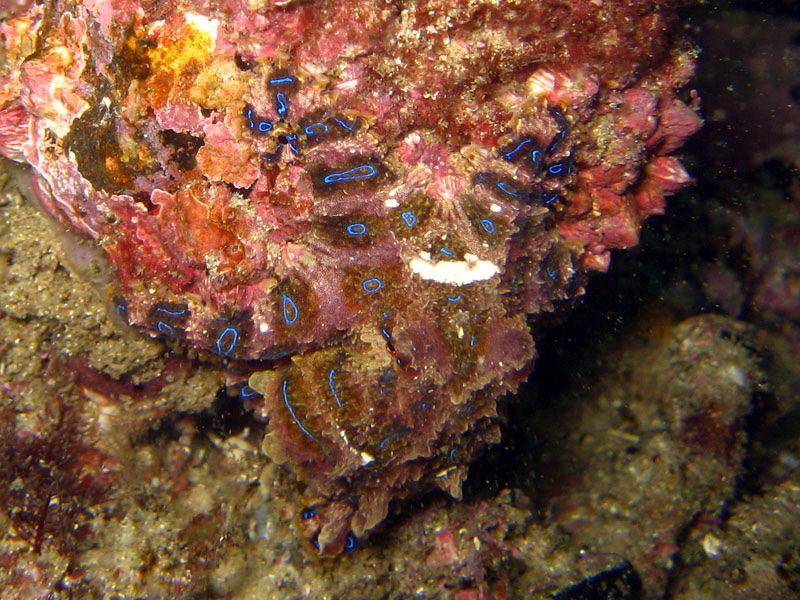
Everything about this encounter should be unhurried and hands-off. Blue-ringed octopuses are golf-ball-small, sand-colored, and easy to overlook until threatened, when iridescent blue rings pulse across the skin: a genuine warning, not a show for the camera. Their saliva carries tetrodotoxin produced by symbiotic bacteria; a bite is often painless, and there is no antivenom. Serious envenomation causes progressive paralysis while the victim remains conscious, and survival turns on immediate, sustained rescue breathing and rapid evacuation. Treated promptly, people recover fully. Bites on divers are extremely rare and essentially always involve handling. The animals themselves are shy hunters of crabs and shrimp across Indo-Pacific rubble, tide pools, and muck slopes, denning inside abandoned shells and bottles. Several species exist, from the Coral Triangle's greater blue-ring to southern Australia's jetty-dwelling species.
Di mana dan kapan melihatnya
"Resident" berarti sebagian besar penyelaman di destinasi tersebut akan menjumpai mereka; "seasonal" berarti kehadirannya dapat diandalkan pada bulan-bulan yang tercantum; selain itu adalah bonus, bukan rencana.
| Destinasi | Keandalan | Bulan | Catatan |
|---|---|---|---|
| Bali & Nusa PenidaIndonesia | Occasional | Sepanjang tahun | |
| Lembeh StraitIndonesia | Occasional | Sepanjang tahun | |
| AnilaoPhilippines | Occasional | Sepanjang tahun | |
| Dumaguete, Dauin & Apo IslandPhilippines | Occasional | Sepanjang tahun | |
| South AustraliaAustralia | Occasional | Sepanjang tahun |
Bulan terbaik, sekilas pandang
Memahaminya
Habitat: Rubble, sand, tide pools, seagrass, and muck slopes; dens in shells, bottles, and cans as readily as in rock.
Sebaran: Indo-Pacific: the greater blue-ringed octopus through the Coral Triangle and western Pacific, with other species around southern Australia and the region's temperate fringes.
Perilaku: Shy and mostly cryptic; flashes iridescent blue rings only when threatened, a genuine last warning rather than a display. Hunts by day and dusk across open bottom between dens.
Diet: Crabs and shrimp, subdued with venomous saliva.
Ukuran: biasanya sekitar 0.1 m; terdokumentasi hingga 0.15 m (arm-span; the mantle is smaller than a golf ball).
Cara berperilaku di sekitarnya
Hands off absolutely, including shells, bottles, and cans, which are favorite dens. Watch the hunt from a camera's length away and let the animal control the encounter.
Konservasi
None of the species is considered threatened; the human story is education, since fatalities historically involved people picking the animal up.
Situs-situs terdata yang dikenal dengan hal itu
Lokasi yang disorot dipetakan untuk spesies ini oleh editor kami; angka-angkanya adalah catatan kemunculan GBIF yang dicatat dalam radius sekitar 5 km dari suatu lokasi sejak 1990.
Tonton
Dari saluran resmi

Wildlife of Monterey | New film in our auditorium

Live Aviary Cam | Monterey Bay Aquarium

Live Aviary Cam | Monterey Bay Aquarium
Video adalah tautan tertanam ke saluran milik kreatornya sendiri. Kami tidak meng-host apa pun dan selalu mencantumkan kredit.