Cephalopods
Blue-Ringed Octopus
Hapalochlaena · Cephalopod mollusks, genus Hapalochlaena, family Octopodidae; genus-level overview of about four described species
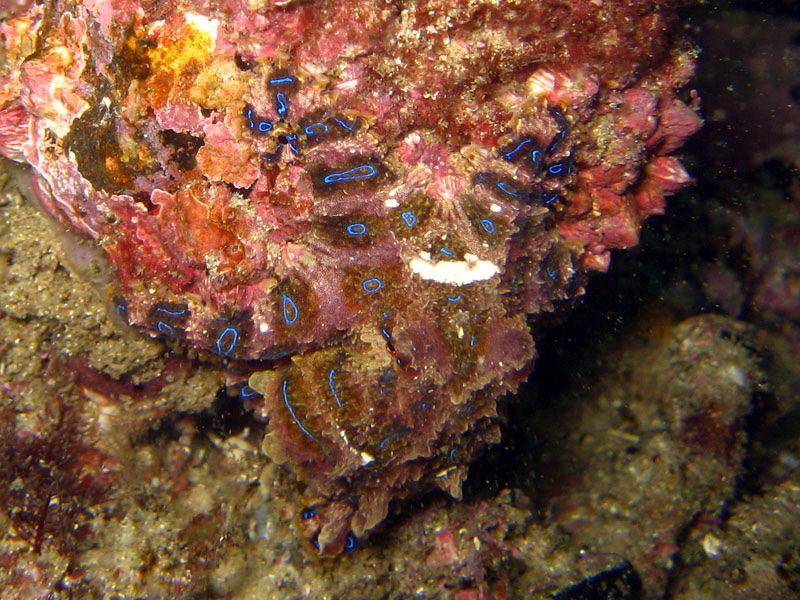
Everything about this encounter should be unhurried and hands-off. Blue-ringed octopuses are golf-ball-small, sand-colored, and easy to overlook until threatened, when iridescent blue rings pulse across the skin: a genuine warning, not a show for the camera. Their saliva carries tetrodotoxin produced by symbiotic bacteria; a bite is often painless, and there is no antivenom. Serious envenomation causes progressive paralysis while the victim remains conscious, and survival turns on immediate, sustained rescue breathing and rapid evacuation. Treated promptly, people recover fully. Bites on divers are extremely rare and essentially always involve handling. The animals themselves are shy hunters of crabs and shrimp across Indo-Pacific rubble, tide pools, and muck slopes, denning inside abandoned shells and bottles. Several species exist, from the Coral Triangle's greater blue-ring to southern Australia's jetty-dwelling species.
Onde e quando ver um
"Residente" significa que a maioria dos mergulhos naquele destino os encontra; "sazonal" significa presença confiável nos meses listados; qualquer outra coisa é um bônus, não um plano.
| Destino | Fiabilidade | Meses | Notas |
|---|---|---|---|
| Bali & Nusa PenidaIndonesia | Occasional | Todo o ano | |
| Lembeh StraitIndonesia | Occasional | Todo o ano | |
| AnilaoPhilippines | Occasional | Todo o ano | |
| Dumaguete, Dauin & Apo IslandPhilippines | Occasional | Todo o ano | |
| South AustraliaAustralia | Occasional | Todo o ano |
Melhor mês, em resumo
Entendendo-os
Habitat: Rubble, sand, tide pools, seagrass, and muck slopes; dens in shells, bottles, and cans as readily as in rock.
Distribuição: Indo-Pacific: the greater blue-ringed octopus through the Coral Triangle and western Pacific, with other species around southern Australia and the region's temperate fringes.
Comportamento: Shy and mostly cryptic; flashes iridescent blue rings only when threatened, a genuine last warning rather than a display. Hunts by day and dusk across open bottom between dens.
Dieta: Crabs and shrimp, subdued with venomous saliva.
Tamanho: normalmente cerca de 0.1 m; documentado até 0.15 m (arm-span; the mantle is smaller than a golf ball).
Como se comportar perto de um
Hands off absolutely, including shells, bottles, and cans, which are favorite dens. Watch the hunt from a camera's length away and let the animal control the encounter.
Conservação
None of the species is considered threatened; the human story is education, since fatalities historically involved people picking the animal up.
Pontos mapeados conhecidos por eles
Os locais destacados foram cartografados para esta espécie pelos nossos editores; os números são registos de ocorrência do GBIF num raio de cerca de 5 km do local desde 1990.
Assista
Dos canais oficiais

Wildlife of Monterey | New film in our auditorium

Live Aviary Cam | Monterey Bay Aquarium

Live Aviary Cam | Monterey Bay Aquarium
Os vídeos são ligações incorporadas para os canais dos próprios criadores. Não alojamos nada e creditamos tudo.