Rays
Blue-Spotted Ribbontail Ray
Taeniura lymma · Cartilaginous fish, family Dasyatidae
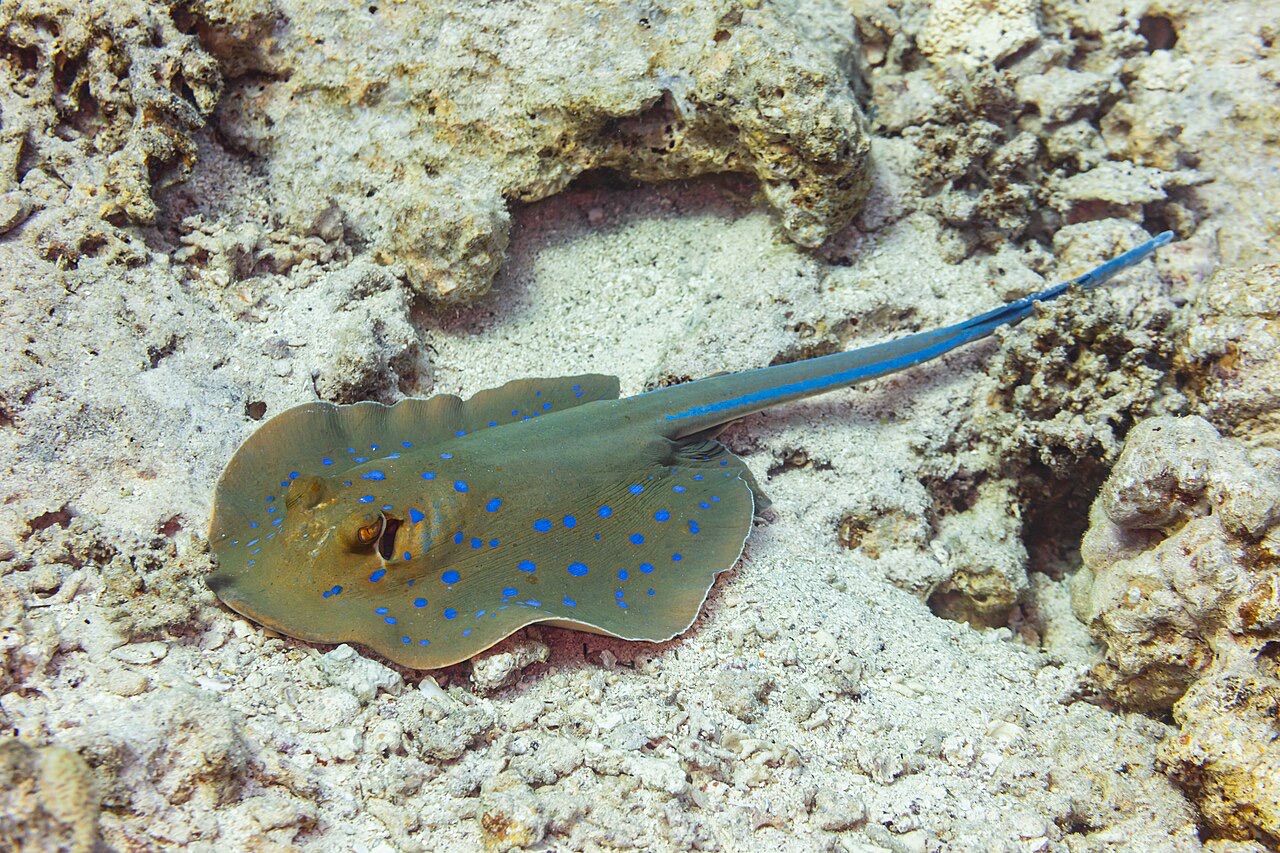
Few reef animals photograph as improbably as this ray: an oval of ochre-gold scattered with neon-blue spots that look airbrushed on, a blue-striped ribbon of tail trailing behind. Red Sea divers meet it constantly: a flash of color retreating deeper under a table coral, or gliding across the sand at Ras Mohammed like a small flying carpet. The vivid spots advertise the venomous spines honestly, aposematic warning rather than decoration. It is a fixture of shallow Indo-Pacific reefs from Dahab to Sipadan, and its twitchy shyness is the correct response to a world of octopuses, hammerheads, and grabby photographers.
Onde e quando ver um
"Residente" significa que a maioria dos mergulhos naquele destino os encontra; "sazonal" significa presença confiável nos meses listados; qualquer outra coisa é um bônus, não um plano.
| Destino | Fiabilidade | Meses | Notas |
|---|---|---|---|
| Sharm El Sheikh & Ras MohammedEgypt | Resident: seen on most dives | Todo o ano | |
| Sipadan & MabulMalaysia | Resident: seen on most dives | Todo o ano | |
| DahabEgypt | Resident: seen on most dives | Todo o ano | |
| Similan Islands & Richelieu RockThailand | Resident: seen on most dives | Oct–May |
Melhor mês, em resumo
Entendendo-os
Habitat: Coral reefs: tucked under table corals and ledges by day, hunting sand aprons on the rising tide
Distribuição: Tropical Indo-Pacific from the Red Sea and East Africa through Southeast Asia to northern Australia and the western Pacific
Comportamento: A shy, jewel-bright little ray that spends daylight wedged into reef crevices with just the tail showing, emerging over sand in the shallows to feed. Unlike many stingrays it seldom buries itself fully; the electric spots seem to do the warning instead.
Dieta: Small crustaceans, worms, and mollusks rooted out of sand
Tamanho: normalmente cerca de 0.3 m; documentado até 0.35 m (disc width; total length with tail roughly doubles it).
Como se comportar perto de um
No prodding animals out of crevices for photos, no blocking the open side of a ledge, and watch fin tips over sand where they feed.
Conservação
Heavily collected historically for the aquarium trade, in which it fares poorly, and pressured by inshore fishing and reef loss across Southeast Asia.
Pontos mapeados conhecidos por eles
Os locais destacados foram cartografados para esta espécie pelos nossos editores; os números são registos de ocorrência do GBIF num raio de cerca de 5 km do local desde 1990.
Assista
Dos canais oficiais

Wildlife of Monterey | New film in our auditorium

Live Aviary Cam | Monterey Bay Aquarium

Live Aviary Cam | Monterey Bay Aquarium
Os vídeos são ligações incorporadas para os canais dos próprios criadores. Não alojamos nada e creditamos tudo.