Tauchplätze, Saisons und Meereslebewesen – recherchiert, kartiert, geplant.
Menü
Reiseziele Tauchplätze Meeresleben Wracks News
Eine Reise planen Tauchtrip-Planer Wann tauchen Kostenrechner Vergleiche Meereslebewesen-Kalender Wassertemperatur Liveaboards Tauchbetriebe & Resorts Meeresschutzgebiete Druckkammern Weltkarte
Regionen Australien, Neuseeland & OstasienKaribik & WestatlantikEuropa, Atlantik & MittelmeerIndischer Ozean & OstafrikaPazifikinseln & MikronesienRotes Meer & Naher OstenSüdostasien & Korallen-DreieckAmerika & Östlicher Pazifik Länder
Lernen & Tools Alle Guides Zertifizierungen Ausrüstungsratgeber Videos Daten abfragen KI-Agenten API
Über uns Über uns Methodik Haftungsausschluss Kontakt
Deine Ansicht
★ Gespeichert

Deine gespeicherten Reiseziele, Tauchplätze und Tierarten — im Browser gespeichert.

API-GATEWAY

Kostenloser, schreibgeschützter JSON-Zugriff auf die gecachten Daten des Atlas.

Dunkelmodus

🧭 Geführte Ansicht
Neu beim Tauchen — Tiefen, Strömungen, Zertifizierungsstufen? Wir erklären jeden Begriff beim Stöbern in verständlicher Sprache. Dieselben Daten, mit integrierter Hilfe.

⚡ Expertenansicht
Du kennst den Unterschied zwischen einem Wall und einem Drift Dive. Nur die Daten – klar, schnell und kompakt. Das ist die Standardansicht.

Oberflächensprache
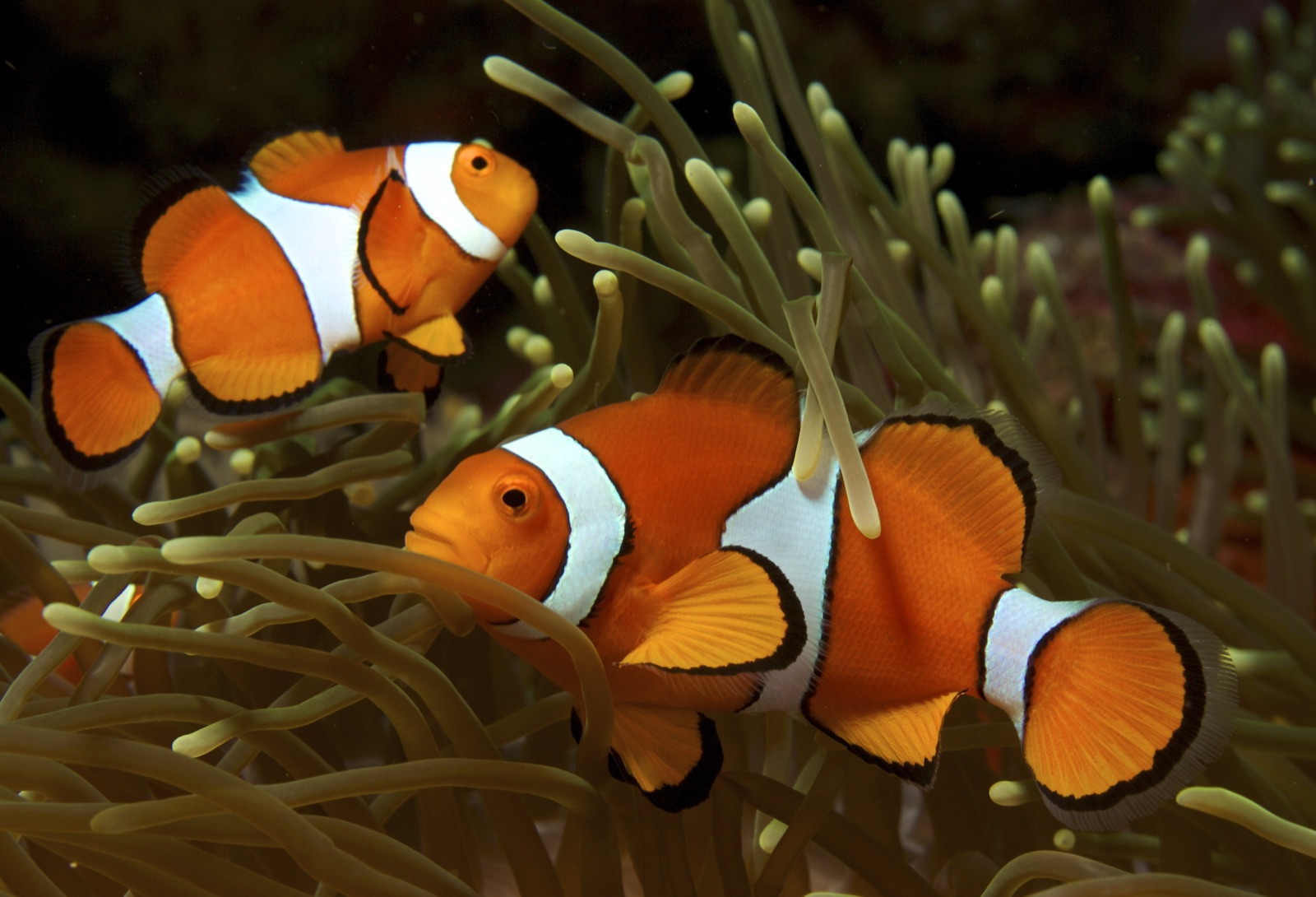
Clownfish & Anemonefish — illustration
KI-generierte Illustration für The Scuba Atlas – illustrativ, kein Dokumentarfoto.

Reef Fish

Clownfish & Anemonefish

Amphiprioninae · Bony fish — subfamily Amphiprioninae, family Pomacentridae (damselfishes); family-level overview covering roughly 30 anemonefish species

~0.09 m total length; varies by species, and females are the larger sex in every one 1–20 m Tiefenbereich Gut dokumentiert

The partnership defines the fish. An anemonefish spends its adult life inside the stinging tentacles of a host anemone, protected by a mucus coat that keeps the nematocysts from firing, and it rarely strays more than a few meters from home. Each anemone houses a strict hierarchy: one large female, one breeding male, and a queue of small non-breeders. Remove the female and the male changes sex to replace her, because every clownfish begins life male. Around thirty species divide the Indo-Pacific, from the two-banded anemonefish on Red Sea reef tops to the false clown of the Coral Triangle and the tomato and skunk anemonefishes farther east. Expect bold defense passes, egg-fanning beside the anemone base, and the occasional harmless nip at a lingering finger. None live in the Caribbean.

Respektfaktor: LowA defended nip startles more than it hurts; the real risk is to the fish and its anemone, not the diver.

Wo und wann man eines sieht

„Resident" bedeutet, dass die meisten Tauchgänge am jeweiligen Tauchziel eine Begegnung erwarten lassen; „saisonal" bedeutet, dass die Art in den genannten Monaten zuverlässig anzutreffen ist; alles andere ist ein Bonus, keine Planungsgrundlage.

ZielZuverlässigkeitMonateHinweise
Bali & Nusa PenidaIndonesia Resident — seen on most dives Ganzjährig
Sipadan & MabulMalaysia Resident — seen on most dives Ganzjährig
Cairns & the Ribbon ReefsAustralia Resident — seen on most dives Ganzjährig
Sharm El Sheikh & Ras MohammedEgypt Resident — seen on most dives Ganzjährig
North & South Malé AtollsMaldives Resident — seen on most dives Ganzjährig
Raja AmpatIndonesia Resident — seen on most dives Ganzjährig

Bester Monat auf einen Blick

MonatZuverlässige Reiseziele
January Bali & Nusa Penida · Sipadan & Mabul · Cairns & the Ribbon Reefs · Sharm El Sheikh & Ras Mohammed · North & South Malé Atolls · Raja Ampat
February Bali & Nusa Penida · Sipadan & Mabul · Cairns & the Ribbon Reefs · Sharm El Sheikh & Ras Mohammed · North & South Malé Atolls · Raja Ampat
March Bali & Nusa Penida · Sipadan & Mabul · Cairns & the Ribbon Reefs · Sharm El Sheikh & Ras Mohammed · North & South Malé Atolls · Raja Ampat
April Bali & Nusa Penida · Sipadan & Mabul · Cairns & the Ribbon Reefs · Sharm El Sheikh & Ras Mohammed · North & South Malé Atolls · Raja Ampat
May Bali & Nusa Penida · Sipadan & Mabul · Cairns & the Ribbon Reefs · Sharm El Sheikh & Ras Mohammed · North & South Malé Atolls · Raja Ampat
June Bali & Nusa Penida · Sipadan & Mabul · Cairns & the Ribbon Reefs · Sharm El Sheikh & Ras Mohammed · North & South Malé Atolls · Raja Ampat
July Bali & Nusa Penida · Sipadan & Mabul · Cairns & the Ribbon Reefs · Sharm El Sheikh & Ras Mohammed · North & South Malé Atolls · Raja Ampat
August Bali & Nusa Penida · Sipadan & Mabul · Cairns & the Ribbon Reefs · Sharm El Sheikh & Ras Mohammed · North & South Malé Atolls · Raja Ampat
September Bali & Nusa Penida · Sipadan & Mabul · Cairns & the Ribbon Reefs · Sharm El Sheikh & Ras Mohammed · North & South Malé Atolls · Raja Ampat
October Bali & Nusa Penida · Sipadan & Mabul · Cairns & the Ribbon Reefs · Sharm El Sheikh & Ras Mohammed · North & South Malé Atolls · Raja Ampat
November Bali & Nusa Penida · Sipadan & Mabul · Cairns & the Ribbon Reefs · Sharm El Sheikh & Ras Mohammed · North & South Malé Atolls · Raja Ampat
December Bali & Nusa Penida · Sipadan & Mabul · Cairns & the Ribbon Reefs · Sharm El Sheikh & Ras Mohammed · North & South Malé Atolls · Raja Ampat

Sie verstehen

Lebensraum: Shallow, sunlit reef flats, lagoon patches, and upper slopes wherever one of about ten host anemone species grows.

Verbreitung: Tropical Indo-Pacific and Red Sea, from East Africa to French Polynesia; absent from the Atlantic and Caribbean.

Verhalten: Strict size-ranked hierarchies on a single anemone; all individuals begin life male, and the dominant male changes sex when the female is lost. Pairs tend and fan eggs laid at the anemone base.

Ernährung: Zooplankton and algae taken within a few meters of the host anemone, plus scraps from the anemone itself.

Größe: typischerweise rund 0.09 m; dokumentiert bis zu 0.17 m (total length; varies by species, and females are the larger sex in every one).

Wie man sich in ihrer Nähe verhält

Watch from a meter away and keep hands clear. Never nudge a fish out of its anemone for a photo — exposed clownfish are easy prey and the anemone stings.

Naturschutz

Most assessed species are not threatened, but anemone bleaching and aquarium-trade collection have thinned local populations; captive breeding now supplies much of the trade.

Bekannte Tauchplätze dafür

Ansehen

Aus den offiziellen Kanälen

Alle Videos →

Videos sind eingebettete Links zu den Kanälen der jeweiligen Ersteller – wir hosten nichts und geben für alles die Quelle an.

Quellen: Wikipedia ↗FishBase ↗ · Fakten wurden anhand der oben genannten Quellen verifiziert; Felder ohne Quellenbeleg sind als noch nicht verifiziert gekennzeichnet.

Australien, Neuseeland & Ostasien

Cairns & the Ribbon ReefsNingaloo ReefCoral Sea & Osprey ReefOkinawa & the Kerama IslandsPoor Knights IslandsTownsville & the YongalaGreen IslandIzu Peninsula

Karibik & Westatlantik

BonaireCozumelRiviera Maya & the CenotesBelize Barrier ReefGrand CaymanIsla Mujeres & CancúnRoatánTiger Beach & Grand Bahama

Europa, Atlantik & Mittelmeer

Malta & GozoSilfra & IcelandThe AzoresCanary IslandsLarnaca & the ZenobiaScapa FlowArctic NorwayMadeira

Indischer Ozean & Ostafrika

North & South Malé AtollsAri AtollBaa Atoll & Hanifaru BayAliwal Shoal & UmkomaasMafia IslandMauritiusSeychellesSodwana Bay

Pazifikinseln & Mikronesien

PalauChuuk (Truk) LagoonFakaravaKona, HawaiʻiRangiroaTaveuni & Rainbow ReefBeqa Lagoon & Pacific HarbourEspiritu Santo

Rotes Meer & Naher Osten

Sharm El Sheikh & Ras MohammedBrothers, Daedalus & St John'sDahabHurghada & El GounaMarsa Alam & the Deep SouthAqabaDaymaniyat IslandsMusandam Peninsula

Südostasien & Korallen-Dreieck

Bali & Nusa PenidaKomodoRaja AmpatSipadan & MabulAnilaoCoronKoh TaoLembeh Strait

Amerika & Östlicher Pazifik

Galápagos IslandsCocos IslandFlorida KeysSea of Cortez & Cabo PulmoSocorro & the RevillagigedosBritish ColumbiaCalifornia Channel IslandsCosta Rica Pacific Coast