Puntos de buceo, temporadas y vida marina — investigados, cartografiados, planificados.
Menú
Destinos Puntos de buceo Vida marina Pecios Noticias
Planifica un viaje Planificador de viajes Cuándo bucear Calculadora de costes Comparativas Calendario de fauna marina Temperatura del agua Liveaboards Operadores y resorts Parques marinos Cámaras hiperbáricas Mapa mundial
Regiones Australia, Nueva Zelanda y Asia OrientalCaribe y Atlántico occidentalEuropa, Atlántico y MediterráneoOcéano Índico y África OrientalIslas del Pacífico y MicronesiaMar Rojo y Oriente MedioSudeste Asiático y el Triángulo del CoralLas Américas y el Pacífico Oriental Países
Aprender y herramientas Todas las guías Certificaciones Guías de equipo Vídeos Consulta los datos Agentes de IA API
Acerca de Quiénes somos Metodología Aviso legal Contacto
Tu vista
★ Guardado

Tus destinos, sitios y especies favoritos — guardados en este navegador.

API GATEWAY

Acceso JSON gratuito de solo lectura a los datos en caché del atlas.

Modo oscuro

🧭 Vista guiada
¿Nuevo en el buceo? ¿Profundidades, corrientes, niveles de certificación? Explicamos cada término mientras navegas, en un lenguaje claro. Los mismos datos, con la ayuda integrada.

⚡ Vista experta
Ya conoces la diferencia entre una pared y un drift dive. Solo los datos — claros, rápidos y concisos. Esta es la vista predeterminada.

Idioma de la interfaz
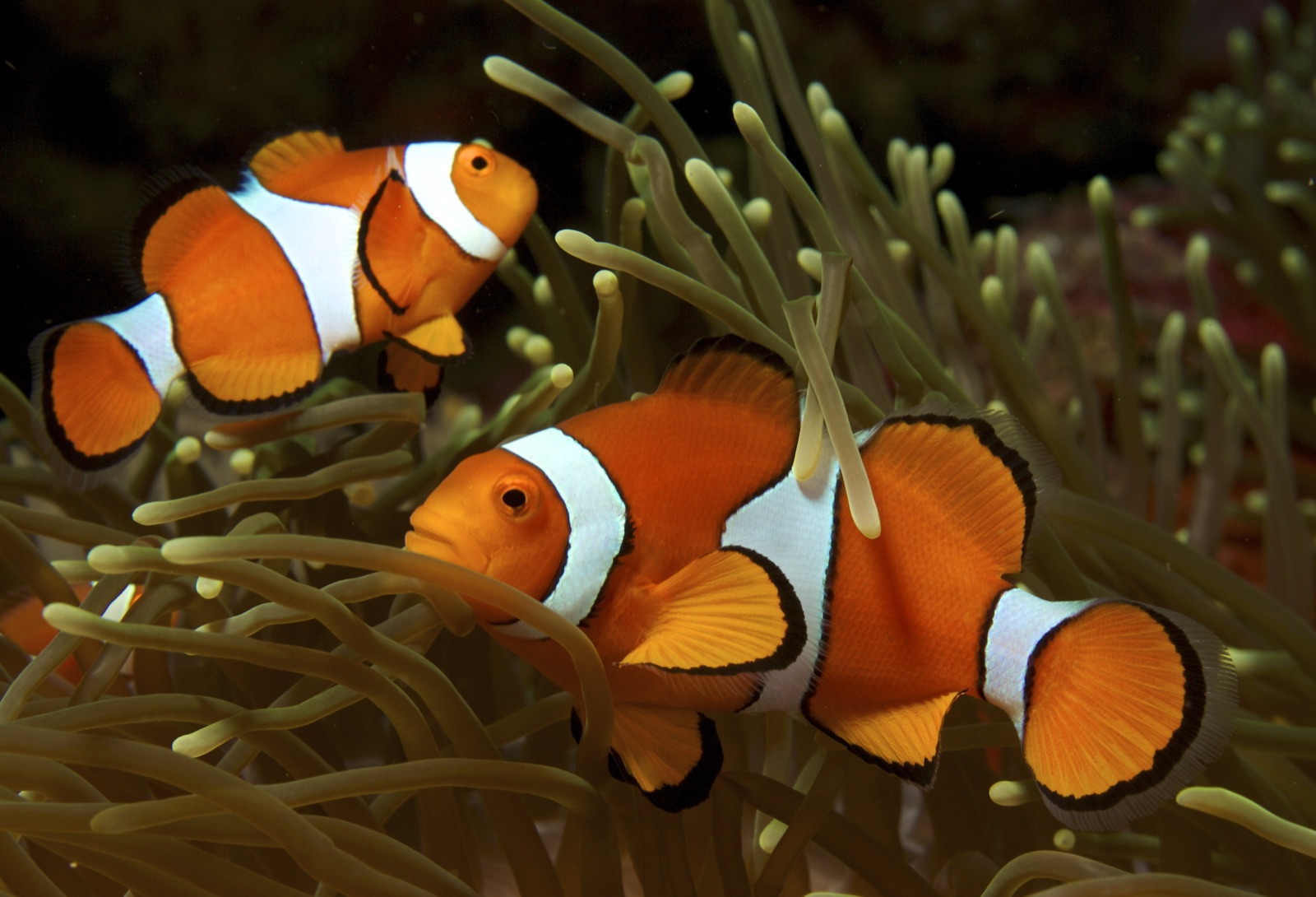
Clownfish & Anemonefish — illustration
Ilustración generada por IA para The Scuba Atlas — ilustrativa, no una fotografía documental.

Reef Fish

Clownfish & Anemonefish

Amphiprioninae · Bony fish — subfamily Amphiprioninae, family Pomacentridae (damselfishes); family-level overview covering roughly 30 anemonefish species

~0.09 m total length; varies by species, and females are the larger sex in every one 1–20 m rango de profundidad Bien documentado

The partnership defines the fish. An anemonefish spends its adult life inside the stinging tentacles of a host anemone, protected by a mucus coat that keeps the nematocysts from firing, and it rarely strays more than a few meters from home. Each anemone houses a strict hierarchy: one large female, one breeding male, and a queue of small non-breeders. Remove the female and the male changes sex to replace her, because every clownfish begins life male. Around thirty species divide the Indo-Pacific, from the two-banded anemonefish on Red Sea reef tops to the false clown of the Coral Triangle and the tomato and skunk anemonefishes farther east. Expect bold defense passes, egg-fanning beside the anemone base, and the occasional harmless nip at a lingering finger. None live in the Caribbean.

Factor de respeto: LowA defended nip startles more than it hurts; the real risk is to the fish and its anemone, not the diver.

Dónde y cuándo ver uno

"Residente" significa que la mayoría de las inmersiones en ese destino tienen encuentros con ellos; "estacional" significa que su presencia es fiable en los meses indicados; cualquier otra cosa es un extra, no algo con lo que contar.

DestinoFiabilidadMesesNotas
Bali & Nusa PenidaIndonesia Resident — seen on most dives Todo el año
Sipadan & MabulMalaysia Resident — seen on most dives Todo el año
Cairns & the Ribbon ReefsAustralia Resident — seen on most dives Todo el año
Sharm El Sheikh & Ras MohammedEgypt Resident — seen on most dives Todo el año
North & South Malé AtollsMaldives Resident — seen on most dives Todo el año
Raja AmpatIndonesia Resident — seen on most dives Todo el año

El mejor mes, de un vistazo

MesDestinos fiables
January Bali & Nusa Penida · Sipadan & Mabul · Cairns & the Ribbon Reefs · Sharm El Sheikh & Ras Mohammed · North & South Malé Atolls · Raja Ampat
February Bali & Nusa Penida · Sipadan & Mabul · Cairns & the Ribbon Reefs · Sharm El Sheikh & Ras Mohammed · North & South Malé Atolls · Raja Ampat
March Bali & Nusa Penida · Sipadan & Mabul · Cairns & the Ribbon Reefs · Sharm El Sheikh & Ras Mohammed · North & South Malé Atolls · Raja Ampat
April Bali & Nusa Penida · Sipadan & Mabul · Cairns & the Ribbon Reefs · Sharm El Sheikh & Ras Mohammed · North & South Malé Atolls · Raja Ampat
May Bali & Nusa Penida · Sipadan & Mabul · Cairns & the Ribbon Reefs · Sharm El Sheikh & Ras Mohammed · North & South Malé Atolls · Raja Ampat
June Bali & Nusa Penida · Sipadan & Mabul · Cairns & the Ribbon Reefs · Sharm El Sheikh & Ras Mohammed · North & South Malé Atolls · Raja Ampat
July Bali & Nusa Penida · Sipadan & Mabul · Cairns & the Ribbon Reefs · Sharm El Sheikh & Ras Mohammed · North & South Malé Atolls · Raja Ampat
August Bali & Nusa Penida · Sipadan & Mabul · Cairns & the Ribbon Reefs · Sharm El Sheikh & Ras Mohammed · North & South Malé Atolls · Raja Ampat
September Bali & Nusa Penida · Sipadan & Mabul · Cairns & the Ribbon Reefs · Sharm El Sheikh & Ras Mohammed · North & South Malé Atolls · Raja Ampat
October Bali & Nusa Penida · Sipadan & Mabul · Cairns & the Ribbon Reefs · Sharm El Sheikh & Ras Mohammed · North & South Malé Atolls · Raja Ampat
November Bali & Nusa Penida · Sipadan & Mabul · Cairns & the Ribbon Reefs · Sharm El Sheikh & Ras Mohammed · North & South Malé Atolls · Raja Ampat
December Bali & Nusa Penida · Sipadan & Mabul · Cairns & the Ribbon Reefs · Sharm El Sheikh & Ras Mohammed · North & South Malé Atolls · Raja Ampat

Comprendiéndolos

Hábitat: Shallow, sunlit reef flats, lagoon patches, and upper slopes wherever one of about ten host anemone species grows.

Rango: Tropical Indo-Pacific and Red Sea, from East Africa to French Polynesia; absent from the Atlantic and Caribbean.

Comportamiento: Strict size-ranked hierarchies on a single anemone; all individuals begin life male, and the dominant male changes sex when the female is lost. Pairs tend and fan eggs laid at the anemone base.

Dieta: Zooplankton and algae taken within a few meters of the host anemone, plus scraps from the anemone itself.

Tamaño: normalmente alrededor de 0.09 m; documentado hasta 0.17 m (total length; varies by species, and females are the larger sex in every one).

Cómo comportarse cerca de uno

Watch from a meter away and keep hands clear. Never nudge a fish out of its anemone for a photo — exposed clownfish are easy prey and the anemone stings.

Conservación

Most assessed species are not threatened, but anemone bleaching and aquarium-trade collection have thinned local populations; captive breeding now supplies much of the trade.

Puntos conocidos por avistamientos

Ver

Desde los canales oficiales

Todos los vídeos →

Los vídeos son enlaces incrustados a los canales propios de sus creadores — no alojamos nada y acreditamos todo.

Fuentes: Wikipedia ↗FishBase ↗ · Datos verificados frente a las fuentes anteriores; los campos sin respaldo se marcan como aún no verificados.

Australia, Nueva Zelanda y Asia Oriental

Cairns & the Ribbon ReefsNingaloo ReefCoral Sea & Osprey ReefOkinawa & the Kerama IslandsPoor Knights IslandsTownsville & the YongalaGreen IslandIzu Peninsula

Caribe y Atlántico occidental

BonaireCozumelRiviera Maya & the CenotesBelize Barrier ReefGrand CaymanIsla Mujeres & CancúnRoatánTiger Beach & Grand Bahama

Europa, Atlántico y Mediterráneo

Malta & GozoSilfra & IcelandThe AzoresCanary IslandsLarnaca & the ZenobiaScapa FlowArctic NorwayMadeira

Océano Índico y África Oriental

North & South Malé AtollsAri AtollBaa Atoll & Hanifaru BayAliwal Shoal & UmkomaasMafia IslandMauritiusSeychellesSodwana Bay

Islas del Pacífico y Micronesia

PalauChuuk (Truk) LagoonFakaravaKona, HawaiʻiRangiroaTaveuni & Rainbow ReefBeqa Lagoon & Pacific HarbourEspiritu Santo

Mar Rojo y Oriente Medio

Sharm El Sheikh & Ras MohammedBrothers, Daedalus & St John'sDahabHurghada & El GounaMarsa Alam & the Deep SouthAqabaDaymaniyat IslandsMusandam Peninsula

Sudeste Asiático y el Triángulo del Coral

Bali & Nusa PenidaKomodoRaja AmpatSipadan & MabulAnilaoCoronKoh TaoLembeh Strait

Las Américas y el Pacífico Oriental

Galápagos IslandsCocos IslandFlorida KeysSea of Cortez & Cabo PulmoSocorro & the RevillagigedosBritish ColumbiaCalifornia Channel IslandsCosta Rica Pacific Coast