Big Fish
Dogtooth Tuna
Gymnosarda unicolor · Bony fish, family Scombridae
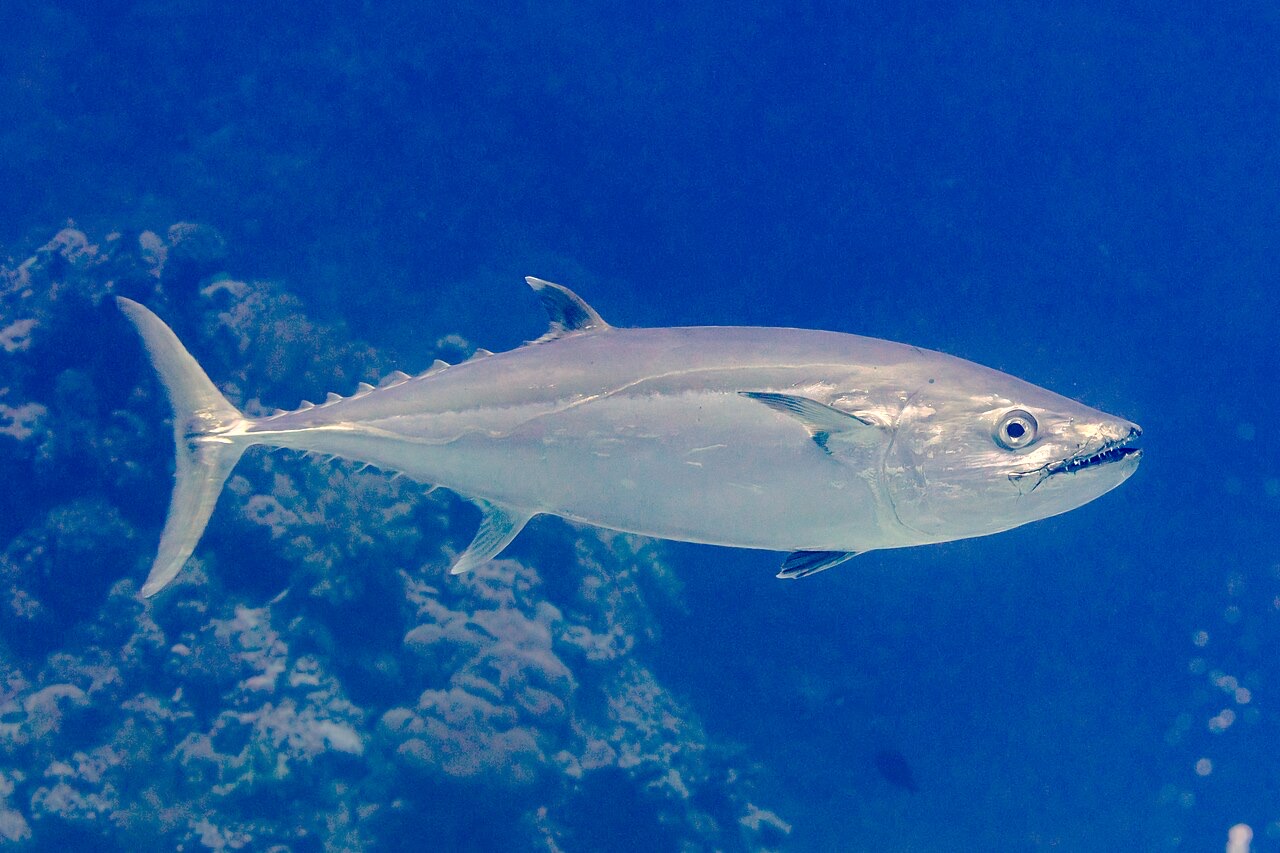
The dogtooth is the wolf of the drop-off: not a true bluefin-style tuna but a giant reef-bound mackerel with a mouthful of visible canines and a habit of appearing exactly where the wall meets deep water. Its presence is a mark of a healthy, current-washed reef; sites like Sipadan's corners, Osprey's North Horn, and Tubbataha's walls almost always hold one cruising the 30-meter line, chrome flanks flashing as it banks. Watching a big doggie hit a fusilier school from below, a detonation of scales in the blue, is one of wall diving's underrated spectacles. It grows slowly and holds territory, so heavily fished reefs go quiet of them fast.
Dónde y cuándo ver uno
"Residente" significa que la mayoría de las inmersiones en ese destino tienen encuentros con ellos; "estacional" significa que su presencia es fiable en los meses indicados; cualquier otra cosa es un extra, no algo con lo que contar.
| Destino | Fiabilidad | Meses | Notas |
|---|---|---|---|
| Sipadan & MabulMalaysia | Resident: seen on most dives | Todo el año | |
| North & South Malé AtollsMaldives | Resident: seen on most dives | Todo el año | |
| Tubbataha ReefsPhilippines | Resident: seen on most dives | Mar–Jun | |
| Coral Sea & Osprey ReefAustralia | Resident: seen on most dives | Todo el año |
El mejor mes, de un vistazo
Comprendiéndolos
Hábitat: Steep outer-reef walls, seamounts, and current-swept channels; a reef-associated tuna rather than an open-ocean roamer
Rango: Tropical Indo-Pacific from the Red Sea and East Africa through Indonesia and Micronesia to the central Pacific
Comportamiento: A solitary or small-group hunter that patrols the blue edge of walls with slow menace, then vanishes upward through a baitball in a silver blur. Divers meet it hanging in current at channel mouths or rising curiously toward bubble streams: a long, pale torpedo with a line of visible teeth even at rest.
Dieta: Schooling reef and mid-water fish (fusiliers, rainbow runners, small trevally) taken in high-speed vertical ambushes
Tamaño: normalmente alrededor de 1.0 m; documentado hasta 2.0 m (total length; trophy fish exceed 80 kg).
Cómo comportarse cerca de uno
Nothing special beyond the usual: hold your line in the current, no feeding, and let the fish make its inspection pass without pursuit.
Conservación
Least Concern but slow-growing and site-attached for a scombrid, and prized by spearfishers. Abundance now tracks protection closely.
Puntos conocidos por avistamientos
Los puntos destacados fueron registrados para esta especie por nuestros editores; los números son registros de ocurrencia de GBIF anotados en un radio de unos 5 km de un punto desde 1990.
Ver
Desde los canales oficiales

Wildlife of Monterey | New film in our auditorium

Live Aviary Cam | Monterey Bay Aquarium

Live Aviary Cam | Monterey Bay Aquarium
Los vídeos son enlaces insertados a los canales de sus propios creadores. No alojamos nada y acreditamos todo.