Puntos de buceo, temporadas y vida marina — investigados, cartografiados, planificados.
Menú
Destinos Puntos de buceo Vida marina Pecios Noticias
Planifica un viaje Planificador de viajes Cuándo bucear Calculadora de costes Comparativas Calendario de fauna marina Temperatura del agua Liveaboards Operadores y resorts Parques marinos Cámaras hiperbáricas Mapa mundial
Regiones Australia, Nueva Zelanda y Asia OrientalCaribe y Atlántico occidentalEuropa, Atlántico y MediterráneoOcéano Índico y África OrientalIslas del Pacífico y MicronesiaMar Rojo y Oriente MedioSudeste Asiático y el Triángulo del CoralLas Américas y el Pacífico Oriental Países
Aprender y herramientas Todas las guías Certificaciones Guías de equipo Vídeos Consulta los datos Agentes de IA API
Acerca de Quiénes somos Metodología Aviso legal Contacto
Tu vista
★ Guardado

Tus destinos, sitios y especies favoritos — guardados en este navegador.

API GATEWAY

Acceso JSON gratuito de solo lectura a los datos en caché del atlas.

Modo oscuro

🧭 Vista guiada
¿Nuevo en el buceo? ¿Profundidades, corrientes, niveles de certificación? Explicamos cada término mientras navegas, en un lenguaje claro. Los mismos datos, con la ayuda integrada.

⚡ Vista experta
Ya conoces la diferencia entre una pared y un drift dive. Solo los datos — claros, rápidos y concisos. Esta es la vista predeterminada.

Idioma de la interfaz
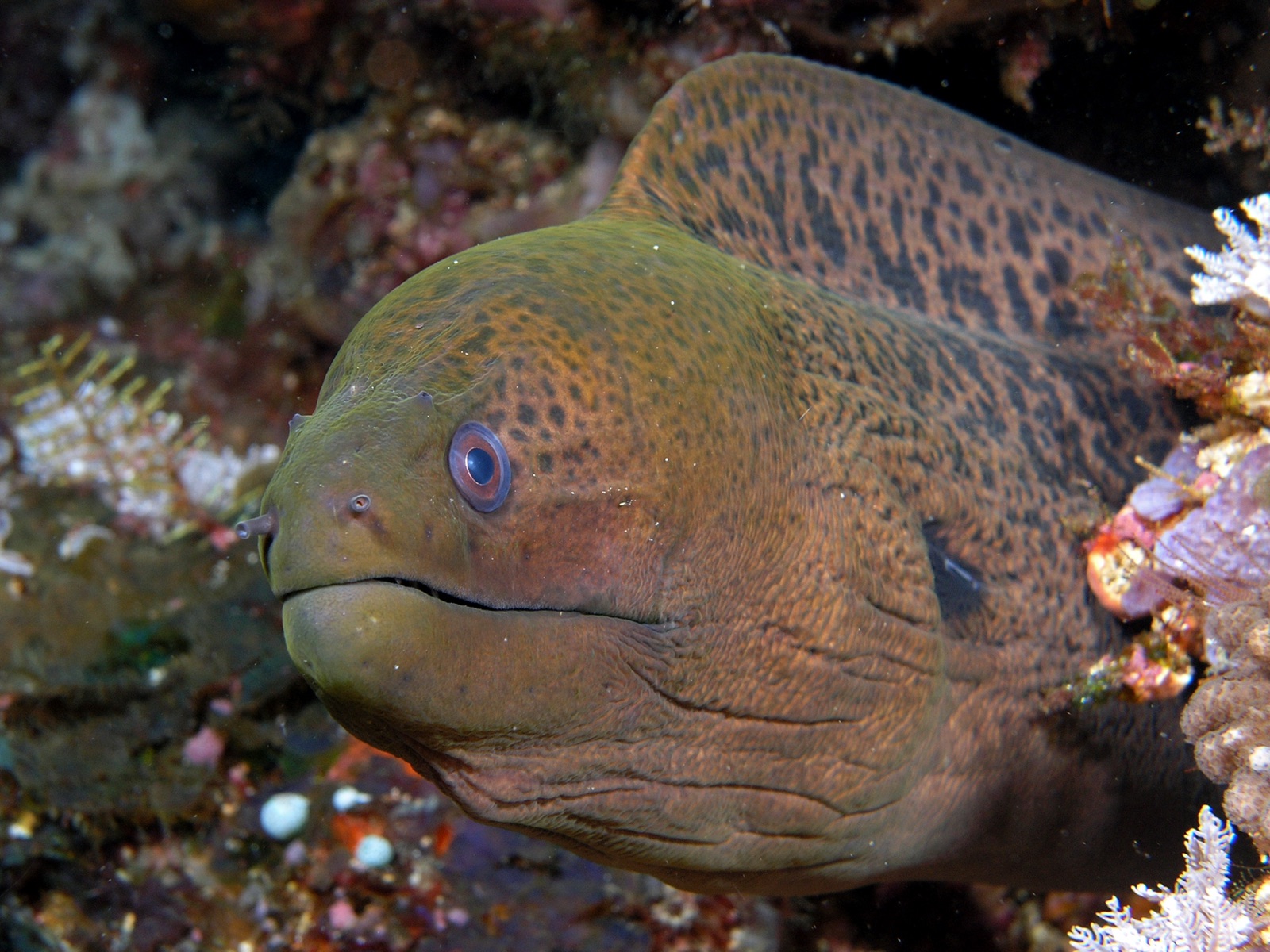
Giant Moray Eel — illustration
Ilustración generada por IA para The Scuba Atlas — ilustrativa, no una fotografía documental.

Reef Fish

Giant Moray Eel

Gymnothorax javanicus · Bony fish — family Muraenidae (moray eels); the largest moray by mass on Indo-Pacific reefs

IUCN: LC ~1.8 m total length; heavy-bodied, with large adults approaching 30 kg 1–50 m rango de profundidad Bien documentado

The open mouth reads as menace but is only breathing — morays pump water over their gills by gaping, and the giant moray spends daylight doing exactly that from a favorite crevice. It is the largest moray on Indo-Pacific reefs, thick as a diver's thigh, patterned in leopard spots that darken with age. Cleaner wrasses and shrimp work inside the open jaws at station after station; hang back and let the appointment finish. In the Red Sea, giant morays have been documented hunting cooperatively with roving coral groupers, the grouper signaling over a hidden fish and the eel flushing it out. Bites almost always trace back to feeding attempts or hands placed into holes. Look into a crevice before you brace on anything, and keep fingers off the reef.

Factor de respeto: Treat With RespectBites almost always trace to fish-feeding or hands placed into holes; the backward-curved teeth make wounds serious. Never feed and never reach blind into the reef.

Dónde y cuándo ver uno

"Residente" significa que la mayoría de las inmersiones en ese destino tienen encuentros con ellos; "estacional" significa que su presencia es fiable en los meses indicados; cualquier otra cosa es un extra, no algo con lo que contar.

DestinoFiabilidadMesesNotas
Sharm El Sheikh & Ras MohammedEgypt Resident — seen on most dives Todo el año
North & South Malé AtollsMaldives Resident — seen on most dives Todo el año
Sipadan & MabulMalaysia Resident — seen on most dives Todo el año
PalauPalau Resident — seen on most dives Todo el año
Cairns & the Ribbon ReefsAustralia Resident — seen on most dives Todo el año
Hurghada & El GounaEgypt Resident — seen on most dives Todo el año

El mejor mes, de un vistazo

MesDestinos fiables
January Sharm El Sheikh & Ras Mohammed · North & South Malé Atolls · Sipadan & Mabul · Palau · Cairns & the Ribbon Reefs · Hurghada & El Gouna
February Sharm El Sheikh & Ras Mohammed · North & South Malé Atolls · Sipadan & Mabul · Palau · Cairns & the Ribbon Reefs · Hurghada & El Gouna
March Sharm El Sheikh & Ras Mohammed · North & South Malé Atolls · Sipadan & Mabul · Palau · Cairns & the Ribbon Reefs · Hurghada & El Gouna
April Sharm El Sheikh & Ras Mohammed · North & South Malé Atolls · Sipadan & Mabul · Palau · Cairns & the Ribbon Reefs · Hurghada & El Gouna
May Sharm El Sheikh & Ras Mohammed · North & South Malé Atolls · Sipadan & Mabul · Palau · Cairns & the Ribbon Reefs · Hurghada & El Gouna
June Sharm El Sheikh & Ras Mohammed · North & South Malé Atolls · Sipadan & Mabul · Palau · Cairns & the Ribbon Reefs · Hurghada & El Gouna
July Sharm El Sheikh & Ras Mohammed · North & South Malé Atolls · Sipadan & Mabul · Palau · Cairns & the Ribbon Reefs · Hurghada & El Gouna
August Sharm El Sheikh & Ras Mohammed · North & South Malé Atolls · Sipadan & Mabul · Palau · Cairns & the Ribbon Reefs · Hurghada & El Gouna
September Sharm El Sheikh & Ras Mohammed · North & South Malé Atolls · Sipadan & Mabul · Palau · Cairns & the Ribbon Reefs · Hurghada & El Gouna
October Sharm El Sheikh & Ras Mohammed · North & South Malé Atolls · Sipadan & Mabul · Palau · Cairns & the Ribbon Reefs · Hurghada & El Gouna
November Sharm El Sheikh & Ras Mohammed · North & South Malé Atolls · Sipadan & Mabul · Palau · Cairns & the Ribbon Reefs · Hurghada & El Gouna
December Sharm El Sheikh & Ras Mohammed · North & South Malé Atolls · Sipadan & Mabul · Palau · Cairns & the Ribbon Reefs · Hurghada & El Gouna

Comprendiéndolos

Hábitat: Crevices, overhangs, and wreck recesses on lagoon and seaward reefs; a favored hole is reused for long periods.

Rango: Indo-Pacific and Red Sea, from East Africa to French Polynesia and southern Japan.

Comportamiento: Gapes rhythmically to breathe, holds still for cleaner wrasses and shrimp working inside the mouth, and in the Red Sea has been documented hunting cooperatively with roving coral groupers.

Dieta: Fishes and occasionally crustaceans, mostly hunted at night by scent along the reef.

Tamaño: normalmente alrededor de 1.8 m; documentado hasta 3.0 m (total length; heavy-bodied, with large adults approaching 30 kg).

Cómo comportarse cerca de uno

Give cleaner stations room to finish, approach the crevice from the front at an unhurried pace, and keep bare hands off the reef around any occupied hole.

Conservación

Widespread and not considered threatened; large individuals are a known ciguatera risk and are rarely fished.

Puntos conocidos por avistamientos

Ver

Desde los canales oficiales

Todos los vídeos →

Los vídeos son enlaces incrustados a los canales propios de sus creadores — no alojamos nada y acreditamos todo.

Fuentes: Wikipedia ↗IUCN Red List ↗ · Datos verificados frente a las fuentes anteriores; los campos sin respaldo se marcan como aún no verificados.

Australia, Nueva Zelanda y Asia Oriental

Cairns & the Ribbon ReefsNingaloo ReefCoral Sea & Osprey ReefOkinawa & the Kerama IslandsPoor Knights IslandsTownsville & the YongalaGreen IslandIzu Peninsula

Caribe y Atlántico occidental

BonaireCozumelRiviera Maya & the CenotesBelize Barrier ReefGrand CaymanIsla Mujeres & CancúnRoatánTiger Beach & Grand Bahama

Europa, Atlántico y Mediterráneo

Malta & GozoSilfra & IcelandThe AzoresCanary IslandsLarnaca & the ZenobiaScapa FlowArctic NorwayMadeira

Océano Índico y África Oriental

North & South Malé AtollsAri AtollBaa Atoll & Hanifaru BayAliwal Shoal & UmkomaasMafia IslandMauritiusSeychellesSodwana Bay

Islas del Pacífico y Micronesia

PalauChuuk (Truk) LagoonFakaravaKona, HawaiʻiRangiroaTaveuni & Rainbow ReefBeqa Lagoon & Pacific HarbourEspiritu Santo

Mar Rojo y Oriente Medio

Sharm El Sheikh & Ras MohammedBrothers, Daedalus & St John'sDahabHurghada & El GounaMarsa Alam & the Deep SouthAqabaDaymaniyat IslandsMusandam Peninsula

Sudeste Asiático y el Triángulo del Coral

Bali & Nusa PenidaKomodoRaja AmpatSipadan & MabulAnilaoCoronKoh TaoLembeh Strait

Las Américas y el Pacífico Oriental

Galápagos IslandsCocos IslandFlorida KeysSea of Cortez & Cabo PulmoSocorro & the RevillagigedosBritish ColumbiaCalifornia Channel IslandsCosta Rica Pacific Coast