Cold Water
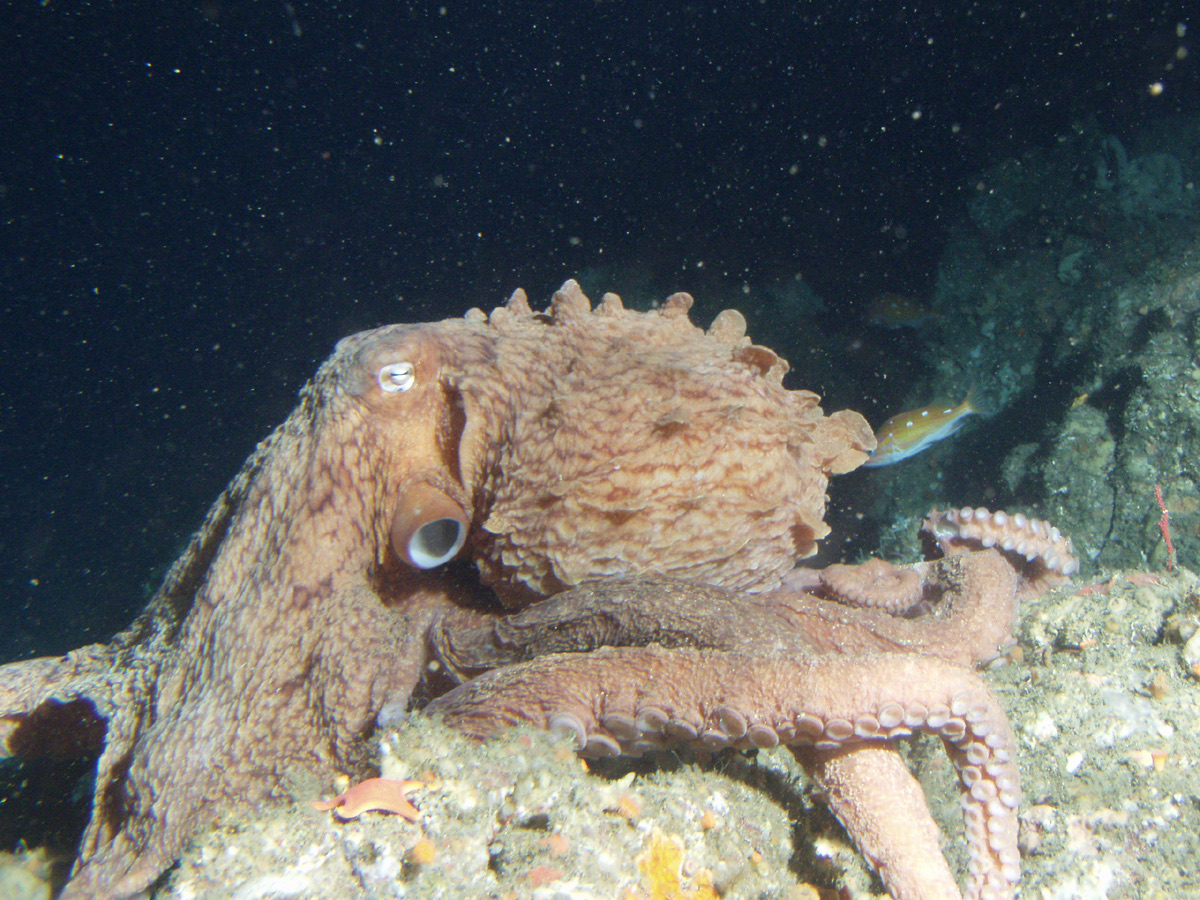
Giant Pacific Octopus
Enteroctopus dofleini · Cephalopod mollusk, family Enteroctopodidae; the largest octopus species known
The giant Pacific octopus is the largest octopus known, and meeting one at home in the emerald water of the Pacific Northwest ranks among cold-water diving's defining moments. An adult's arms can span a small room, yet the animal pours itself through den slots a fraction of that size; find the door by its midden, a fan of emptied crab and clam shells spilling down the spoil heap. Despite the scale it lives fast: a few years of relentless growth, one round of reproduction, and death, the female fasting for months while she guards and aerates tens of thousands of eggs. Encounters run from a watchful eye deep in a crevice to a bold animal walking the wall and tasting a diver's gear with sucker-lined arm tips. Let curiosity set the pace; never pull, pry, or crowd the den.
Where and when to see one
"Resident" means most dives at that destination encounter them; "seasonal" means reliably present in the listed months; anything else is a bonus, not a plan.
| Destination | Reliability | Months | Notes |
|---|---|---|---|
| British ColumbiaCanada | Resident: seen on most dives | Year-round |
Best month, at a glance
| Month | Reliable destinations |
|---|---|
| January | British Columbia |
| February | British Columbia |
| March | British Columbia |
| April | British Columbia |
| May | British Columbia |
| June | British Columbia |
| July | British Columbia |
| August | British Columbia |
| September | British Columbia |
| October | British Columbia |
| November | British Columbia |
| December | British Columbia |
Understanding them
Habitat: Rocky reefs, walls, and boulder fields with den crevices, from the intertidal to well past diver depths in cold, emerald water.
Range: North Pacific rim: from California through British Columbia and Alaska across to Japan and Korea.
Behavior: Lives only a few years, growing relentlessly to one round of reproduction; the female guards and aerates tens of thousands of eggs without feeding until she dies. Individuals range from reclusive to boldly curious.
Diet: Crabs, clams, shrimp, and fishes; the den is marked by a midden of emptied shells outside the entrance.
Size: typically around 4.0 m; documented up to 6.0 m (arm-span tip to tip; big animals commonly weigh 15–20 kg, exceptional ones far more).
How to behave around one
Let curiosity run at the octopus's pace, keep hands out of dens, and skip lights in a brooding female's crevice: she cannot leave and stress costs her eggs.
Conservation
Least Concern; taken in some regional fisheries and as bycatch, with local protections in parts of the range.
Charted sites known for them
Highlighted sites were charted for this species by our editors; numbers are GBIF occurrence records logged within about 5 km of a site since 1990.
Watch
From the official channels

Wildlife of Monterey | New film in our auditorium

Live Aviary Cam | Monterey Bay Aquarium

Live Aviary Cam | Monterey Bay Aquarium
Videos are embedded links to their creators' own channels. We host nothing and credit everything.