Cold Water
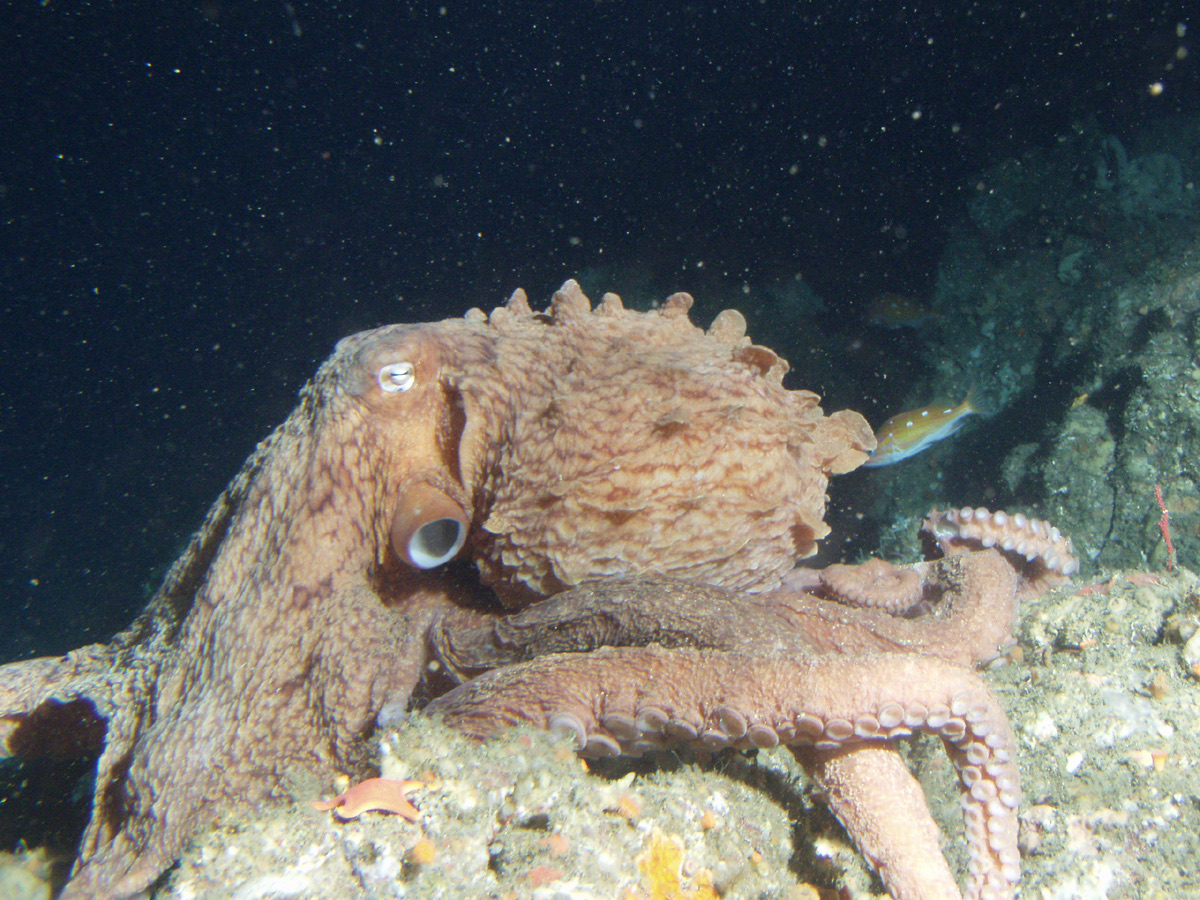
Giant Pacific Octopus
Enteroctopus dofleini · Cephalopod mollusk, family Enteroctopodidae; the largest octopus species known
The giant Pacific octopus is the largest octopus known, and meeting one at home in the emerald water of the Pacific Northwest ranks among cold-water diving's defining moments. An adult's arms can span a small room, yet the animal pours itself through den slots a fraction of that size; find the door by its midden, a fan of emptied crab and clam shells spilling down the spoil heap. Despite the scale it lives fast: a few years of relentless growth, one round of reproduction, and death, the female fasting for months while she guards and aerates tens of thousands of eggs. Encounters run from a watchful eye deep in a crevice to a bold animal walking the wall and tasting a diver's gear with sucker-lined arm tips. Let curiosity set the pace; never pull, pry, or crowd the den.
Dove e quando avvistarne uno
"Residente" significa che la maggior parte delle immersioni in quella destinazione li incontra; "stagionale" significa che sono presenti in modo affidabile nei mesi indicati; qualsiasi altra cosa è un bonus, non un piano.
| Destinazione | Affidabilità | Mesi | Note |
|---|---|---|---|
| British ColumbiaCanada | Resident: seen on most dives | Tutto l'anno |
Il mese migliore, a colpo d'occhio
| Mese | Destinazioni affidabili |
|---|---|
| January | British Columbia |
| February | British Columbia |
| March | British Columbia |
| April | British Columbia |
| May | British Columbia |
| June | British Columbia |
| July | British Columbia |
| August | British Columbia |
| September | British Columbia |
| October | British Columbia |
| November | British Columbia |
| December | British Columbia |
Capirle
Habitat: Rocky reefs, walls, and boulder fields with den crevices, from the intertidal to well past diver depths in cold, emerald water.
Distribuzione: North Pacific rim: from California through British Columbia and Alaska across to Japan and Korea.
Comportamento: Lives only a few years, growing relentlessly to one round of reproduction; the female guards and aerates tens of thousands of eggs without feeding until she dies. Individuals range from reclusive to boldly curious.
Dieta: Crabs, clams, shrimp, and fishes; the den is marked by a midden of emptied shells outside the entrance.
Dimensioni: tipicamente intorno a 4.0 m; documentato fino a 6.0 m (arm-span tip to tip; big animals commonly weigh 15–20 kg, exceptional ones far more).
Come comportarsi in sua presenza
Let curiosity run at the octopus's pace, keep hands out of dens, and skip lights in a brooding female's crevice: she cannot leave and stress costs her eggs.
Conservazione
Least Concern; taken in some regional fisheries and as bycatch, with local protections in parts of the range.
Siti mappati noti per avvistamenti
I siti evidenziati sono stati schedati per questa specie dai nostri redattori; i numeri sono record di occorrenza GBIF registrati entro circa 5 km dal sito a partire dal 1990.
Guarda
Dai canali ufficiali

Wildlife of Monterey | New film in our auditorium

Live Aviary Cam | Monterey Bay Aquarium

Live Aviary Cam | Monterey Bay Aquarium
I video sono link incorporati ai canali dei rispettivi autori. Non ospitiamo nulla e accreditiamo tutto.