Sharks
Lemon Shark
Negaprion brevirostris · Cartilaginous fish, family Carcharhinidae
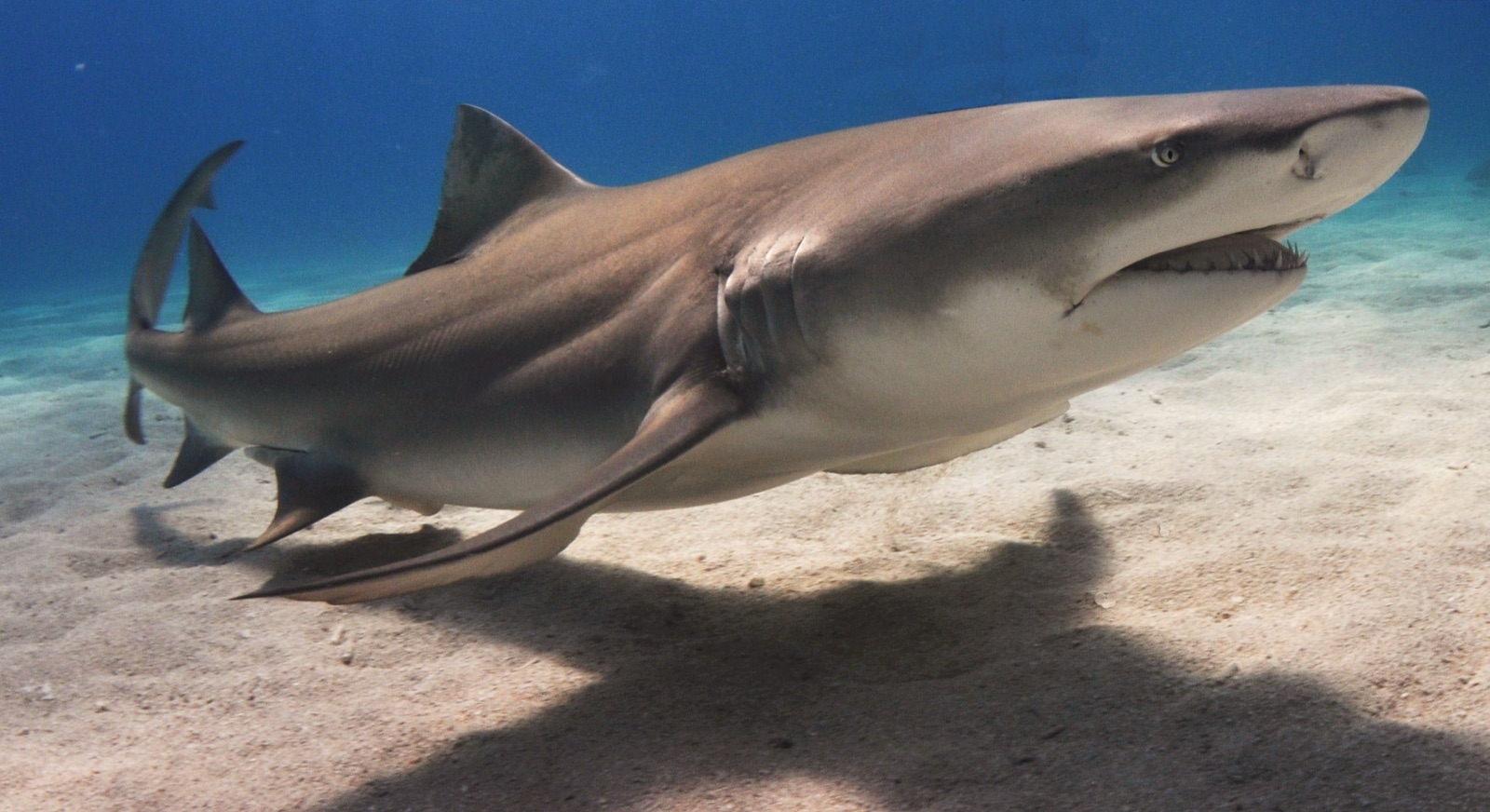
Lemon sharks bring character to the sand flats of the Bahamas: big, blunt-faced animals in olive-gold livery, trailing remoras like streamers, mouths fixed in an underbite that ruins their menace at close range. They are among the best-studied sharks on Earth thanks to decades of work in Bimini's mangroves, which revealed social networks, nursery fidelity, and females returning to their own birth lagoons to pup. At Tiger Beach they play second lead to the tigers, arriving first, staying latest, and stacking on the bottom beneath the boat like parked aircraft.
Where and when to see one
"Resident" means most dives at that destination encounter them; "seasonal" means reliably present in the listed months; anything else is a bonus, not a plan.
| Destination | Reliability | Months | Notes |
|---|---|---|---|
| Tiger Beach & Grand BahamaThe Bahamas | Resident: seen on most dives | Nov–Apr | |
| Florida KeysUnited States | Occasional | Year-round | |
| Nassau & New ProvidenceThe Bahamas | Occasional | Year-round |
Best month, at a glance
| Month | Reliable destinations |
|---|---|
| January | Tiger Beach & Grand Bahama · Florida Keys · Nassau & New Providence |
| February | Tiger Beach & Grand Bahama · Florida Keys · Nassau & New Providence |
| March | Tiger Beach & Grand Bahama · Florida Keys · Nassau & New Providence |
| April | Tiger Beach & Grand Bahama · Florida Keys · Nassau & New Providence |
| May | Florida Keys · Nassau & New Providence |
| June | Florida Keys · Nassau & New Providence |
| July | Florida Keys · Nassau & New Providence |
| August | Florida Keys · Nassau & New Providence |
| September | Florida Keys · Nassau & New Providence |
| October | Florida Keys · Nassau & New Providence |
| November | Tiger Beach & Grand Bahama · Florida Keys · Nassau & New Providence |
| December | Tiger Beach & Grand Bahama · Florida Keys · Nassau & New Providence |
Understanding them
Habitat: Shallow sand flats, mangrove nurseries, and reef edges; adults commute between lagoons and deeper ledges
Range: Western Atlantic from the Carolinas and Bahamas to Brazil, with a separate population off West Africa; the closely related sicklefin lemon shark fills the same niche in the Indo-Pacific
Behavior: A yellow-bronze, twin-dorsaled shark that works low over the bottom, often escorted by remoras. Famously social for a shark: juveniles form groups in mangrove nurseries with measurable personalities, and adults gather seasonally at fixed winter sites. At Tiger Beach they cruise under the boat and rest on sand in numbers.
Diet: Bony fish and rays taken over sand, plus crustaceans; hunts most actively at dawn and dusk
Size: typically around 2.5 m; documented up to 3.4 m (total length).
How to behave around one
Standard baited-dive discipline: stay settled in the sand line, hands in, let sharks pass overhead without reaching up, and avoid crowding animals resting on the bottom.
Conservation
Vulnerable: coastal development is squeezing the mangrove nurseries the species depends on, and it is fished through much of its Atlantic range outside sanctuary nations.
Charted sites known for them
Highlighted sites were charted for this species by our editors; numbers are GBIF occurrence records logged within about 5 km of a site since 1990.
Watch
From the official channels

Wildlife of Monterey | New film in our auditorium

Live Aviary Cam | Monterey Bay Aquarium

Live Aviary Cam | Monterey Bay Aquarium
Videos are embedded links to their creators' own channels. We host nothing and credit everything.