Reef Fish
Lionfish
Pterois volitans · Bony fish, family Scorpaenidae (scorpionfishes); the red lionfish, with the near-identical Pterois miles sharing the story
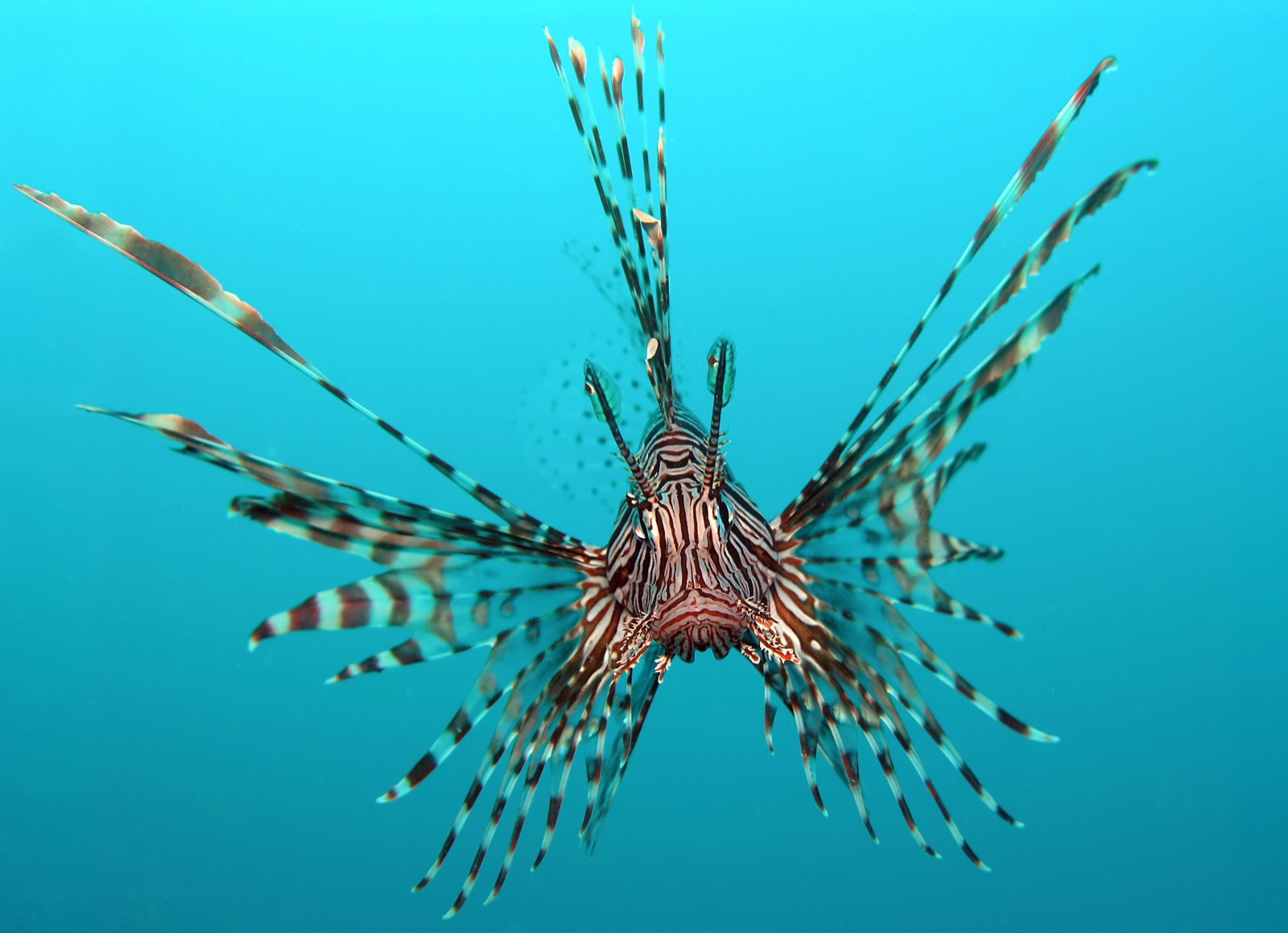
A lionfish hunting at dusk is theater: pectoral fins flared into banded fans, herding small fish into corners before an engulfing strike measured in milliseconds. Across its native Indo-Pacific and Red Sea range it is a modest, mostly solitary predator kept in balance by its ecosystem. In the western Atlantic it became something else: introduced off Florida in the 1980s, lionfish spread through the Caribbean, the Gulf of Mexico, and down to Brazil with no effective predators, eating juvenile reef fish at damaging rates. Many destinations now run sanctioned culls, and lionfish turn out to be excellent eating once the venomous spines are removed. Divers see them hovering under ledges and wrecks by day, often upside down against the ceiling, trusting their spines completely.
Onde e quando ver um
"Residente" significa que a maioria dos mergulhos naquele destino os encontra; "sazonal" significa presença confiável nos meses listados; qualquer outra coisa é um bônus, não um plano.
| Destino | Fiabilidade | Meses | Notas |
|---|---|---|---|
| Raja AmpatIndonesia | Resident: seen on most dives | Todo o ano | |
| Sharm El Sheikh & Ras MohammedEgypt | Resident: seen on most dives | Todo o ano | |
| CozumelMexico | Resident: seen on most dives | Todo o ano | |
| BonaireBonaire | Resident: seen on most dives | Todo o ano | |
| Similan Islands & Richelieu RockThailand | Resident: seen on most dives | Todo o ano | |
| RoatánHonduras | Resident: seen on most dives | Todo o ano | |
| Florida KeysUnited States | Resident: seen on most dives | Todo o ano |
Melhor mês, em resumo
Entendendo-os
Habitat: Reef ledges, wrecks, pilings, and lagoon patch reefs; in the invaded Atlantic it also thrives far deeper than most divers go.
Distribuição: Native to the Indo-Pacific and (as Pterois miles) the Red Sea; invasive across the western Atlantic, Caribbean, and Gulf of Mexico since the 1980s–2000s, with Mediterranean spread underway.
Comportamento: Slow, confident, and mostly crepuscular; hovers under overhangs by day, often inverted, relying entirely on venomous spines for defense.
Dieta: Small fishes and crustaceans herded against the reef and engulfed whole.
Tamanho: normalmente cerca de 0.3 m; documentado até 0.47 m (total length; invasive Atlantic fish often grow larger than those in the native range).
Como se comportar perto de um
In the native range, observe like any scorpionfish. In the invaded Atlantic, leave removal to trained, locally sanctioned hunters and report sightings where destinations ask for them.
Conservação
Secure as a species; the conservation problem is the Atlantic invasion, managed by culling because eradication is no longer considered possible.
Pontos mapeados conhecidos por eles
Os locais destacados foram cartografados para esta espécie pelos nossos editores; os números são registos de ocorrência do GBIF num raio de cerca de 5 km do local desde 1990.
Assista
Dos canais oficiais

Wildlife of Monterey | New film in our auditorium

Live Aviary Cam | Monterey Bay Aquarium

Live Aviary Cam | Monterey Bay Aquarium
Os vídeos são ligações incorporadas para os canais dos próprios criadores. Não alojamos nada e creditamos tudo.