Cephalopods
Mimic Octopus
Thaumoctopus mimicus · Cephalopod mollusk, family Octopodidae; described in 2005 after its late-1990s discovery on Indonesian muck
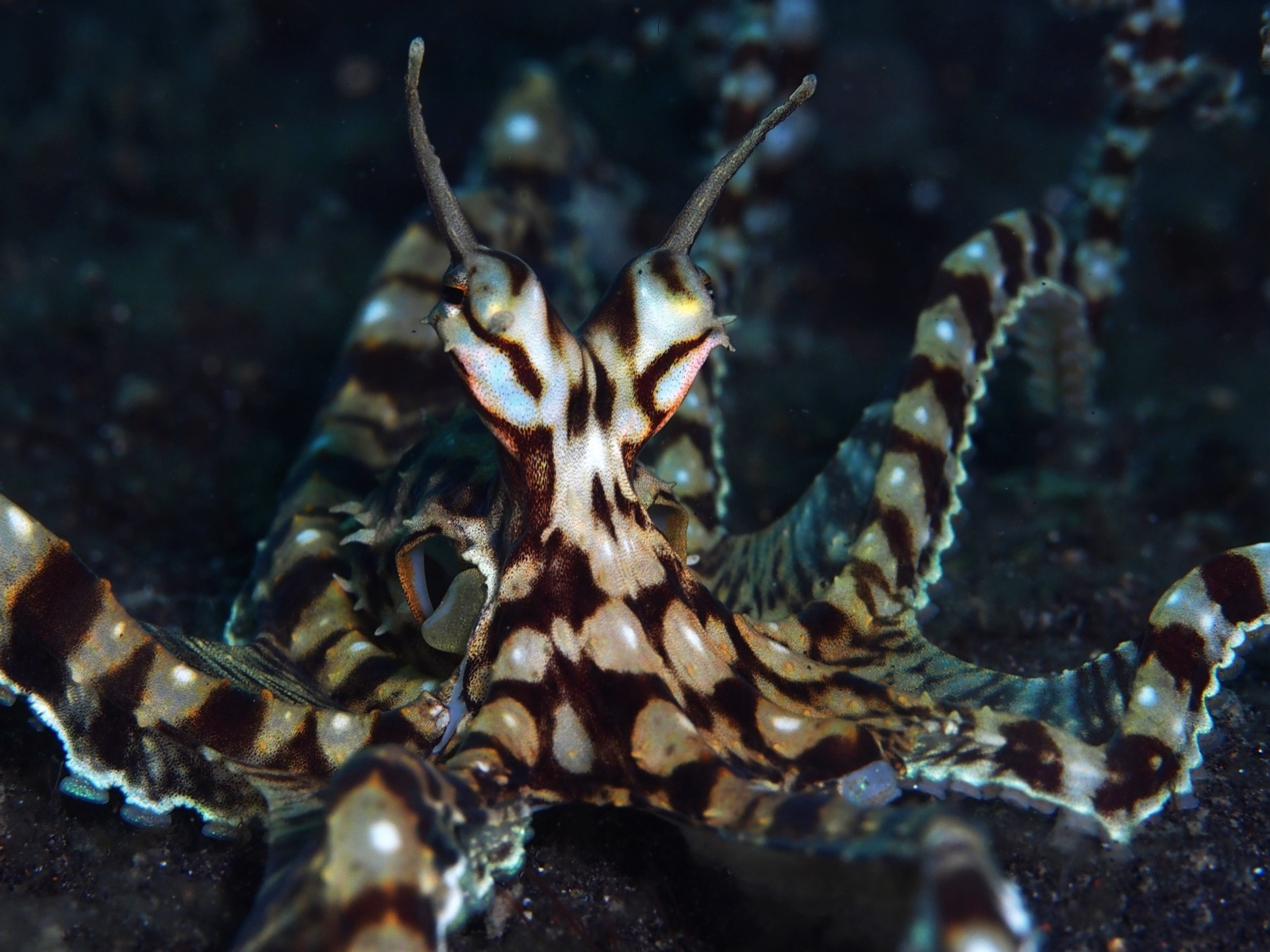
Plenty of octopuses match backgrounds; the mimic octopus impersonates other animals. First noticed on Sulawesi muck in the late 1990s, it forages exposed on bare silt in daylight, and its survival act is a repertoire: flattening into a gliding flounder, trailing banded arms like lionfish spines, or hiding all but two arms in a burrow and waving a convincing banded sea krait. Which impression appears seems to track which predator threatens. Longer lists get claimed (jellyfish, anemones, mantis shrimp) and deserve some skepticism; the core three are well documented. The animal itself is slight, brown-and-white banded, arms like linguine, probing worm holes across featureless slopes. Whole dives at black-sand sites are built around finding one. Stay off the silt, follow at arm's length, and let the show be voluntary.
Dónde y cuándo ver uno
"Residente" significa que la mayoría de las inmersiones en ese destino tienen encuentros con ellos; "estacional" significa que su presencia es fiable en los meses indicados; cualquier otra cosa es un extra, no algo con lo que contar.
| Destino | Fiabilidad | Meses | Notas |
|---|---|---|---|
| Bali & Nusa PenidaIndonesia | Occasional | Todo el año | |
| Lembeh StraitIndonesia | Occasional | Todo el año | |
| AnilaoPhilippines | Occasional | Todo el año | |
| Dumaguete, Dauin & Apo IslandPhilippines | Occasional | Todo el año | |
| Banda Sea & AmbonIndonesia | Occasional | Todo el año |
El mejor mes, de un vistazo
Comprendiéndolos
Hábitat: Bare silt and black-sand flats near river mouths and muck bays, foraging around worm holes and burrows it can dive into.
Rango: Indo-Malayan region: Indonesia and the Philippines through to northern Australia and New Guinea.
Comportamiento: Forages exposed in daylight on featureless bottom, switching between impersonations (a gliding flounder, trailing lionfish-like arms, or a banded sea krait waved from a burrow), apparently matched to the threat at hand.
Dieta: Small crustaceans and fishes probed out of burrows with linguine-thin arms.
Tamaño: normalmente alrededor de 0.4 m; documentado hasta 0.6 m (arm-span; the arms are strikingly slender).
Cómo comportarse cerca de uno
Follow at arm's length off the bottom, never dig, corral, or bait, and let every impersonation be the animal's own idea.
Conservación
Not reliably assessed; its narrow, developable coastal habitat and value to dive tourism argue for keeping muck bays healthy.
Puntos conocidos por avistamientos
Los puntos destacados fueron registrados para esta especie por nuestros editores; los números son registros de ocurrencia de GBIF anotados en un radio de unos 5 km de un punto desde 1990.
Ver
Desde los canales oficiales

Wildlife of Monterey | New film in our auditorium

Live Aviary Cam | Monterey Bay Aquarium

Live Aviary Cam | Monterey Bay Aquarium
Los vídeos son enlaces insertados a los canales de sus propios creadores. No alojamos nada y acreditamos todo.