Cephalopods
Mimic Octopus
Thaumoctopus mimicus · Cephalopod mollusk, family Octopodidae; described in 2005 after its late-1990s discovery on Indonesian muck
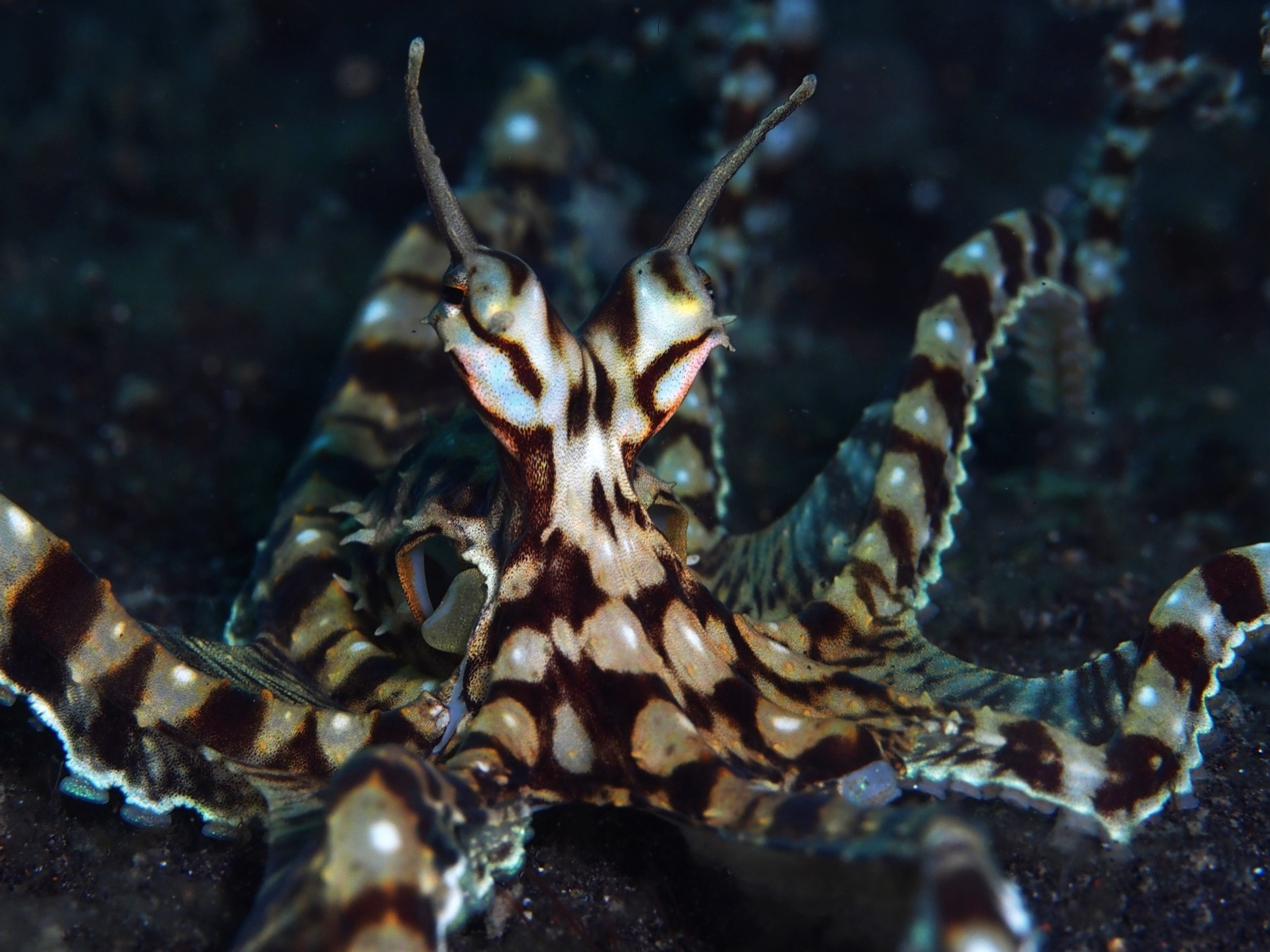
Plenty of octopuses match backgrounds; the mimic octopus impersonates other animals. First noticed on Sulawesi muck in the late 1990s, it forages exposed on bare silt in daylight, and its survival act is a repertoire: flattening into a gliding flounder, trailing banded arms like lionfish spines, or hiding all but two arms in a burrow and waving a convincing banded sea krait. Which impression appears seems to track which predator threatens. Longer lists get claimed (jellyfish, anemones, mantis shrimp) and deserve some skepticism; the core three are well documented. The animal itself is slight, brown-and-white banded, arms like linguine, probing worm holes across featureless slopes. Whole dives at black-sand sites are built around finding one. Stay off the silt, follow at arm's length, and let the show be voluntary.
Nơi và thời điểm có thể gặp
"Thường trú" nghĩa là hầu hết các lần lặn tại điểm đó đều gặp được chúng; "theo mùa" nghĩa là chúng xuất hiện đáng tin cậy trong các tháng được liệt kê; bất kỳ điều gì ngoài ra là điểm thưởng, không phải kế hoạch.
| Điểm đến | Độ tin cậy | Các tháng | Ghi chú |
|---|---|---|---|
| Bali & Nusa PenidaIndonesia | Occasional | Quanh năm | |
| Lembeh StraitIndonesia | Occasional | Quanh năm | |
| AnilaoPhilippines | Occasional | Quanh năm | |
| Dumaguete, Dauin & Apo IslandPhilippines | Occasional | Quanh năm | |
| Banda Sea & AmbonIndonesia | Occasional | Quanh năm |
Tháng tốt nhất, nhìn tổng quan
Tìm hiểu về chúng
Môi trường sống: Bare silt and black-sand flats near river mouths and muck bays, foraging around worm holes and burrows it can dive into.
Phạm vi phân bố: Indo-Malayan region: Indonesia and the Philippines through to northern Australia and New Guinea.
Hành vi: Forages exposed in daylight on featureless bottom, switching between impersonations (a gliding flounder, trailing lionfish-like arms, or a banded sea krait waved from a burrow), apparently matched to the threat at hand.
Chế độ ăn: Small crustaceans and fishes probed out of burrows with linguine-thin arms.
Kích thước: thường vào khoảng 0.4 m; ghi nhận đến độ sâu 0.6 m (arm-span; the arms are strikingly slender).
Cách ứng xử khi ở gần loài này
Follow at arm's length off the bottom, never dig, corral, or bait, and let every impersonation be the animal's own idea.
Bảo tồn
Not reliably assessed; its narrow, developable coastal habitat and value to dive tourism argue for keeping muck bays healthy.
Các điểm lặn đã ghi nhận có loài này
Các điểm được làm nổi bật là những điểm đã được ban biên tập ghi chép cho loài này; các con số là bản ghi xuất hiện từ GBIF được ghi nhận trong phạm vi khoảng 5 km của điểm lặn kể từ năm 1990.
Xem
Từ kênh chính thức

Wildlife of Monterey | New film in our auditorium

Live Aviary Cam | Monterey Bay Aquarium

Live Aviary Cam | Monterey Bay Aquarium
Video là các liên kết nhúng dẫn đến kênh của chính tác giả. Chúng tôi không lưu trữ gì và ghi công đầy đủ.