Turtles
Olive Ridley Turtle
Lepidochelys olivacea · Marine reptile, family Cheloniidae
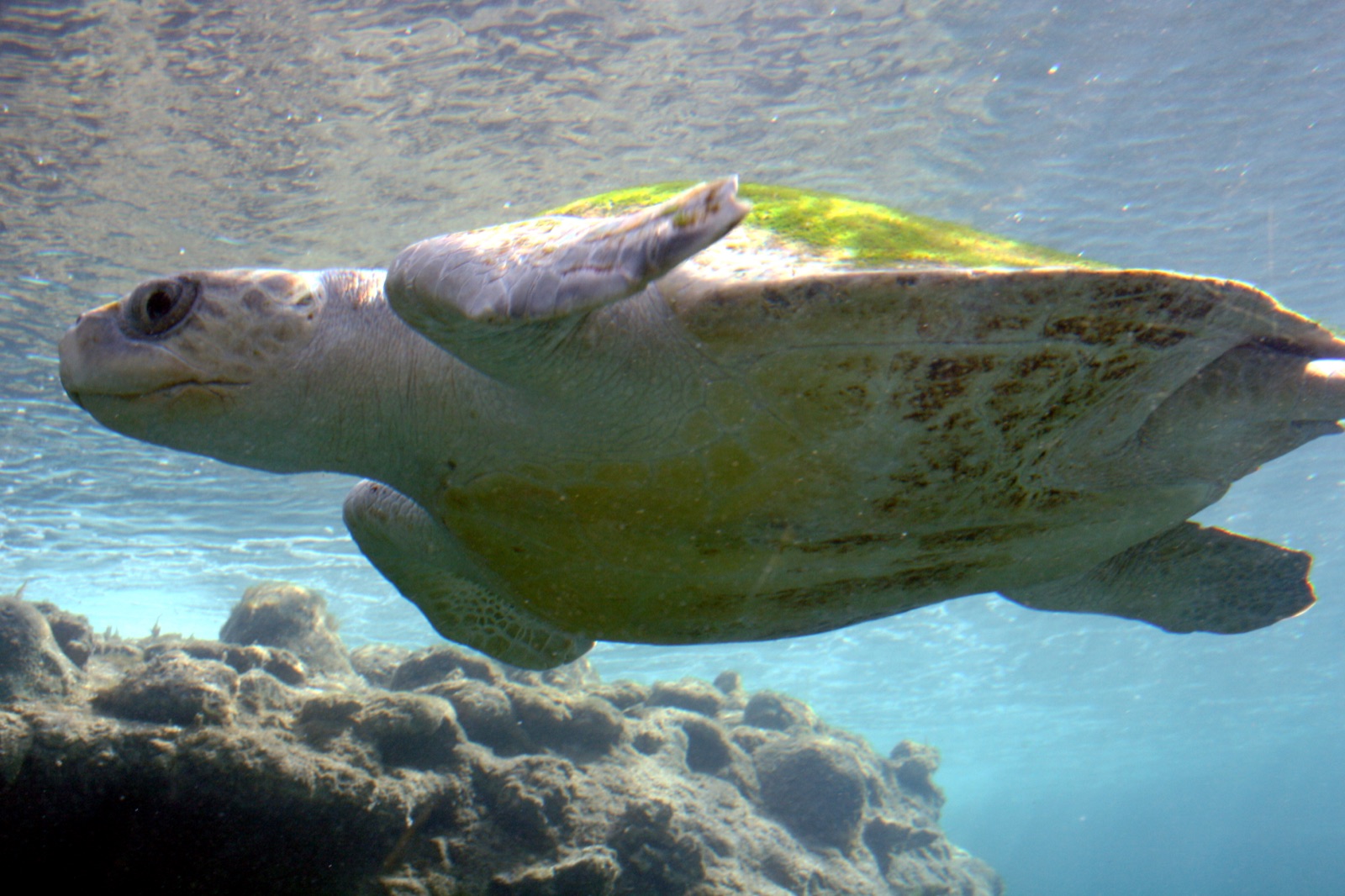
The olive ridley is the ocean's commonest sea turtle and one of its least seen by divers: a modest, round-shelled animal in gray-green that spends its life offshore rather than posing on reefs. Its fame rests on one of nature's numeric marvels: the arribadas of Ostional and Nancite in Costa Rica and Odisha in India, when a season's females arrive in coordinated waves and beaches vanish under nesting turtles. Underwater encounters are surface crossings: a small head raised mid-ocean, a pair drifting in the blue off Baja or the Revillagigedos. Sheer abundance hides real vulnerability; a species that concentrates itself so densely can be hurt at scale just as fast.
Where and when to see one
"Resident" means most dives at that destination encounter them; "seasonal" means reliably present in the listed months; anything else is a bonus, not a plan.
| Destination | Reliability | Months | Notes |
|---|---|---|---|
| Costa Rica Pacific CoastCosta Rica | Seasonal: reliable in season | Aug–Nov | |
| Socorro & the RevillagigedosMexico | Occasional | Year-round | |
| Sea of Cortez & Cabo PulmoMexico | Occasional | Year-round |
Best month, at a glance
Understanding them
Habitat: Open tropical ocean and soft-bottom coastal shelves; not a reef turtle: most of its life passes offshore
Range: Pantropical, with enormous eastern Pacific and Indian Ocean populations; mass-nesting beaches in Costa Rica, Mexico, and India
Behavior: Famous for the arribada: synchronized mass nesting in which tens of thousands of females storm a single beach over a few nights, a strategy that swamps predators. At sea it drifts and forages alone, often logging motionless at the surface far from land.
Diet: Crustaceans, jellyfish, tunicates, and small invertebrates taken in open water and on soft bottoms
Size: typically around 0.65 m; documented up to 0.75 m (carapace length; the smallest sea turtle alongside its Kemp's ridley sister species).
How to behave around one
Arribada beaches are strictly managed: enter only with licensed guides under national park rules. At sea, give floating turtles space; they may be resting, mating, or accompanied by boats' propellers too often already.
Conservation
Vulnerable; regulated egg harvest at Ostional coexists with strict protection elsewhere, while trawl bycatch (answered by turtle excluder devices) and coastal development press the big rookeries.
Charted sites known for them
Highlighted sites were charted for this species by our editors; numbers are GBIF occurrence records logged within about 5 km of a site since 1990.
Watch
From the official channels

Wildlife of Monterey | New film in our auditorium

Live Aviary Cam | Monterey Bay Aquarium

Live Aviary Cam | Monterey Bay Aquarium
Videos are embedded links to their creators' own channels. We host nothing and credit everything.