Reef Fish
Oriental Sweetlips
Plectorhinchus vittatus · Bony fish, family Haemulidae (grunts and sweetlips)
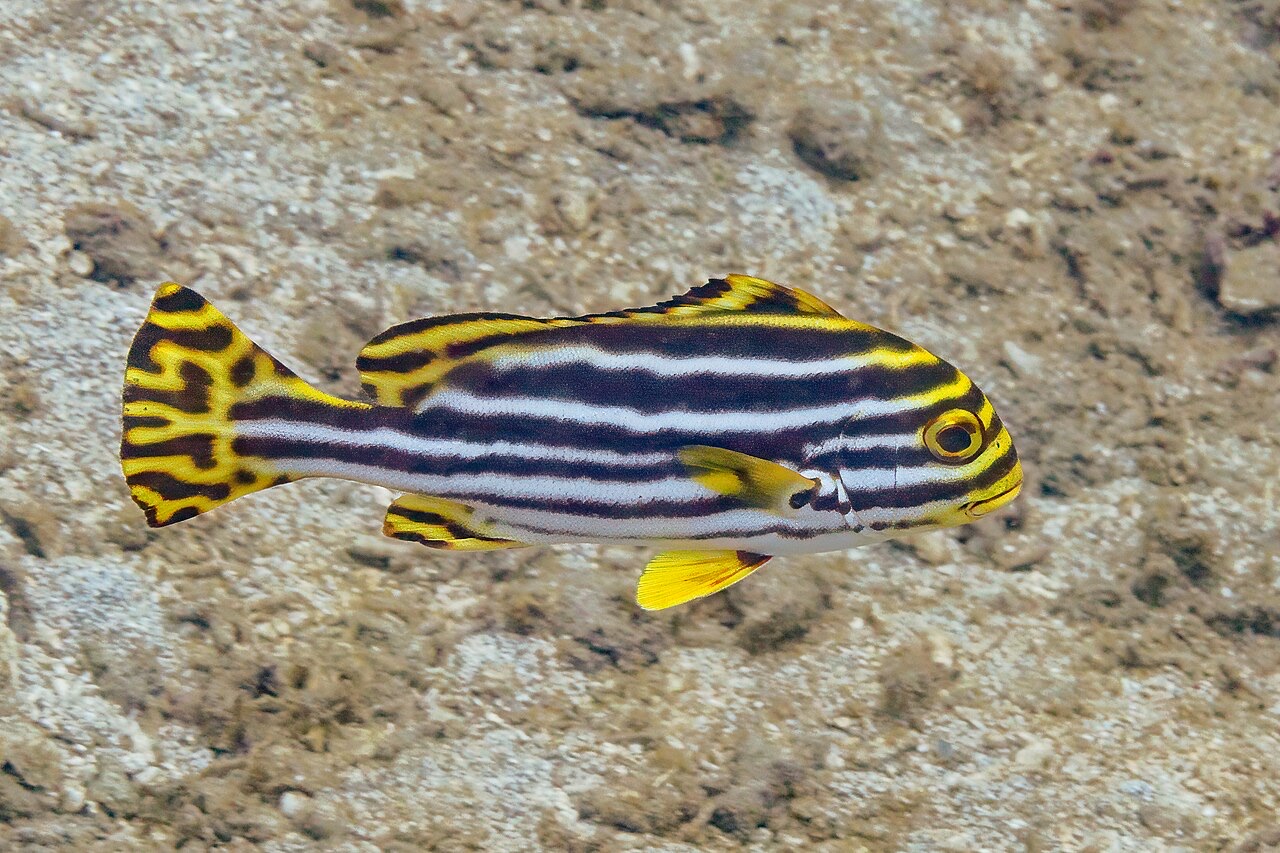
Adult oriental sweetlips have perfected standing still in public. Schools of a few dozen hover in tight formation under table corals and overhangs through the day, thick lips and painted stripes all facing the current, barely finning: an arrangement photographers structure whole dives around, especially in the Maldives. They disperse at night to root crustaceans and worms out of the sand. The juveniles seem like a different animal entirely: blotched brown-and-white clowns that swim in exaggerated, flopping loops, a performance widely interpreted as mimicry of toxic flatworms, advertising unpalatability before the fish has size on its side. Day schools tolerate a slow, level approach to within a body length; rush them and the formation dissolves over the reef edge. The family name is earned: disturbed fish grunt audibly by grinding pharyngeal teeth.
Dónde y cuándo ver uno
"Residente" significa que la mayoría de las inmersiones en ese destino tienen encuentros con ellos; "estacional" significa que su presencia es fiable en los meses indicados; cualquier otra cosa es un extra, no algo con lo que contar.
| Destino | Fiabilidad | Meses | Notas |
|---|---|---|---|
| North & South Malé AtollsMaldives | Resident: seen on most dives | Todo el año | |
| Sipadan & MabulMalaysia | Resident: seen on most dives | Todo el año | |
| Ari AtollMaldives | Resident: seen on most dives | Todo el año | |
| Similan Islands & Richelieu RockThailand | Resident: seen on most dives | Todo el año | |
| Zanzibar & MnembaTanzania | Resident: seen on most dives | Todo el año |
El mejor mes, de un vistazo
Comprendiéndolos
Hábitat: Clear lagoon and seaward reefs, schooling by day under table corals, overhangs, and bommie shadows.
Rango: Indian Ocean and western Pacific, from East Africa and the Maldives to Indonesia, Micronesia, and Samoa.
Comportamiento: Day-resting schools hold tight formation facing the current, dispersing after dark to feed; boldly patterned juveniles swim in exaggerated flopping loops widely read as flatworm mimicry.
Dieta: Crustaceans, worms, and other invertebrates rooted from sand and rubble at night.
Tamaño: normalmente alrededor de 0.4 m; documentado hasta 0.6 m (total length).
Cómo comportarse cerca de uno
Approach a resting school slow and level from down-current; rushing the formation scatters it and costs every diver behind you the sight.
Conservación
Taken in local fisheries across parts of the range; day-schooling behavior makes populations easy to deplete where spearfishing is common.
Puntos conocidos por avistamientos
Los puntos destacados fueron registrados para esta especie por nuestros editores; los números son registros de ocurrencia de GBIF anotados en un radio de unos 5 km de un punto desde 1990.
Ver
Desde los canales oficiales

Wildlife of Monterey | New film in our auditorium

Live Aviary Cam | Monterey Bay Aquarium

Live Aviary Cam | Monterey Bay Aquarium
Los vídeos son enlaces insertados a los canales de sus propios creadores. No alojamos nada y acreditamos todo.