Reef Fish
Pinnate Batfish
Platax pinnatus · Bony fish, family Ephippidae (batfishes and spadefishes)
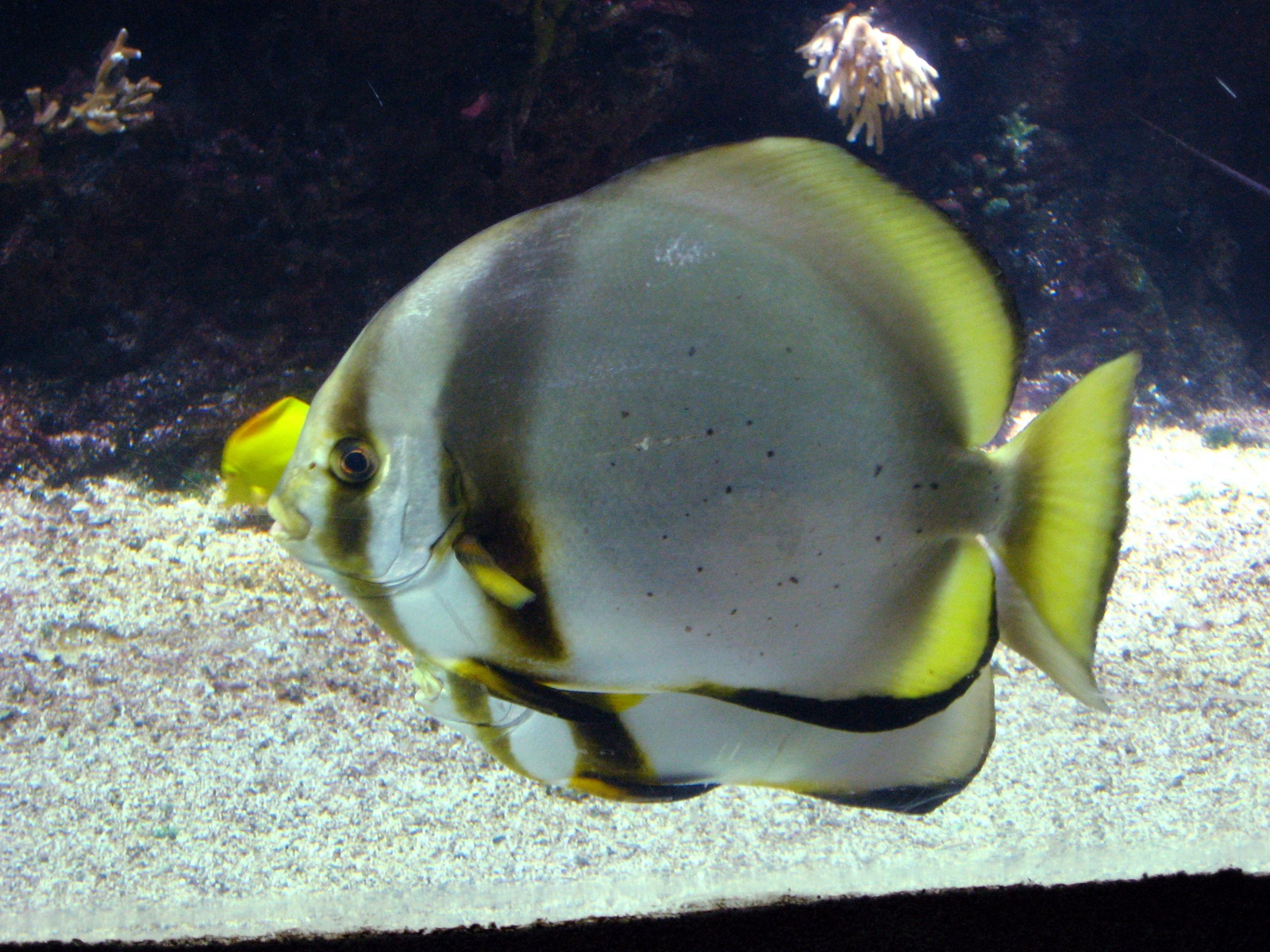
The pinnate batfish spends its celebrity early. Juveniles are jet black rimmed in vivid orange, ribbon-thin and taller than long, undulating through the shadows of ledges and silty margins in what is widely interpreted as mimicry of a toxic flatworm; they rank among the most photographed fish in the muck world. Adults trade the costume for silver: a tall, composed schooling batfish of lagoon edges and drop-offs, curious enough to escort divers along a wall. The two stages differ so completely that early naturalists could have described them as separate fish. Finding a juvenile is guide work: they hold tight to dark cover in shallow, protected water and seldom stay long at one site. Bring patience, favor ambient light, and keep the animal between you and its bolt-hole, never cut off from it.
Where and when to see one
"Resident" means most dives at that destination encounter them; "seasonal" means reliably present in the listed months; anything else is a bonus, not a plan.
| Destination | Reliability | Months | Notes |
|---|---|---|---|
| Raja AmpatIndonesia | Resident: seen on most dives | Year-round | |
| Bali & Nusa PenidaIndonesia | Occasional | Year-round | |
| Lembeh StraitIndonesia | Occasional | Year-round | |
| Banda Sea & AmbonIndonesia | Occasional | Year-round | |
| Dumaguete, Dauin & Apo IslandPhilippines | Occasional | Year-round |
Best month, at a glance
Understanding them
Habitat: Juveniles hug dark cover in sheltered, often silty shallows: ledges, mangrove edges, wreck shadows; adults school along lagoon and outer-reef drop-offs.
Range: Western Pacific from the Ryukyu Islands through the Philippines and Indonesia to northern Australia and Melanesia.
Behavior: Juveniles undulate ribbon-like through shadows in apparent flatworm mimicry; adults are calm, tall-bodied schoolers that sometimes escort divers along a wall for minutes.
Diet: Algae, small invertebrates, and jellies; adults graze as well as pick.
Size: typically around 0.3 m; documented up to 0.45 m (total length; juveniles are taller than long, adults disc-shaped).
How to behave around one
Shoot juveniles with patience and minimal light (the orange rim overexposes easily), and let the fish keep its shadowed cover rather than herding it into the open.
Conservation
Not a major fishery species; juveniles are collected for aquaria despite poor survival, and mangrove loss removes nursery habitat.
Charted sites known for them
Highlighted sites were charted for this species by our editors; numbers are GBIF occurrence records logged within about 5 km of a site since 1990.
Watch
From the official channels

Wildlife of Monterey | New film in our auditorium

Live Aviary Cam | Monterey Bay Aquarium

Live Aviary Cam | Monterey Bay Aquarium
Videos are embedded links to their creators' own channels. We host nothing and credit everything.