Reef Fish
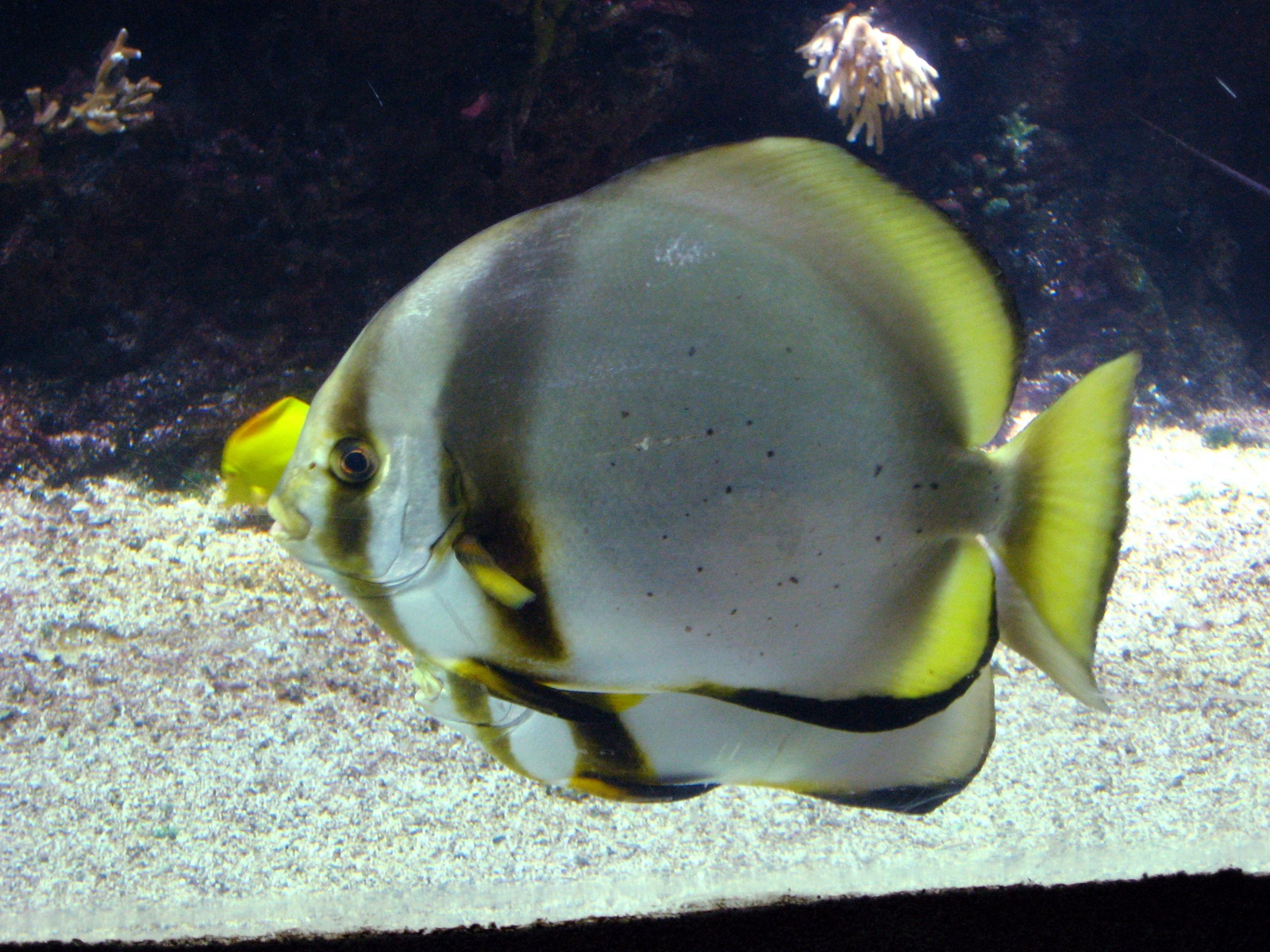
Pinnate Batfish
Platax pinnatus · Bony fish, family Ephippidae (batfishes and spadefishes)
The pinnate batfish spends its celebrity early. Juveniles are jet black rimmed in vivid orange, ribbon-thin and taller than long, undulating through the shadows of ledges and silty margins in what is widely interpreted as mimicry of a toxic flatworm; they rank among the most photographed fish in the muck world. Adults trade the costume for silver: a tall, composed schooling batfish of lagoon edges and drop-offs, curious enough to escort divers along a wall. The two stages differ so completely that early naturalists could have described them as separate fish. Finding a juvenile is guide work: they hold tight to dark cover in shallow, protected water and seldom stay long at one site. Bring patience, favor ambient light, and keep the animal between you and its bolt-hole, never cut off from it.
Où et quand en observer un
« Résident » signifie que la plupart des plongées sur ce site permettent de les observer ; « saisonnier » signifie qu'ils sont présents de manière fiable durant les mois indiqués ; tout le reste est un bonus, pas une certitude.
| Destination | Fiabilité | Mois | Notes |
|---|---|---|---|
| Raja AmpatIndonesia | Resident: seen on most dives | Toute l'année | |
| Bali & Nusa PenidaIndonesia | Occasional | Toute l'année | |
| Lembeh StraitIndonesia | Occasional | Toute l'année | |
| Banda Sea & AmbonIndonesia | Occasional | Toute l'année | |
| Dumaguete, Dauin & Apo IslandPhilippines | Occasional | Toute l'année |
Meilleur mois, en un coup d'œil
Les comprendre
Habitat: Juveniles hug dark cover in sheltered, often silty shallows: ledges, mangrove edges, wreck shadows; adults school along lagoon and outer-reef drop-offs.
Aire de répartition: Western Pacific from the Ryukyu Islands through the Philippines and Indonesia to northern Australia and Melanesia.
Comportement: Juveniles undulate ribbon-like through shadows in apparent flatworm mimicry; adults are calm, tall-bodied schoolers that sometimes escort divers along a wall for minutes.
Régime alimentaire: Algae, small invertebrates, and jellies; adults graze as well as pick.
Taille: généralement autour de 0.3 m; documenté jusqu'à 0.45 m (total length; juveniles are taller than long, adults disc-shaped).
Comment se comporter avec lui
Shoot juveniles with patience and minimal light (the orange rim overexposes easily), and let the fish keep its shadowed cover rather than herding it into the open.
Conservation
Not a major fishery species; juveniles are collected for aquaria despite poor survival, and mangrove loss removes nursery habitat.
Sites répertoriés connus pour leur présence
Les sites mis en évidence ont été cartographiés pour cette espèce par nos éditeurs ; les chiffres correspondent aux occurrences GBIF enregistrées dans un rayon d'environ 5 km d'un site depuis 1990.
Regarder
Depuis les canaux officiels

Wildlife of Monterey | New film in our auditorium

Live Aviary Cam | Monterey Bay Aquarium

Live Aviary Cam | Monterey Bay Aquarium
Les vidéos sont des liens intégrés vers les chaînes de leurs créateurs. Nous n'hébergeons rien et créditons tout.