Sharks
Silky Shark
Carcharhinus falciformis · Cartilaginous fish, family Carcharhinidae
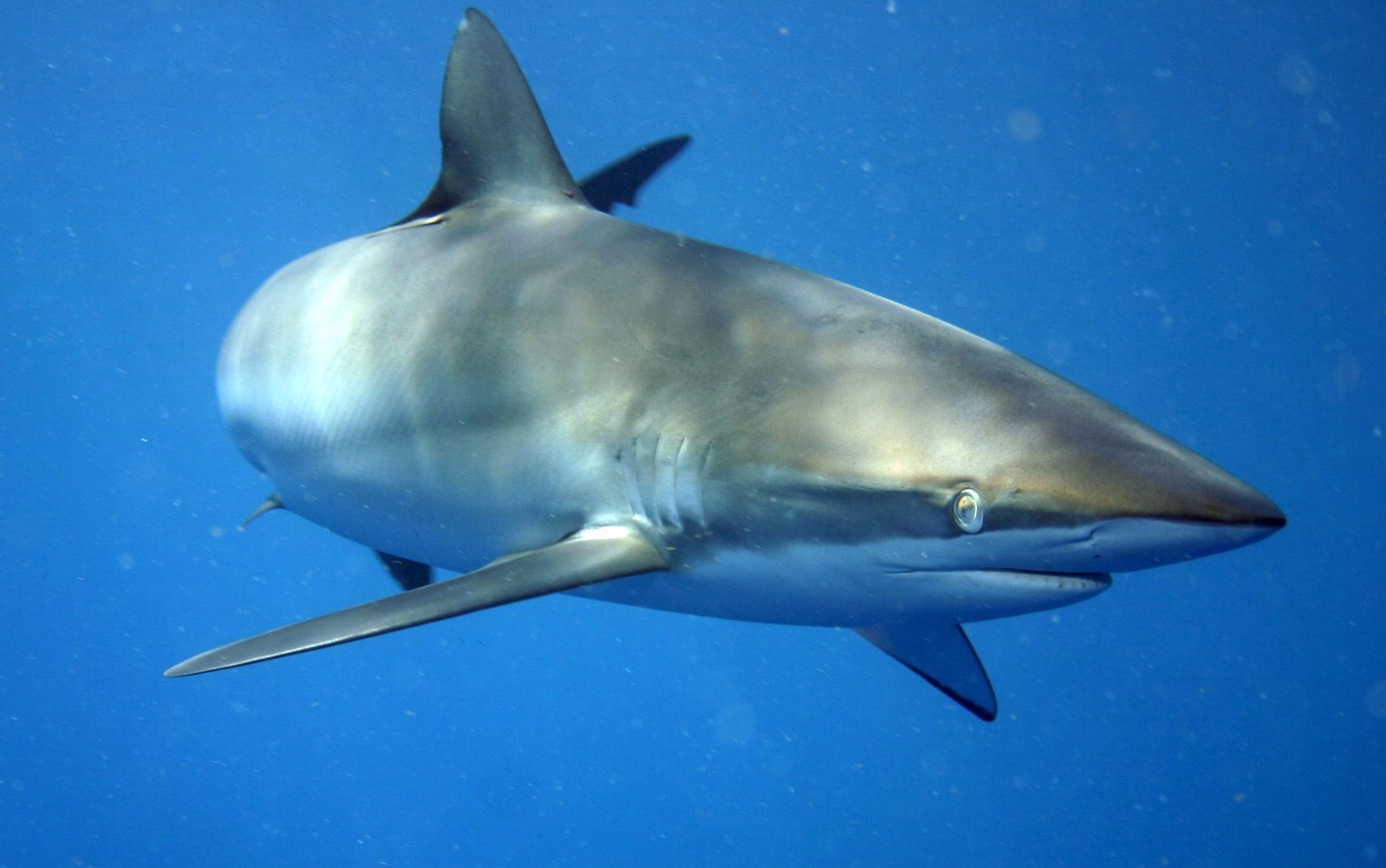
Silkies are the open ocean's welcoming committee. Hang beneath a liveaboard at Daedalus or in Cuba's Jardines de la Reina and they appear from nowhere: slender, bronze-backed sharks with long tail lobes, carving smooth circles a fin's length away. Few species close distance so readily, and few wear their curiosity so plainly; a safety stop can turn into twenty minutes of orbiting escort. They are also among the most heavily fished sharks on Earth, hauled up in vast numbers on tuna longlines and purse seines, which makes the confident crowds at protected seamounts feel like dispatches from an older ocean.
Où et quand en observer un
« Résident » signifie que la plupart des plongées sur ce site permettent de les observer ; « saisonnier » signifie qu'ils sont présents de manière fiable durant les mois indiqués ; tout le reste est un bonus, pas une certitude.
| Destination | Fiabilité | Mois | Notes |
|---|---|---|---|
| Cocos IslandCosta Rica | Resident: seen on most dives | Toute l'année | |
| Socorro & the RevillagigedosMexico | Resident: seen on most dives | Toute l'année | |
| Jardines de la ReinaCuba | Resident: seen on most dives | Toute l'année | |
| MalpeloColombia | Resident: seen on most dives | Toute l'année | |
| Brothers, Daedalus & St John'sEgypt | Seasonal: reliable in season | May–Oct |
Meilleur mois, en un coup d'œil
Les comprendre
Habitat: Warm open ocean over deep water; gathers around seamounts, offshore reefs, drifting objects, and anchored boats
Aire de répartition: Circumtropical: one of the most abundant large sharks of the world's warm offshore waters, from the Caribbean and Eastern Pacific to the Red Sea and central Pacific
Comportement: Fast, sleek, and inquisitive, named for the fine, smooth texture of its skin. Silkies materialize around boats and safety stops in open water, circling divers closely and persistently, especially toward dusk. Around baitballs they switch to quick, slashing runs.
Régime alimentaire: Schooling fish such as tuna and mackerel, plus squid; often follows baitballs and tuna schools
Taille: généralement autour de 2.2 m; documenté jusqu'à 3.3 m (total length).
Comment se comporter avec lui
Keep the group compact during drifting safety stops, avoid low-light surface swims where silkies are working bait, and never spearfish from a liveaboard mooring they patrol.
Conservation
Vulnerable and declining: silkies are the most common shark in the global fin trade and dominate tuna-fishery bycatch. CITES Appendix II listing now regulates international trade.
Sites répertoriés connus pour leur présence
Les sites mis en évidence ont été cartographiés pour cette espèce par nos éditeurs ; les chiffres correspondent aux occurrences GBIF enregistrées dans un rayon d'environ 5 km d'un site depuis 1990.
Regarder
Depuis les canaux officiels

Wildlife of Monterey | New film in our auditorium

Live Aviary Cam | Monterey Bay Aquarium

Live Aviary Cam | Monterey Bay Aquarium
Les vidéos sont des liens intégrés vers les chaînes de leurs créateurs. Nous n'hébergeons rien et créditons tout.