Sharks
Silky Shark
Carcharhinus falciformis · Cartilaginous fish, family Carcharhinidae
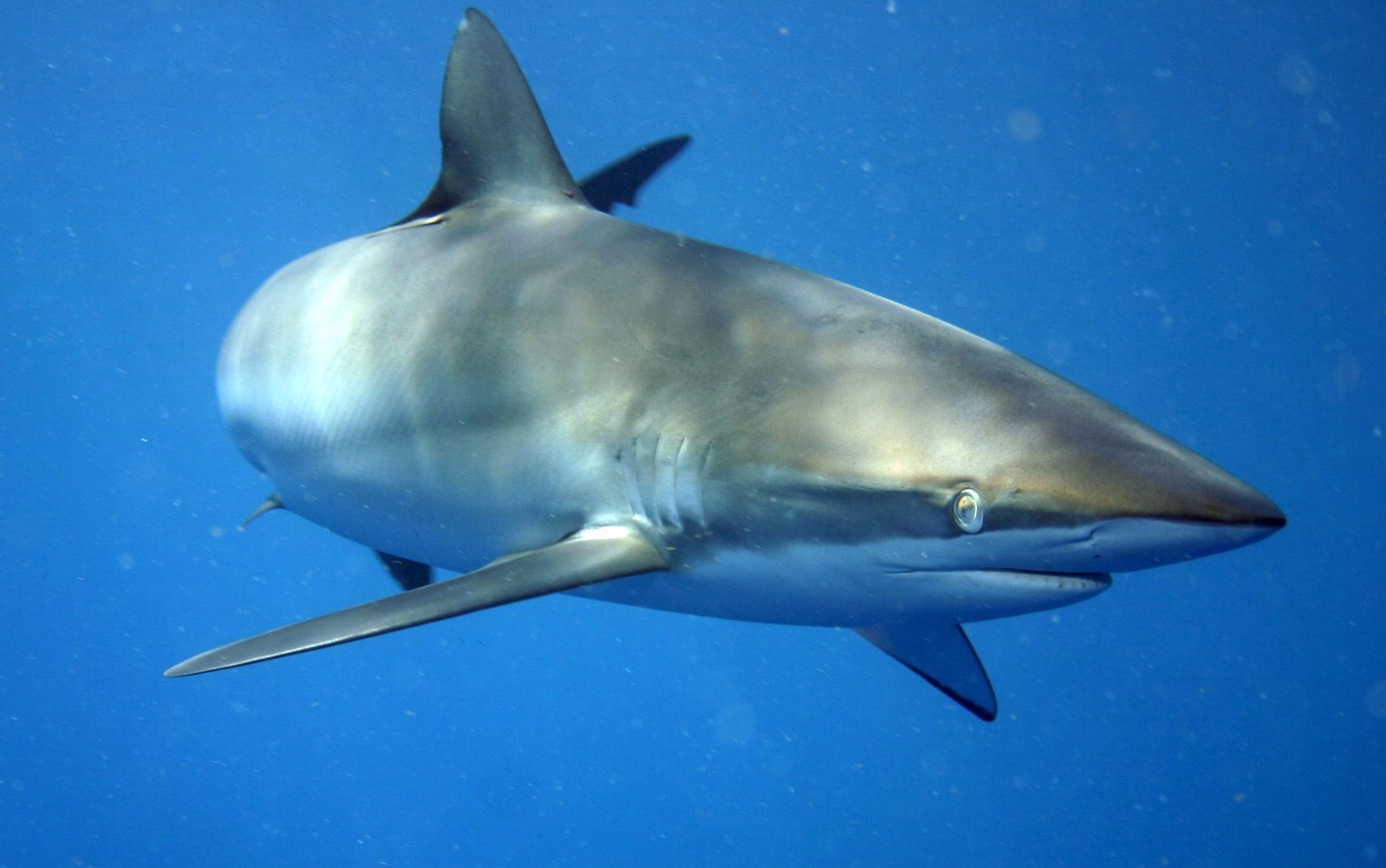
Silkies are the open ocean's welcoming committee. Hang beneath a liveaboard at Daedalus or in Cuba's Jardines de la Reina and they appear from nowhere: slender, bronze-backed sharks with long tail lobes, carving smooth circles a fin's length away. Few species close distance so readily, and few wear their curiosity so plainly; a safety stop can turn into twenty minutes of orbiting escort. They are also among the most heavily fished sharks on Earth, hauled up in vast numbers on tuna longlines and purse seines, which makes the confident crowds at protected seamounts feel like dispatches from an older ocean.
Dove e quando avvistarne uno
"Residente" significa che la maggior parte delle immersioni in quella destinazione li incontra; "stagionale" significa che sono presenti in modo affidabile nei mesi indicati; qualsiasi altra cosa è un bonus, non un piano.
| Destinazione | Affidabilità | Mesi | Note |
|---|---|---|---|
| Cocos IslandCosta Rica | Resident: seen on most dives | Tutto l'anno | |
| Socorro & the RevillagigedosMexico | Resident: seen on most dives | Tutto l'anno | |
| Jardines de la ReinaCuba | Resident: seen on most dives | Tutto l'anno | |
| MalpeloColombia | Resident: seen on most dives | Tutto l'anno | |
| Brothers, Daedalus & St John'sEgypt | Seasonal: reliable in season | May–Oct |
Il mese migliore, a colpo d'occhio
Capirle
Habitat: Warm open ocean over deep water; gathers around seamounts, offshore reefs, drifting objects, and anchored boats
Distribuzione: Circumtropical: one of the most abundant large sharks of the world's warm offshore waters, from the Caribbean and Eastern Pacific to the Red Sea and central Pacific
Comportamento: Fast, sleek, and inquisitive, named for the fine, smooth texture of its skin. Silkies materialize around boats and safety stops in open water, circling divers closely and persistently, especially toward dusk. Around baitballs they switch to quick, slashing runs.
Dieta: Schooling fish such as tuna and mackerel, plus squid; often follows baitballs and tuna schools
Dimensioni: tipicamente intorno a 2.2 m; documentato fino a 3.3 m (total length).
Come comportarsi in sua presenza
Keep the group compact during drifting safety stops, avoid low-light surface swims where silkies are working bait, and never spearfish from a liveaboard mooring they patrol.
Conservazione
Vulnerable and declining: silkies are the most common shark in the global fin trade and dominate tuna-fishery bycatch. CITES Appendix II listing now regulates international trade.
Siti mappati noti per avvistamenti
I siti evidenziati sono stati schedati per questa specie dai nostri redattori; i numeri sono record di occorrenza GBIF registrati entro circa 5 km dal sito a partire dal 1990.
Guarda
Dai canali ufficiali

Wildlife of Monterey | New film in our auditorium

Live Aviary Cam | Monterey Bay Aquarium

Live Aviary Cam | Monterey Bay Aquarium
I video sono link incorporati ai canali dei rispettivi autori. Non ospitiamo nulla e accreditiamo tutto.