Macro
Spanish Dancer
Hexabranchus sanguineus · Marine gastropod mollusk, family Hexabranchidae; one of the largest nudibranchs known
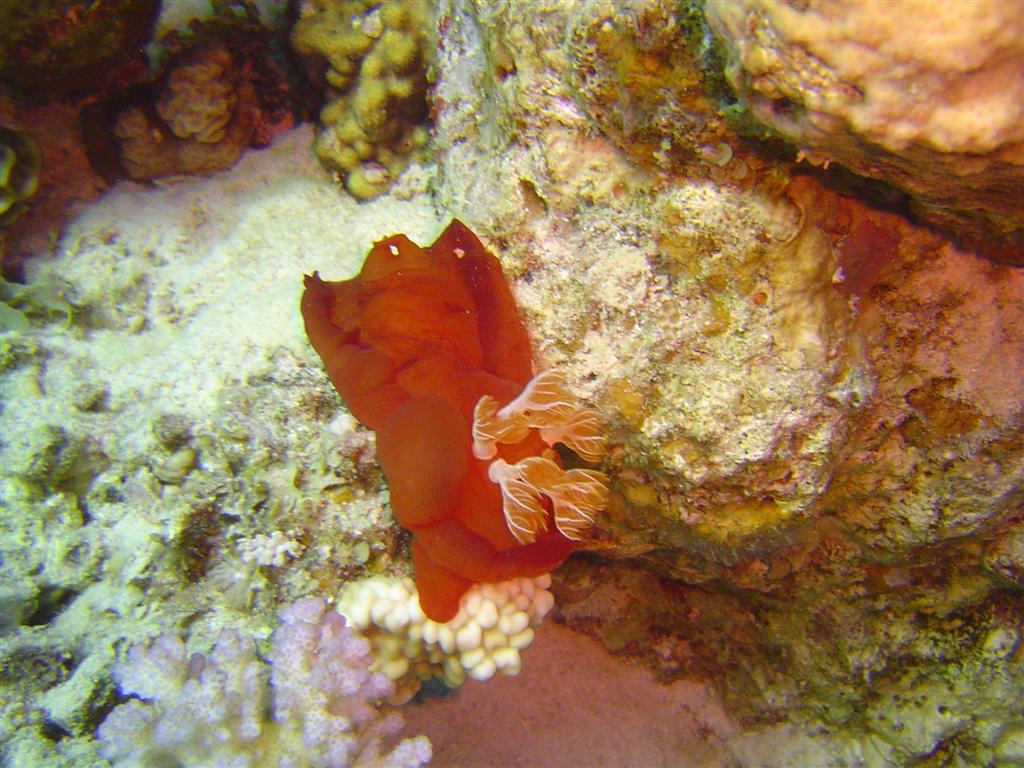
Most nudibranchs crawl; the Spanish dancer, disturbed, lets go of the reef and swims, mantle skirts flaring and rolling in the deep-red flamenco motion that named it. It ranks among the largest of all nudibranchs, a crimson animal that can reach forearm length, and it is almost strictly nocturnal, which makes it a signature night-dive find across the Indo-Pacific and Red Sea. By torchlight look for one plowing across open reef between sponge meals, often carrying passengers: emperor shrimp ride the mantle folds like deckhands. Its eggs are as recognizable as the animal, a rose-shaped ribbon of pink spirals fixed to hard bottom and chemically defended like the adult. Watch a voluntary swim from a respectful distance; forced performances exhaust an animal with nowhere to hide.
Where and when to see one
"Resident" means most dives at that destination encounter them; "seasonal" means reliably present in the listed months; anything else is a bonus, not a plan.
| Destination | Reliability | Months | Notes |
|---|---|---|---|
| Sharm El Sheikh & Ras MohammedEgypt | Occasional | Year-round | |
| North & South Malé AtollsMaldives | Occasional | Year-round | |
| Marsa Alam & the Deep SouthEgypt | Occasional | Year-round | |
| Lembeh StraitIndonesia | Occasional | Year-round | |
| Kona, HawaiʻiUnited States | Occasional | Year-round |
Best month, at a glance
Understanding them
Habitat: Coral reefs, rubble, and lagoon slopes, sheltering by day and crossing open bottom at night between sponge meals.
Range: Tropical Indo-Pacific and Red Sea, east to Hawaii and French Polynesia.
Behavior: Almost strictly nocturnal; crawls like any dorid until disturbed, then swims free with rolling flexes of its flared crimson mantle. Lays a rose-shaped pink egg ribbon on hard bottom.
Diet: Sponges, favoring chemically defended species whose compounds it stores for its own protection.
Size: typically around 0.25 m; documented up to 0.6 m (body length; most individuals run 20–30 cm).
How to behave around one
If the swimming display happens, enjoy it, but never lift, prod, or fan an animal loose to force a performance, and leave the egg roses unhandled.
Conservation
Not formally assessed; conspicuous size makes it a frequent harassment victim, which responsible operators actively brief against.
Charted sites known for them
Highlighted sites were charted for this species by our editors; numbers are GBIF occurrence records logged within about 5 km of a site since 1990.
Watch
From the official channels

Wildlife of Monterey | New film in our auditorium

Live Aviary Cam | Monterey Bay Aquarium

Live Aviary Cam | Monterey Bay Aquarium
Videos are embedded links to their creators' own channels. We host nothing and credit everything.