Sharks
Tasselled Wobbegong
Eucrossorhinus dasypogon · Cartilaginous fish, family Orectolobidae
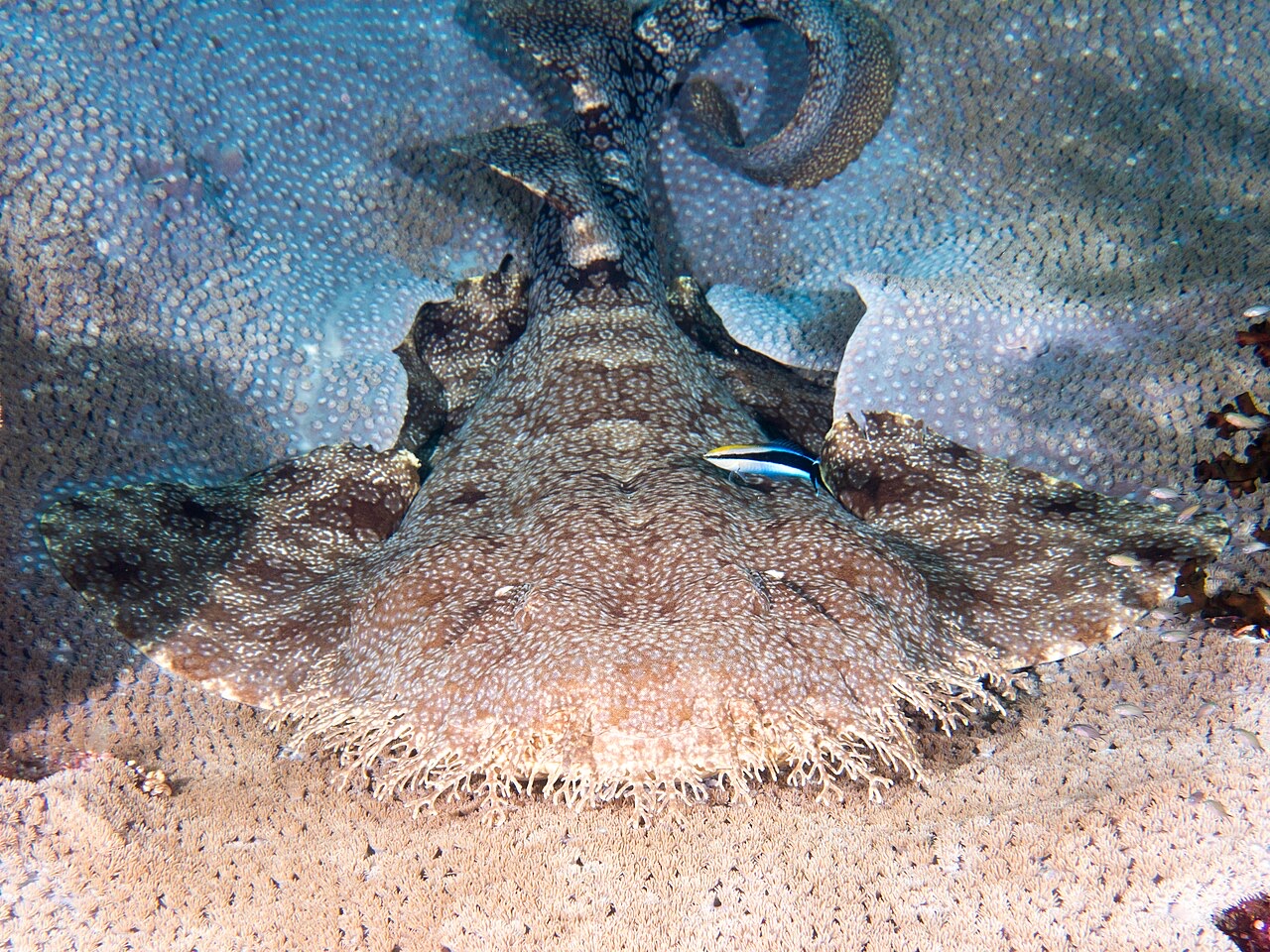
Half the pleasure of a tasselled wobbegong is the moment of resolution: what read as a patch of algae-furred reef assembles itself into a shark, flattened, marbled in fawn and umber, chin frilled with weedy tassels, eyes like slits in upholstery. Raja Ampat made it famous; nearly every site there hides one under a table coral, sometimes with its tail wedged in a barrel sponge and its head cocked toward passing fusiliers. The strike, if you're lucky enough to witness one, is a white blur and a shut mouth. It is camouflage elevated to a career, and a mascot for the strangeness of Coral Triangle diving.
Dove e quando avvistarne uno
"Residente" significa che la maggior parte delle immersioni in quella destinazione li incontra; "stagionale" significa che sono presenti in modo affidabile nei mesi indicati; qualsiasi altra cosa è un bonus, non un piano.
| Destinazione | Affidabilità | Mesi | Note |
|---|---|---|---|
| Raja AmpatIndonesia | Resident: seen on most dives | Tutto l'anno | |
| Milne BayPapua New Guinea | Resident: seen on most dives | Tutto l'anno | |
| Cairns & the Ribbon ReefsAustralia | Occasional | Tutto l'anno | |
| Kimbe BayPapua New Guinea | Occasional | Tutto l'anno |
Il mese migliore, a colpo d'occhio
| Mese | Destinazioni affidabili |
|---|---|
| January | Raja Ampat · Milne Bay · Cairns & the Ribbon Reefs · Kimbe Bay |
| February | Raja Ampat · Milne Bay · Cairns & the Ribbon Reefs · Kimbe Bay |
| March | Raja Ampat · Milne Bay · Cairns & the Ribbon Reefs · Kimbe Bay |
| April | Raja Ampat · Milne Bay · Cairns & the Ribbon Reefs · Kimbe Bay |
| May | Raja Ampat · Milne Bay · Cairns & the Ribbon Reefs · Kimbe Bay |
| June | Raja Ampat · Milne Bay · Cairns & the Ribbon Reefs · Kimbe Bay |
| July | Raja Ampat · Milne Bay · Cairns & the Ribbon Reefs · Kimbe Bay |
| August | Raja Ampat · Milne Bay · Cairns & the Ribbon Reefs · Kimbe Bay |
| September | Raja Ampat · Milne Bay · Cairns & the Ribbon Reefs · Kimbe Bay |
| October | Raja Ampat · Milne Bay · Cairns & the Ribbon Reefs · Kimbe Bay |
| November | Raja Ampat · Milne Bay · Cairns & the Ribbon Reefs · Kimbe Bay |
| December | Raja Ampat · Milne Bay · Cairns & the Ribbon Reefs · Kimbe Bay |
Capirle
Habitat: Coral reefs: under table corals, inside barrel sponges, and on ledges, where it lies flattened and all but invisible
Distribuzione: The Coral Triangle's eastern arc: eastern Indonesia (Raja Ampat above all), Papua New Guinea, and northern Australia
Comportamento: The definitive ambush shark. A fringe of branching dermal tassels erases its outline against coral, and it can lie unmoving for hours, luring fish with subtle tail movements before a strike faster than the eye. Mostly nocturnal on the move; by day divers find it coiled under plate corals.
Dieta: Fish and crustaceans ambushed at point-blank range; capable of swallowing surprisingly large prey, including other sharks
Dimensioni: tipicamente intorno a 1.2 m; documentato fino a 1.8 m (total length).
Come comportarsi in sua presenza
Never touch, lift, or drag one into the open; keep fingers off ledges you haven't scanned; give a walking wobbegong right of way at night.
Conservazione
Least Concern, with most of its core range inside Indonesian and PNG reef systems; localized pressure comes from reef degradation and the aquarium trade.
Siti mappati noti per avvistamenti
I siti evidenziati sono stati schedati per questa specie dai nostri redattori; i numeri sono record di occorrenza GBIF registrati entro circa 5 km dal sito a partire dal 1990.
Guarda
Dai canali ufficiali

Wildlife of Monterey | New film in our auditorium

Live Aviary Cam | Monterey Bay Aquarium

Live Aviary Cam | Monterey Bay Aquarium
I video sono link incorporati ai canali dei rispettivi autori. Non ospitiamo nulla e accreditiamo tutto.