Marine Mammals
West Indian Manatee
Trichechus manatus · Marine mammal, family Trichechidae (order Sirenia)
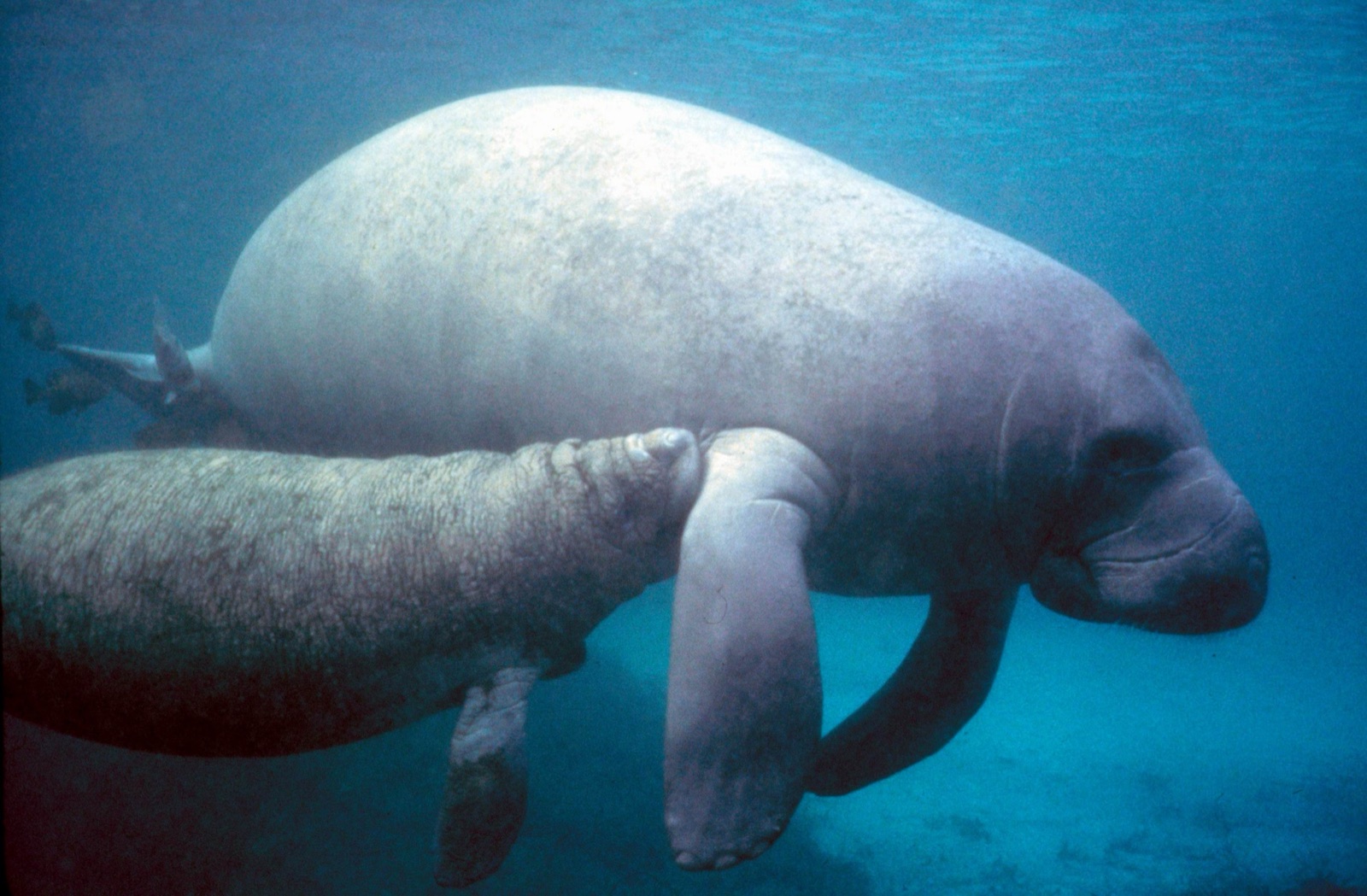
The West Indian manatee is a boulder that learned contentment: a gray, whiskered vegetarian the size of a small car, hanging in tea-colored shallows with its paddle tail curled and its nostrils periscoping up for air. Most famous from Florida's winter springs, where hundreds raft together in the clear warm water, it also drifts through Caribbean lagoons and mangrove channels from Belize to the Yucatán, where sightings are scarcer and stranger: a shadow the size of a sofa easing beneath a snorkeler in a cenote-fed inlet. Nothing about it hurries. The propeller scars that identify individual animals are the species' story in shorthand.
Where and when to see one
"Resident" means most dives at that destination encounter them; "seasonal" means reliably present in the listed months; anything else is a bonus, not a plan.
| Destination | Reliability | Months | Notes |
|---|---|---|---|
| Belize Barrier ReefBelize | Occasional | Year-round | |
| Florida KeysUnited States | Occasional | Year-round | |
| Riviera Maya & the CenotesMexico | Rare | Year-round |
Best month, at a glance
| Month | Reliable destinations |
|---|---|
| January | Belize Barrier Reef · Florida Keys · Riviera Maya & the Cenotes |
| February | Belize Barrier Reef · Florida Keys · Riviera Maya & the Cenotes |
| March | Belize Barrier Reef · Florida Keys · Riviera Maya & the Cenotes |
| April | Belize Barrier Reef · Florida Keys · Riviera Maya & the Cenotes |
| May | Belize Barrier Reef · Florida Keys · Riviera Maya & the Cenotes |
| June | Belize Barrier Reef · Florida Keys · Riviera Maya & the Cenotes |
| July | Belize Barrier Reef · Florida Keys · Riviera Maya & the Cenotes |
| August | Belize Barrier Reef · Florida Keys · Riviera Maya & the Cenotes |
| September | Belize Barrier Reef · Florida Keys · Riviera Maya & the Cenotes |
| October | Belize Barrier Reef · Florida Keys · Riviera Maya & the Cenotes |
| November | Belize Barrier Reef · Florida Keys · Riviera Maya & the Cenotes |
| December | Belize Barrier Reef · Florida Keys · Riviera Maya & the Cenotes |
Understanding them
Habitat: Warm rivers, springs, estuaries, and seagrass coasts; overwinters at warm-water refuges because it cannot tolerate cold
Range: Florida and the Gulf of Mexico through the Caribbean coasts of Central and South America; Antillean populations are scattered and small
Behavior: An unhurried, rotund herbivore that drifts, grazes, and dozes in the shallows, rising nose-first to breathe. Winter cold snaps concentrate Florida's manatees into springs and power-plant outflows by the hundred. Naturally curious, some approach quiet snorkelers; regulations exist precisely because that trust is easy to abuse.
Diet: Seagrass and freshwater vegetation in enormous quantities: hours of every day are spent grazing
Size: typically around 3.0 m; documented up to 4.0 m (body length; adults typically 400–600 kg, exceptional animals larger).
How to behave around one
US law prohibits touching, chasing, cornering, or disturbing resting manatees; passive observation only, no entering roped refuge zones, and idle-speed boating in manatee areas. In the listed destinations, treat any sighting as a bonus and keep hands off.
Conservation
Vulnerable; Florida's population recovered enough for a controversial US downlisting, then suffered mass seagrass-starvation mortality in the 2020s. Habitat quality, not just protection, decides its future.
Charted sites known for them
Highlighted sites were charted for this species by our editors; numbers are GBIF occurrence records logged within about 5 km of a site since 1990.
Watch
From the official channels

Wildlife of Monterey | New film in our auditorium

Live Aviary Cam | Monterey Bay Aquarium

Live Aviary Cam | Monterey Bay Aquarium
Videos are embedded links to their creators' own channels. We host nothing and credit everything.