Dive sites, seasons and marine life — researched, mapped, planned.
Menu
Destinations Dive Sites Marine Life Wrecks News
Plan a trip Trip planner When to dive Cost calculator Comparisons Marine-life calendar Water temperature Liveaboards Operators & resorts Marine parks Hyperbaric chambers World map
Regions Australia, New Zealand & East AsiaCaribbean & Western AtlanticEurope, Atlantic & MediterraneanIndian Ocean & East AfricaPacific Islands & MicronesiaRed Sea & Middle EastSoutheast Asia & Coral TriangleThe Americas & Eastern Pacific Countries
Learn & Tools All guides Certifications Gear guides Videos Ask the Data AI Agents API
About About us Methodology Disclaimer Contact
Your view
★ Saved

Your starred destinations, sites and species — stored in this browser.

API GATEWAY

Free read-only JSON access to the atlas's cached data.

Dark mode

🧭 Guided View
New to diving — depths, currents, certification levels? We explain every term as you browse, in plain English. Same data, with the help built in.

⚡ Expert View
You already know the difference between a wall and a drift. Just the data — clean, fast and compact. This is the default view.

Interface language
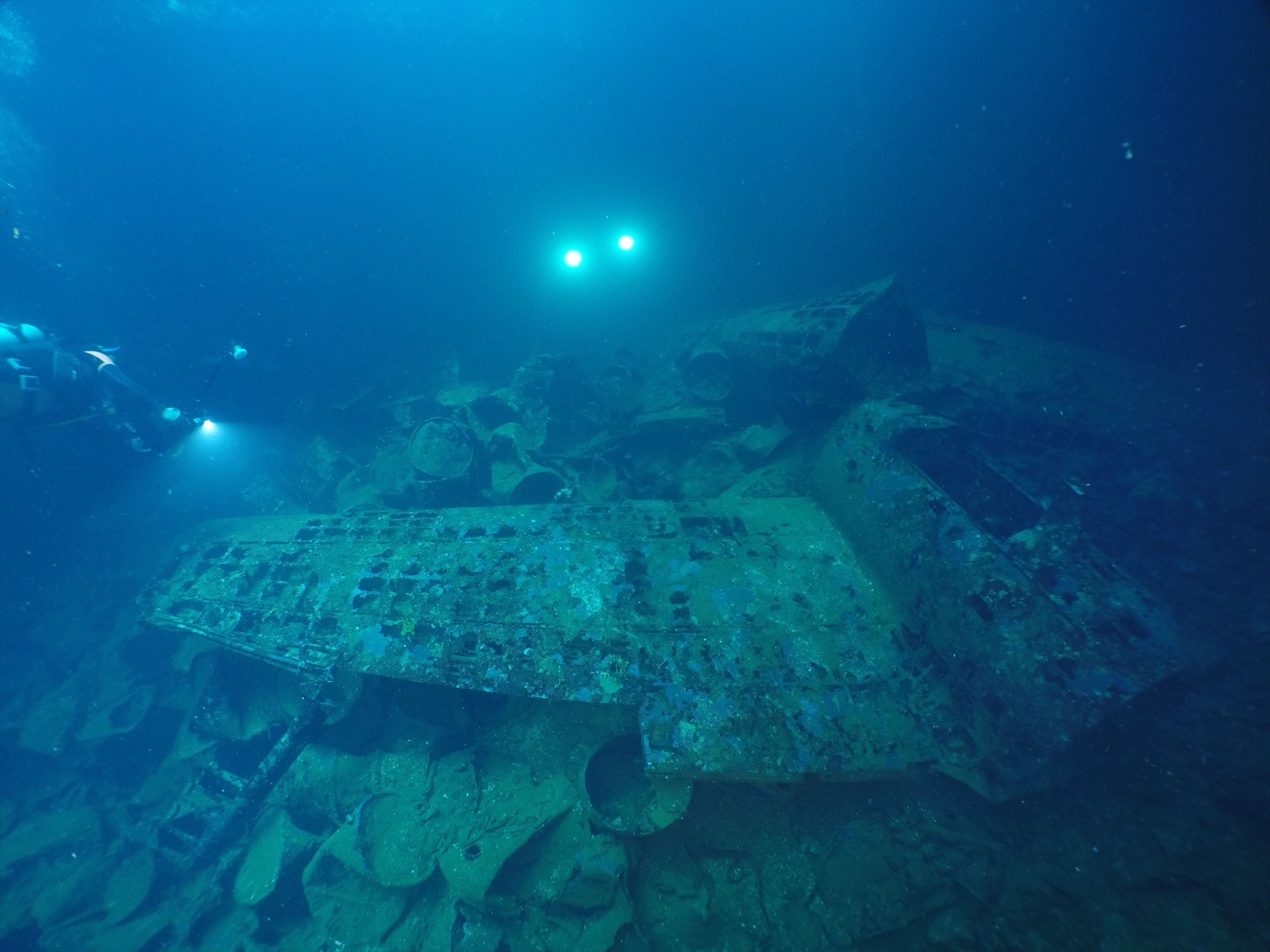
Fujikawa Maru — illustrative image

Fujikawa Maru

Japanese armed aircraft transport (requisitioned passenger-cargo ship) Sunk 1944 12–34 m Chuuk (Truk) Lagoon
AI-generated illustration
War grave People died here and, in some cases, remain aboard. Dive it as you would visit a memorial: nothing touched, nothing taken, nothing disturbed.
Well documented
Depth to deck
12 m / 39 ft
Maximum depth
34 m / 112 ft
Built / sunk
1938 / 1944
Length
133 m
Tonnage
6,938 GRT
Orientation
Upright
Level
Intermediate
Best months
Dec–Apr

The story

Built in 1938 for the silk trade and requisitioned by the Imperial Japanese Navy as an aircraft ferry, the Fujikawa Maru was swinging at anchor in Truk Lagoon when Operation Hailstone opened on 17 February 1944. American carrier aircraft caught Japan's great mid-Pacific fleet anchorage with its shipping still in place, and over two days they put more than forty vessels on the lagoon floor. The Fujikawa took an aerial torpedo, burned, and settled upright on the sand with her cargo intact: disassembled Zero fighter fuselages still racked in her forward holds, ammunition, and spares. Her old six-inch guns — First World War relics fitted at bow and stern — now wear a half-century of soft coral. In the machine shop stands the air compressor divers have nicknamed for a film robot. She is the most dived wreck in Chuuk, and like her neighbors she is a war grave: men died aboard, and some remain within.

How she sank: Torpedoed and bombed by US carrier aircraft during Operation Hailstone, 17–18 February 1944.

Diving her today

Condition: Still coherent but visibly weakening — typhoons and eighty years of corrosion have begun collapsing sections of superstructure.

Penetration: Full With Training. Holds and the machine shop are standard guided penetrations for wreck-trained divers; deeper engineering spaces are silty and unforgiving. Entering any overhead environment requires specific training — a wreck certification at minimum, technical wreck training for full penetration.

Recommended certification: Advanced Open Water; wreck training for interiors

Current: Mild · Visibility: 15–30 m

Marine life: The guns and kingposts are pillars of soft coral and anemones; baitfish cloud the superstructure and turtles rest on the deck.

Hazards: Silt-out risk inside, deteriorating steel overhead, and munitions in the holds that must never be handled.

Protection & law

Chuuk's wrecks are protected as an underwater historical monument; a state dive permit/fee applies.

Human remains rest in this ship. Japanese missions have recovered and honored some of the dead; treat every interior space with the restraint owed a grave.

Artifact removal is illegal under Chuuk state law and has already thinned these wrecks — leave everything.

Watch

From the official channels

All videos →

Videos are embedded links to their creators' own channels — we host nothing and credit everything.

Sources: U.S. Navy ↗Wikipedia ↗ · Facts verified against the sources above; fields without support are labeled not yet verified.

Australia, New Zealand & East Asia

Cairns & the Ribbon ReefsNingaloo ReefCoral Sea & Osprey ReefOkinawa & the Kerama IslandsPoor Knights IslandsTownsville & the YongalaGreen IslandIzu Peninsula

Caribbean & Western Atlantic

BonaireCozumelRiviera Maya & the CenotesBelize Barrier ReefGrand CaymanIsla Mujeres & CancúnRoatánTiger Beach & Grand Bahama

Europe, Atlantic & Mediterranean

Malta & GozoSilfra & IcelandThe AzoresCanary IslandsLarnaca & the ZenobiaScapa FlowArctic NorwayMadeira

Indian Ocean & East Africa

North & South Malé AtollsAri AtollBaa Atoll & Hanifaru BayAliwal Shoal & UmkomaasMafia IslandMauritiusSeychellesSodwana Bay

Pacific Islands & Micronesia

PalauChuuk (Truk) LagoonFakaravaKona, HawaiʻiRangiroaTaveuni & Rainbow ReefBeqa Lagoon & Pacific HarbourEspiritu Santo

Red Sea & Middle East

Sharm El Sheikh & Ras MohammedBrothers, Daedalus & St John'sDahabHurghada & El GounaMarsa Alam & the Deep SouthAqabaDaymaniyat IslandsMusandam Peninsula

Southeast Asia & Coral Triangle

Bali & Nusa PenidaKomodoRaja AmpatSipadan & MabulAnilaoCoronKoh TaoLembeh Strait

The Americas & Eastern Pacific

Galápagos IslandsCocos IslandFlorida KeysSea of Cortez & Cabo PulmoSocorro & the RevillagigedosBritish ColumbiaCalifornia Channel IslandsCosta Rica Pacific Coast