Sites de plongée, saisons et vie marine — recherchés, cartographiés, planifiés.
Menu
Destinations Sites de plongée Vie marine Épaves Actualités
Planifier un voyage Planificateur de séjour Quand plonger Calculateur de coût Comparaisons Calendrier de la faune marine Température de l'eau Liveaboards Opérateurs & resorts Parcs marins Caissons hyperbares Carte du monde
Régions Australie, Nouvelle-Zélande & Asie de l'EstCaraïbes & Atlantique occidentalEurope, Atlantique & MéditerranéeOcéan Indien & Afrique de l'EstÎles du Pacifique & MicronésieMer Rouge & Moyen-OrientAsie du Sud-Est et Triangle de CorailLes Amériques et Pacifique Est Pays
Apprendre & Outils Tous les guides Certifications Guides d'équipement Vidéos Interroger les données Agents IA API
À propos À propos de nous Méthodologie Avertissement Contact
Votre vue
★ Enregistré

Vos destinations, sites et espèces favoris — enregistrés dans ce navigateur.

API GATEWAY

Accès JSON gratuit en lecture seule aux données en cache de l'atlas.

Mode sombre

🧭 Vue Guidée
Nouveau dans la plongée — profondeurs, courants, niveaux de certification ? Nous expliquons chaque terme au fil de votre navigation, en langage clair. Les mêmes données, avec l'aide intégrée.

⚡ Vue Expert
Vous connaissez déjà la différence entre un tombant et un drift. Juste les données — claires, rapides et compactes. C'est la vue par défaut.

Langue de l'interface
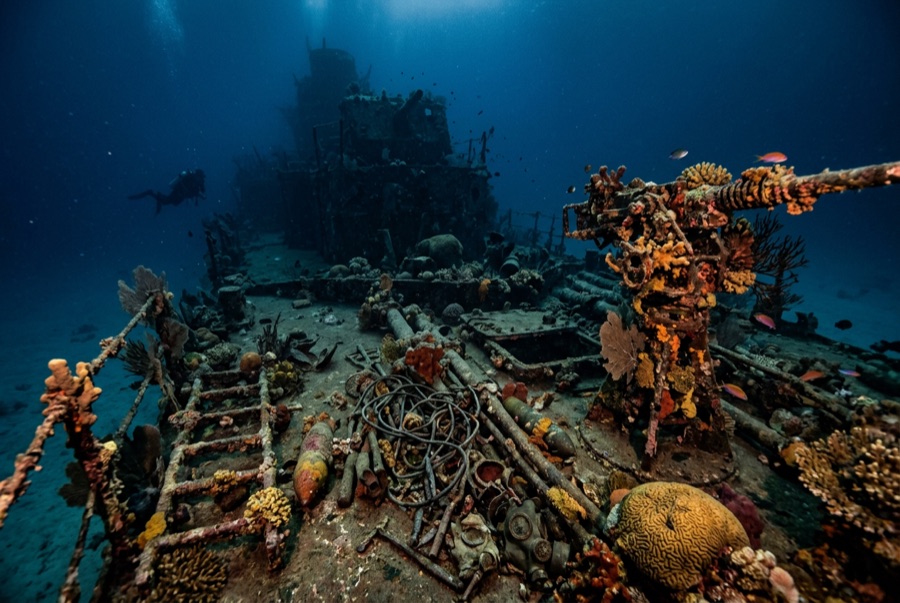
Million Dollar Point — illustrative image

Million Dollar Point

Second World War military equipment dump (debris field, not a vessel) Coulé 1945 1–40 m Espiritu Santo
Illustration générée par IA
Des vies ont été perdues iciNone. Les opérateurs locaux demandent que l'épave soit plongée avec le respect qui s'impose.
Documenté
Profondeur jusqu'au pont
1 m / 3 ft
Profondeur maximale
40 m / 131 ft
Construit / coulé
? / 1945
Orientation
A Jumbled Slope Of Machinery From The Shoreline Into Deep Water
Niveau
Beginner
Meilleurs mois
Apr–Oct

L'histoire

When the Pacific war ended, Espiritu Santo held one of the largest American bases on earth, and shipping mountains of used equipment home made no economic sense. The story told on Santo — supported by what lies on the seabed — is that the US offered the lot to the Anglo-French authorities at a token price, the local administration stalled in the expectation of getting it free, and the Americans answered by building a ramp and driving the inventory into the sea: bulldozers, six-wheeled trucks, jeeps, cranes, forklifts, sheet steel, engines, and crate upon crate of stores, with Coca-Cola bottles beyond counting. The name records the estimated value of what went over. Today the point is a shore dive down a slope of interlocked machinery, axles and tracks fused by coral into a single sardonic monument to logistics. Two later shipwrecks lie among the debris, casualties of salvage attempts on the very metal being thrown away.

Comment elle a coulé: US forces deliberately dumped surplus equipment into the sea at the end of the war after disposal negotiations failed.

Plongée sur ce site aujourd'hui

Condition: A rust garden in slow collapse; recognizable machines emerge and disappear as the pile settles and storms rearrange the shallows.

Pénétration: None. There is no hull to enter — only unstable stacked machinery, and wriggling into gaps between forty-ton machines is how divers get hurt.

Certification recommandée: Open Water

Courant: Mild · Visibilité: 5–15 m

Vie marine: Corals colonize axles and cab frames, octopus den in engine blocks, lionfish and sweepers fill the truck beds, and reef fish swarm the shallows where snorkelers drift.

Dangers: Sharp, unstable metal throughout; surge in the shallows; broken glass near the old bottle dumps.

Protection & réglementation

Protected alongside the Coolidge under Vanuatu's wreck-site rules; local fees apply at the shore entry.

Bottles and brass have walked away for decades — the site is protected now, so leave every piece in the pile.

Regarder

Depuis les canaux officiels

Toutes les vidéos →

Les vidéos sont des liens intégrés vers les chaînes de leurs créateurs — nous n'hébergeons rien et créditons tout.

Sources: Vanuatu Tourism ↗Wikipedia ↗ · Informations vérifiées par rapport aux sources ci-dessus ; les champs sans référence sont marqués non encore vérifiés.

Australie, Nouvelle-Zélande & Asie de l'Est

Cairns & the Ribbon ReefsNingaloo ReefCoral Sea & Osprey ReefOkinawa & the Kerama IslandsPoor Knights IslandsTownsville & the YongalaGreen IslandIzu Peninsula

Caraïbes & Atlantique occidental

BonaireCozumelRiviera Maya & the CenotesBelize Barrier ReefGrand CaymanIsla Mujeres & CancúnRoatánTiger Beach & Grand Bahama

Europe, Atlantique & Méditerranée

Malta & GozoSilfra & IcelandThe AzoresCanary IslandsLarnaca & the ZenobiaScapa FlowArctic NorwayMadeira

Océan Indien & Afrique de l'Est

North & South Malé AtollsAri AtollBaa Atoll & Hanifaru BayAliwal Shoal & UmkomaasMafia IslandMauritiusSeychellesSodwana Bay

Îles du Pacifique & Micronésie

PalauChuuk (Truk) LagoonFakaravaKona, HawaiʻiRangiroaTaveuni & Rainbow ReefBeqa Lagoon & Pacific HarbourEspiritu Santo

Mer Rouge & Moyen-Orient

Sharm El Sheikh & Ras MohammedBrothers, Daedalus & St John'sDahabHurghada & El GounaMarsa Alam & the Deep SouthAqabaDaymaniyat IslandsMusandam Peninsula

Asie du Sud-Est et Triangle de Corail

Bali & Nusa PenidaKomodoRaja AmpatSipadan & MabulAnilaoCoronKoh TaoLembeh Strait

Les Amériques et Pacifique Est

Galápagos IslandsCocos IslandFlorida KeysSea of Cortez & Cabo PulmoSocorro & the RevillagigedosBritish ColumbiaCalifornia Channel IslandsCosta Rica Pacific Coast