Puntos de buceo, temporadas y vida marina — investigados, cartografiados, planificados.
Menú
Destinos Puntos de buceo Vida marina Pecios Noticias
Planifica un viaje Planificador de viajes Cuándo bucear Calculadora de costes Comparativas Calendario de fauna marina Temperatura del agua Liveaboards Operadores y resorts Parques marinos Cámaras hiperbáricas Mapa mundial
Regiones Australia, Nueva Zelanda y Asia OrientalCaribe y Atlántico occidentalEuropa, Atlántico y MediterráneoOcéano Índico y África OrientalIslas del Pacífico y MicronesiaMar Rojo y Oriente MedioSudeste Asiático y el Triángulo del CoralLas Américas y el Pacífico Oriental Países
Aprender y herramientas Todas las guías Certificaciones Guías de equipo Vídeos Consulta los datos Agentes de IA API
Acerca de Quiénes somos Metodología Aviso legal Contacto
Tu vista
★ Guardado

Tus destinos, sitios y especies favoritos — guardados en este navegador.

API GATEWAY

Acceso JSON gratuito de solo lectura a los datos en caché del atlas.

Modo oscuro

🧭 Vista guiada
¿Nuevo en el buceo? ¿Profundidades, corrientes, niveles de certificación? Explicamos cada término mientras navegas, en un lenguaje claro. Los mismos datos, con la ayuda integrada.

⚡ Vista experta
Ya conoces la diferencia entre una pared y un drift dive. Solo los datos — claros, rápidos y concisos. Esta es la vista predeterminada.

Idioma de la interfaz
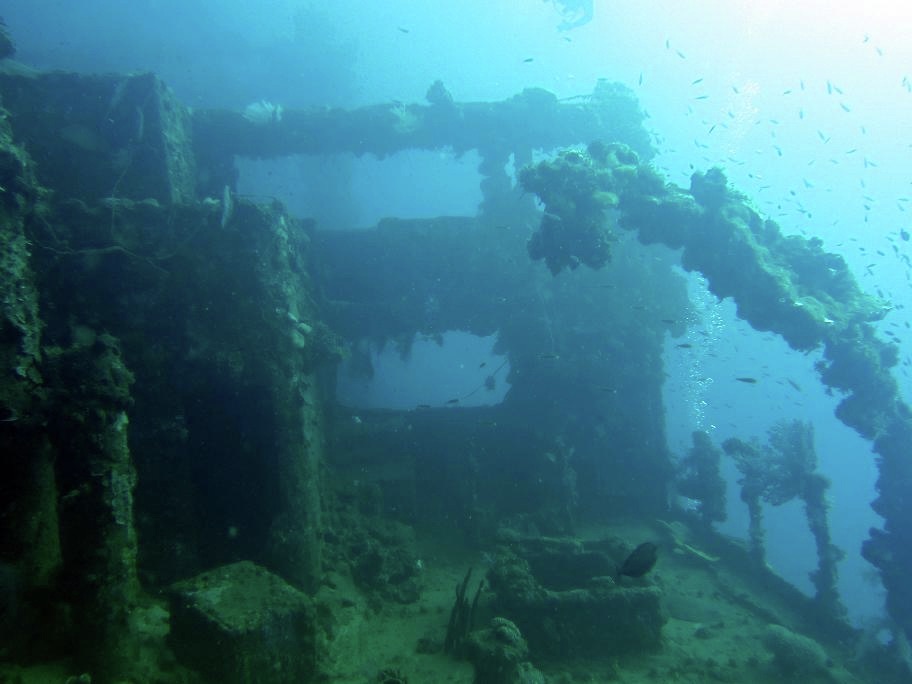
Nippo Maru — illustrative image

Nippo Maru

Japanese army cargo ship and water carrier Hundido 1944 28–48 m Chuuk (Truk) Lagoon
Ilustración generada por IA
Tumba de guerra Aquí murieron personas que, en algunos casos, siguen a bordo. Bucea en este lugar como si visitaras un memorial: no toques, no te lleves nada, no perturbes nada.
Documentado
Profundidad hasta cubierta
28 m / 92 ft
Profundidad máxima
48 m / 157 ft
Construido / hundido
1936 / 1944
Longitud
107 m
Tonelaje
3,764 GRT
Orientación
Upright With A Port List
Nivel
Advanced
Mejores meses
Dec–Apr

La historia

A working freighter built in 1936, the Nippo Maru spent the war hauling the unglamorous freight that garrisons live on — above all fresh water for Truk's outer-island gun crews, along with munitions and equipment. Hailstone's bombers sent her down in February 1944, and she landed upright with a gentle list on a deeper patch of lagoon floor, which kept casual visitors away for decades and preserved her details. What survived is a museum spread: a Type 95 light tank sits on her deck as if parked, field artillery pieces lean nearby, trucks and mines occupy the holds, and her compact bridge still holds its helm and engine telegraphs — one of the most photographed compositions in wreck diving. She was lost to memory after the war and relocated by divers in 1980. The depth that protected her also demands respect; this is the lagoon's threshold wreck between sport and technical diving, and a war grave besides.

Cómo se hundió: Bombed by US carrier aircraft during Operation Hailstone, February 1944.

Buceando aquí hoy

Condición: Intact and finely detailed, with slower growth and dimmer light than the shallow wrecks; corrosion is gradual at this depth.

Penetración: Limited. The bridge and forward holds admit trained divers for short, shallow-in penetrations; anything deeper in the hull is technical territory. Acceder a cualquier entorno de penetración exige formación específica — como mínimo una certificación en pecios, y formación técnica en pecios para penetración completa.

Certificación recomendada: Deep-trained Advanced Open Water; technical certification recommended for full exploration

Corriente: Mild · Visibilidad: 15–30 m

Vida marina: Whip corals and black corals at depth, lionfish on the bridge wings, and batfish escorting divers along the deck.

Riesgos: Depth and bottom time are the governing risks; munitions in the holds are untouchable; silt lies thick on every horizontal surface.

Protección y legislación

Chuuk lagoon monument protection; state dive permit/fee applies.

Treated as a war grave with the rest of the Hailstone fleet; conduct yourself accordingly.

The tank, guns, and bridge instruments stay where the war left them — removal is illegal.

Ver

Desde los canales oficiales

Todos los vídeos →

Los vídeos son enlaces incrustados a los canales propios de sus creadores — no alojamos nada y acreditamos todo.

Fuentes: CombinedFleet.com ↗Wikipedia ↗ · Datos verificados frente a las fuentes anteriores; los campos sin respaldo se marcan como aún no verificados.

Australia, Nueva Zelanda y Asia Oriental

Cairns & the Ribbon ReefsNingaloo ReefCoral Sea & Osprey ReefOkinawa & the Kerama IslandsPoor Knights IslandsTownsville & the YongalaGreen IslandIzu Peninsula

Caribe y Atlántico occidental

BonaireCozumelRiviera Maya & the CenotesBelize Barrier ReefGrand CaymanIsla Mujeres & CancúnRoatánTiger Beach & Grand Bahama

Europa, Atlántico y Mediterráneo

Malta & GozoSilfra & IcelandThe AzoresCanary IslandsLarnaca & the ZenobiaScapa FlowArctic NorwayMadeira

Océano Índico y África Oriental

North & South Malé AtollsAri AtollBaa Atoll & Hanifaru BayAliwal Shoal & UmkomaasMafia IslandMauritiusSeychellesSodwana Bay

Islas del Pacífico y Micronesia

PalauChuuk (Truk) LagoonFakaravaKona, HawaiʻiRangiroaTaveuni & Rainbow ReefBeqa Lagoon & Pacific HarbourEspiritu Santo

Mar Rojo y Oriente Medio

Sharm El Sheikh & Ras MohammedBrothers, Daedalus & St John'sDahabHurghada & El GounaMarsa Alam & the Deep SouthAqabaDaymaniyat IslandsMusandam Peninsula

Sudeste Asiático y el Triángulo del Coral

Bali & Nusa PenidaKomodoRaja AmpatSipadan & MabulAnilaoCoronKoh TaoLembeh Strait

Las Américas y el Pacífico Oriental

Galápagos IslandsCocos IslandFlorida KeysSea of Cortez & Cabo PulmoSocorro & the RevillagigedosBritish ColumbiaCalifornia Channel IslandsCosta Rica Pacific Coast