Pontos de mergulho, épocas e vida marinha — pesquisados, mapeados, planeados.
Menu
Destinos Pontos de Mergulho Vida Marinha Naufrágios Notícias
Planejar uma viagem Planejador de viagem Quando mergulhar Calculadora de custos Comparações Calendário de vida marinha Temperatura da água Liveaboards Operadores & resorts Parques marinhos Câmaras hiperbáricas Mapa mundial
Regiões Austrália, Nova Zelândia e Ásia OrientalCaribe e Atlântico OcidentalEuropa, Atlântico & MediterrâneoOceano Índico e África OrientalIlhas do Pacífico & MicronésiaMar Vermelho & Médio OrienteSudeste Asiático e Triângulo de CoralAs Américas e o Pacífico Oriental Países
Aprender e Ferramentas Todos os guias Certificações Guias de equipamento Vídeos Consulte os Dados Agentes de IA API
Sobre Sobre nós Metodologia Aviso legal Contato
A sua vista
★ Guardado

Os seus destinos, sítios de mergulho e espécies favoritos — guardados neste browser.

API GATEWAY

Acesso JSON gratuito e só de leitura aos dados em cache do atlas.

Modo escuro

🧭 Vista Guiada
Novo no mergulho — profundidades, correntes, níveis de certificação? Explicamos cada termo enquanto navega, em linguagem simples. Os mesmos dados, com a ajuda integrada.

⚡ Vista de Especialista
Já sabe a diferença entre uma parede e um drift dive. Apenas os dados — claros, rápidos e compactos. Esta é a vista predefinida.

Idioma da interface
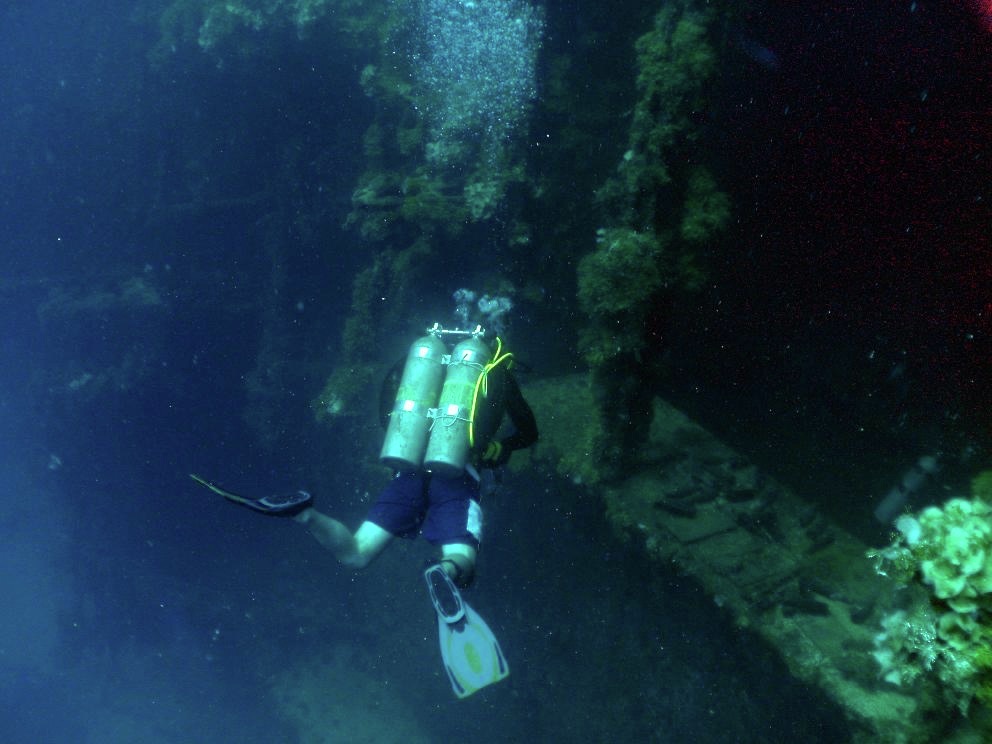
Rio de Janeiro Maru — illustrative image

Rio de Janeiro Maru

Japanese passenger liner converted to submarine tender and transport Afundado 1944 12–34 m Chuuk (Truk) Lagoon
Ilustração gerada por IA
Túmulo de guerra Pessoas morreram aqui e, em alguns casos, permanecem a bordo. Mergulhe como visitaria um memorial: nada tocado, nada levado, nada perturbado.
Documentado
Profundidade até o convés
12 m / 39 ft
Profundidade máxima
34 m / 112 ft
Construído / afundado
1930 / 1944
Comprimento
140 m
Tonelagem
9,626 GRT
Orientação
On Her Starboard Side
Nível
Intermediate
Melhores meses
Dec–Apr

A história

The Rio de Janeiro Maru was built in 1930 for the OSK line's emigrant route to South America, a motor liner named for her destination port. The navy took her in 1940, used her first as a submarine tender and then as a transport, and Hailstone's bombers found her at Truk in February 1944; she absorbed her damage slowly and went down quietly the next morning, rolling onto her starboard side on a sandy bottom. She is a dive of oversized details. Her port hull, now the wreck's upper surface, is a field of plating within easy reach of the surface; at the stern, her big twin screws stand in the blue like monuments; and in the aft holds sit crates of beer bottles by the thousand, stacked as the stevedores left them. A stern gun still points at nothing. Like every ship of the Hailstone fleet, she carried men who did not get off, and divers treat her accordingly.

Como afundou: Bombed on 17 February 1944 during Operation Hailstone; sank in the early hours of the following day.

A mergulhar nela hoje

Condição: Coherent and stable, with the gradual sagging of a large hull lying on its side for eighty years.

Penetração: Full With Training. Hold entries are broad and forgiving by lagoon standards, but the rotated interior still calls for wreck training and a guide who knows the exits. Entrar em qualquer ambiente fechado requer formação específica — no mínimo uma certificação de mergulho em naufrágios, e formação técnica em naufrágios para penetração total.

Certificação recomendada: Advanced Open Water; wreck training for interiors

Corrente: Mild · Visibilidade: 15–30 m

Vida marinha: Hard corals pave the upturned hull, sweetlips and snappers gather at the stern, and turtles are regular visitors along the rail.

Perigos: Silt in the holds, collapsing internal fittings, and glass and cargo that must be left undisturbed.

Proteção & legislação

Chuuk lagoon monument protection; state dive permit/fee applies.

A war grave of the February 1944 raid; conduct inside the hull should honor that.

The famous bottles stay in their crates — removal is illegal.

Assista

Dos canais oficiais

Todos os vídeos →

Os vídeos são links incorporados dos próprios canais dos criadores — não hospedamos nada e creditamos tudo.

Fontes: CombinedFleet.com ↗Wikipedia ↗ · Factos verificados em relação às fontes acima; os campos sem suporte estão assinalados como não verificado ainda.

Austrália, Nova Zelândia e Ásia Oriental

Cairns & the Ribbon ReefsNingaloo ReefCoral Sea & Osprey ReefOkinawa & the Kerama IslandsPoor Knights IslandsTownsville & the YongalaGreen IslandIzu Peninsula

Caribe e Atlântico Ocidental

BonaireCozumelRiviera Maya & the CenotesBelize Barrier ReefGrand CaymanIsla Mujeres & CancúnRoatánTiger Beach & Grand Bahama

Europa, Atlântico & Mediterrâneo

Malta & GozoSilfra & IcelandThe AzoresCanary IslandsLarnaca & the ZenobiaScapa FlowArctic NorwayMadeira

Oceano Índico e África Oriental

North & South Malé AtollsAri AtollBaa Atoll & Hanifaru BayAliwal Shoal & UmkomaasMafia IslandMauritiusSeychellesSodwana Bay

Ilhas do Pacífico & Micronésia

PalauChuuk (Truk) LagoonFakaravaKona, HawaiʻiRangiroaTaveuni & Rainbow ReefBeqa Lagoon & Pacific HarbourEspiritu Santo

Mar Vermelho & Médio Oriente

Sharm El Sheikh & Ras MohammedBrothers, Daedalus & St John'sDahabHurghada & El GounaMarsa Alam & the Deep SouthAqabaDaymaniyat IslandsMusandam Peninsula

Sudeste Asiático e Triângulo de Coral

Bali & Nusa PenidaKomodoRaja AmpatSipadan & MabulAnilaoCoronKoh TaoLembeh Strait

As Américas e o Pacífico Oriental

Galápagos IslandsCocos IslandFlorida KeysSea of Cortez & Cabo PulmoSocorro & the RevillagigedosBritish ColumbiaCalifornia Channel IslandsCosta Rica Pacific Coast