Sites de plongée, saisons et vie marine — recherchés, cartographiés, planifiés.
Menu
Destinations Sites de plongée Vie marine Épaves Actualités
Planifier un voyage Planificateur de séjour Quand plonger Calculateur de coût Comparaisons Calendrier de la faune marine Température de l'eau Liveaboards Opérateurs & resorts Parcs marins Caissons hyperbares Carte du monde
Régions Australie, Nouvelle-Zélande & Asie de l'EstCaraïbes & Atlantique occidentalEurope, Atlantique & MéditerranéeOcéan Indien & Afrique de l'EstÎles du Pacifique & MicronésieMer Rouge & Moyen-OrientAsie du Sud-Est et Triangle de CorailLes Amériques et Pacifique Est Pays
Apprendre & Outils Tous les guides Certifications Guides d'équipement Vidéos Interroger les données Agents IA API
À propos À propos de nous Méthodologie Avertissement Contact
Votre vue
★ Enregistré

Vos destinations, sites et espèces favoris — enregistrés dans ce navigateur.

API GATEWAY

Accès JSON gratuit en lecture seule aux données en cache de l'atlas.

Mode sombre

🧭 Vue Guidée
Nouveau dans la plongée — profondeurs, courants, niveaux de certification ? Nous expliquons chaque terme au fil de votre navigation, en langage clair. Les mêmes données, avec l'aide intégrée.

⚡ Vue Expert
Vous connaissez déjà la différence entre un tombant et un drift. Juste les données — claires, rapides et compactes. C'est la vue par défaut.

Langue de l'interface
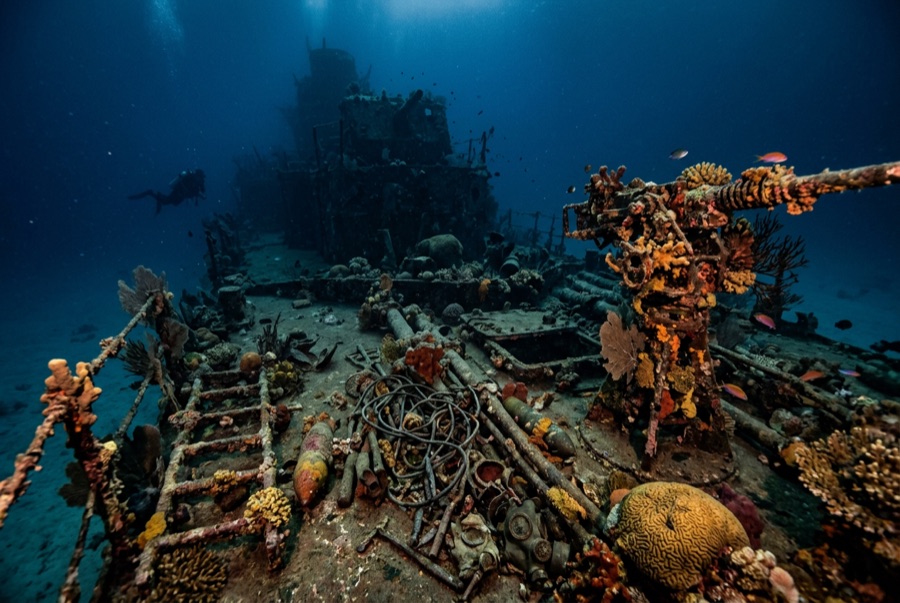
Shinkoku Maru — illustrative image

Shinkoku Maru

Japanese naval fleet oiler Coulé 1944 12–38 m Chuuk (Truk) Lagoon
Illustration générée par IA
Tombe de guerre Des personnes sont mortes ici et, dans certains cas, reposent encore à bord. Plongez-y comme vous visiteriez un mémorial : rien de touché, rien de prélevé, rien de dérangé.
Bien documenté
Profondeur jusqu'au pont
12 m / 39 ft
Profondeur maximale
38 m / 125 ft
Construit / coulé
1940 / 1944
Longueur
152 m
Tonnage
10,020 GRT
Orientation
Upright
Niveau
Intermediate
Meilleurs mois
Dec–Apr

L'histoire

The Shinkoku Maru had already touched history before she reached the bottom of Truk Lagoon: completed in 1940, she was one of the tankers that refueled the strike force on its run toward Pearl Harbor in December 1941. She spent the war feeding the fleet's boilers until Operation Hailstone found her at anchor in February 1944, when an aircraft torpedo ended her and she settled upright and nearly level on the lagoon floor. Time has been strangely generous. Sitting in nutrient-rich, sheltered water, her decks, rails, masts, and bridge have grown the densest coral garden of any wreck in the lagoon — anemones carpet the telegraphs, and night dives here rank among the finest anywhere. The counterweight to all that color is below decks: her sick bay, with its operating table, is one of the lagoon's most sobering spaces, and human remains have been encountered aboard. She is dived, rightly, as both reef and grave.

Comment elle a coulé: Sunk by US carrier aircraft during Operation Hailstone, February 1944.

Plongée sur ce site aujourd'hui

Condition: Upright, intact, and thickly overgrown; among the best-preserved large wrecks of the Pacific war.

Pénétration: Full With Training. The bridge, engine room, and sick bay are dived by wreck-trained teams with guides; the sick bay in particular calls for slow fins and silence. Toute pénétration en environnement semi-fermé exige une formation spécifique — au minimum une certification épave, et une formation technique épave pour une pénétration complète.

Certification recommandée: Advanced Open Water; wreck training for interiors

Courant: Mild · Visibilité: 15–30 m

Vie marine: Anemonefish colonies on the superstructure, soft corals sheathing every rail, reef sharks passing at the bow, and prolific invertebrate life after dark.

Dangers: Deep silt inside, aging overheads, and the usual lagoon rule: fine trim or stay out.

Protection & réglementation

Protected under Chuuk state law as part of the lagoon monument; dive permit/fee applies.

A war grave containing human remains — enter briefly, touch nothing, and photograph the dead not at all.

Everything aboard is protected; removal is illegal.

Regarder

Depuis les canaux officiels

Toutes les vidéos →

Les vidéos sont des liens intégrés vers les chaînes de leurs créateurs — nous n'hébergeons rien et créditons tout.

Sources: CombinedFleet.com ↗Wikipedia ↗ · Informations vérifiées par rapport aux sources ci-dessus ; les champs sans référence sont marqués non encore vérifiés.

Australie, Nouvelle-Zélande & Asie de l'Est

Cairns & the Ribbon ReefsNingaloo ReefCoral Sea & Osprey ReefOkinawa & the Kerama IslandsPoor Knights IslandsTownsville & the YongalaGreen IslandIzu Peninsula

Caraïbes & Atlantique occidental

BonaireCozumelRiviera Maya & the CenotesBelize Barrier ReefGrand CaymanIsla Mujeres & CancúnRoatánTiger Beach & Grand Bahama

Europe, Atlantique & Méditerranée

Malta & GozoSilfra & IcelandThe AzoresCanary IslandsLarnaca & the ZenobiaScapa FlowArctic NorwayMadeira

Océan Indien & Afrique de l'Est

North & South Malé AtollsAri AtollBaa Atoll & Hanifaru BayAliwal Shoal & UmkomaasMafia IslandMauritiusSeychellesSodwana Bay

Îles du Pacifique & Micronésie

PalauChuuk (Truk) LagoonFakaravaKona, HawaiʻiRangiroaTaveuni & Rainbow ReefBeqa Lagoon & Pacific HarbourEspiritu Santo

Mer Rouge & Moyen-Orient

Sharm El Sheikh & Ras MohammedBrothers, Daedalus & St John'sDahabHurghada & El GounaMarsa Alam & the Deep SouthAqabaDaymaniyat IslandsMusandam Peninsula

Asie du Sud-Est et Triangle de Corail

Bali & Nusa PenidaKomodoRaja AmpatSipadan & MabulAnilaoCoronKoh TaoLembeh Strait

Les Amériques et Pacifique Est

Galápagos IslandsCocos IslandFlorida KeysSea of Cortez & Cabo PulmoSocorro & the RevillagigedosBritish ColumbiaCalifornia Channel IslandsCosta Rica Pacific Coast