Siti di immersione, stagioni e fauna marina — ricercati, mappati, pianificati.
Menu
Destinazioni Siti di immersione Vita marina Relitti Notizie
Pianifica un viaggio Pianificatore di viaggi Quando immergersi Calcolatore dei costi Confronti Calendario della fauna marina Temperatura dell'acqua Liveaboard Operatori & resort Parchi marini Camere iperbariche Mappa del mondo
Regioni Australia, Nuova Zelanda e Asia OrientaleCaraibi e Atlantico occidentaleEuropa, Atlantico e MediterraneoOceano Indiano e Africa OrientaleIsole del Pacifico & MicronesiaMar Rosso & Medio OrienteAsia meridionale e Triangolo dei CoralliLe Americhe e il Pacifico orientale Paesi
Impara e strumenti Tutte le guide Brevetti Guide all'attrezzatura Video Interroga i dati AI Agent API
Informazioni Chi siamo Metodologia Disclaimer Contatti
La tua vista
★ Salvato

Le tue destinazioni, siti e specie preferiti — salvati in questo browser.

API GATEWAY

Accesso JSON gratuito in sola lettura ai dati in cache dell'atlante.

Modalità scura

🧭 Visualizzazione Guidata
Sei nuovo alle immersioni — profondità, correnti, livelli di brevetto? Spieghiamo ogni termine mentre navighi, in modo semplice e chiaro. Gli stessi dati, con il supporto integrato.

⚡ Visualizzazione Esperta
Conosci già la differenza tra una parete e una drift dive. Solo i dati — chiari, rapidi e compatti. Questa è la visualizzazione predefinita.

Lingua dell'interfaccia
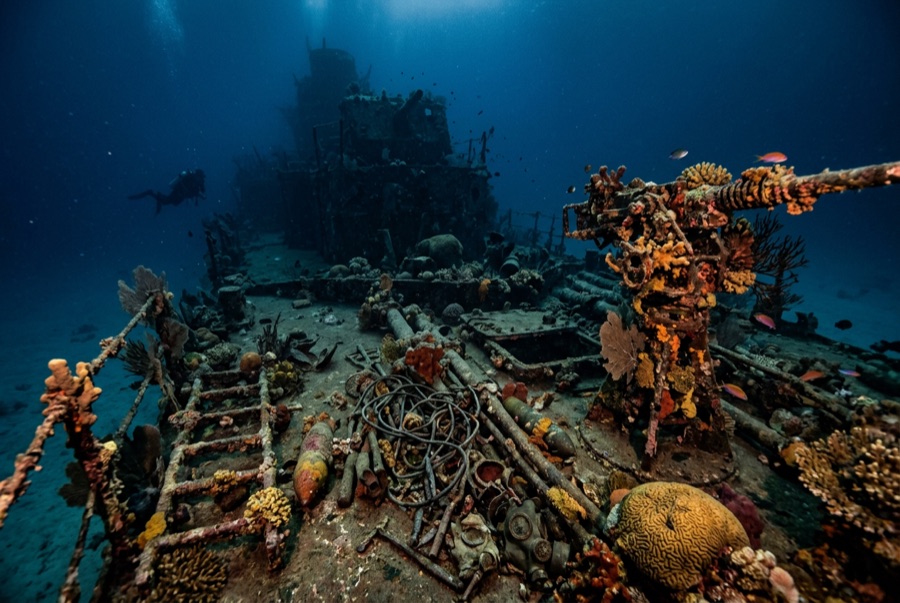
Shinkoku Maru — illustrative image

Shinkoku Maru

Japanese naval fleet oiler Affondata 1944 12–38 m Chuuk (Truk) Lagoon
Illustrazione generata dall'AI
Tomba di guerra Qui sono morte delle persone che, in alcuni casi, riposano ancora a bordo. Immergiti come se stessi visitando un memoriale: nulla va toccato, prelevato o disturbato.
Ben documentato
Profondità al ponte
12 m / 39 ft
Profondità massima
38 m / 125 ft
Costruito / affondato
1940 / 1944
Lunghezza
152 m
Stazza
10,020 GRT
Orientamento
Upright
Livello
Intermediate
Mesi migliori
Dec–Apr

La storia

The Shinkoku Maru had already touched history before she reached the bottom of Truk Lagoon: completed in 1940, she was one of the tankers that refueled the strike force on its run toward Pearl Harbor in December 1941. She spent the war feeding the fleet's boilers until Operation Hailstone found her at anchor in February 1944, when an aircraft torpedo ended her and she settled upright and nearly level on the lagoon floor. Time has been strangely generous. Sitting in nutrient-rich, sheltered water, her decks, rails, masts, and bridge have grown the densest coral garden of any wreck in the lagoon — anemones carpet the telegraphs, and night dives here rank among the finest anywhere. The counterweight to all that color is below decks: her sick bay, with its operating table, is one of the lagoon's most sobering spaces, and human remains have been encountered aboard. She is dived, rightly, as both reef and grave.

Come è affondata: Sunk by US carrier aircraft during Operation Hailstone, February 1944.

Immersioni su di essa oggi

Condizione: Upright, intact, and thickly overgrown; among the best-preserved large wrecks of the Pacific war.

Penetrazione: Full With Training. The bridge, engine room, and sick bay are dived by wreck-trained teams with guides; the sick bay in particular calls for slow fins and silence. Entrare in qualsiasi ambiente overhead richiede una formazione specifica — come minimo una certificazione wreck, e una formazione tecnica wreck per la penetrazione completa.

Certificazione consigliata: Advanced Open Water; wreck training for interiors

Corrente: Mild · Visibilità: 15–30 m

Vita marina: Anemonefish colonies on the superstructure, soft corals sheathing every rail, reef sharks passing at the bow, and prolific invertebrate life after dark.

Pericoli: Deep silt inside, aging overheads, and the usual lagoon rule: fine trim or stay out.

Tutela & normativa

Protected under Chuuk state law as part of the lagoon monument; dive permit/fee applies.

A war grave containing human remains — enter briefly, touch nothing, and photograph the dead not at all.

Everything aboard is protected; removal is illegal.

Guarda

Dai canali ufficiali

Tutti i video →

I video sono link incorporati ai canali dei rispettivi autori — non ospitiamo nulla e diamo sempre credito a tutti.

Fonti: CombinedFleet.com ↗Wikipedia ↗ · Dati verificati rispetto alle fonti indicate; i campi privi di riscontro sono contrassegnati come non ancora verificati.

Australia, Nuova Zelanda e Asia Orientale

Cairns & the Ribbon ReefsNingaloo ReefCoral Sea & Osprey ReefOkinawa & the Kerama IslandsPoor Knights IslandsTownsville & the YongalaGreen IslandIzu Peninsula

Caraibi e Atlantico occidentale

BonaireCozumelRiviera Maya & the CenotesBelize Barrier ReefGrand CaymanIsla Mujeres & CancúnRoatánTiger Beach & Grand Bahama

Europa, Atlantico e Mediterraneo

Malta & GozoSilfra & IcelandThe AzoresCanary IslandsLarnaca & the ZenobiaScapa FlowArctic NorwayMadeira

Oceano Indiano e Africa Orientale

North & South Malé AtollsAri AtollBaa Atoll & Hanifaru BayAliwal Shoal & UmkomaasMafia IslandMauritiusSeychellesSodwana Bay

Isole del Pacifico & Micronesia

PalauChuuk (Truk) LagoonFakaravaKona, HawaiʻiRangiroaTaveuni & Rainbow ReefBeqa Lagoon & Pacific HarbourEspiritu Santo

Mar Rosso & Medio Oriente

Sharm El Sheikh & Ras MohammedBrothers, Daedalus & St John'sDahabHurghada & El GounaMarsa Alam & the Deep SouthAqabaDaymaniyat IslandsMusandam Peninsula

Asia meridionale e Triangolo dei Coralli

Bali & Nusa PenidaKomodoRaja AmpatSipadan & MabulAnilaoCoronKoh TaoLembeh Strait

Le Americhe e il Pacifico orientale

Galápagos IslandsCocos IslandFlorida KeysSea of Cortez & Cabo PulmoSocorro & the RevillagigedosBritish ColumbiaCalifornia Channel IslandsCosta Rica Pacific Coast