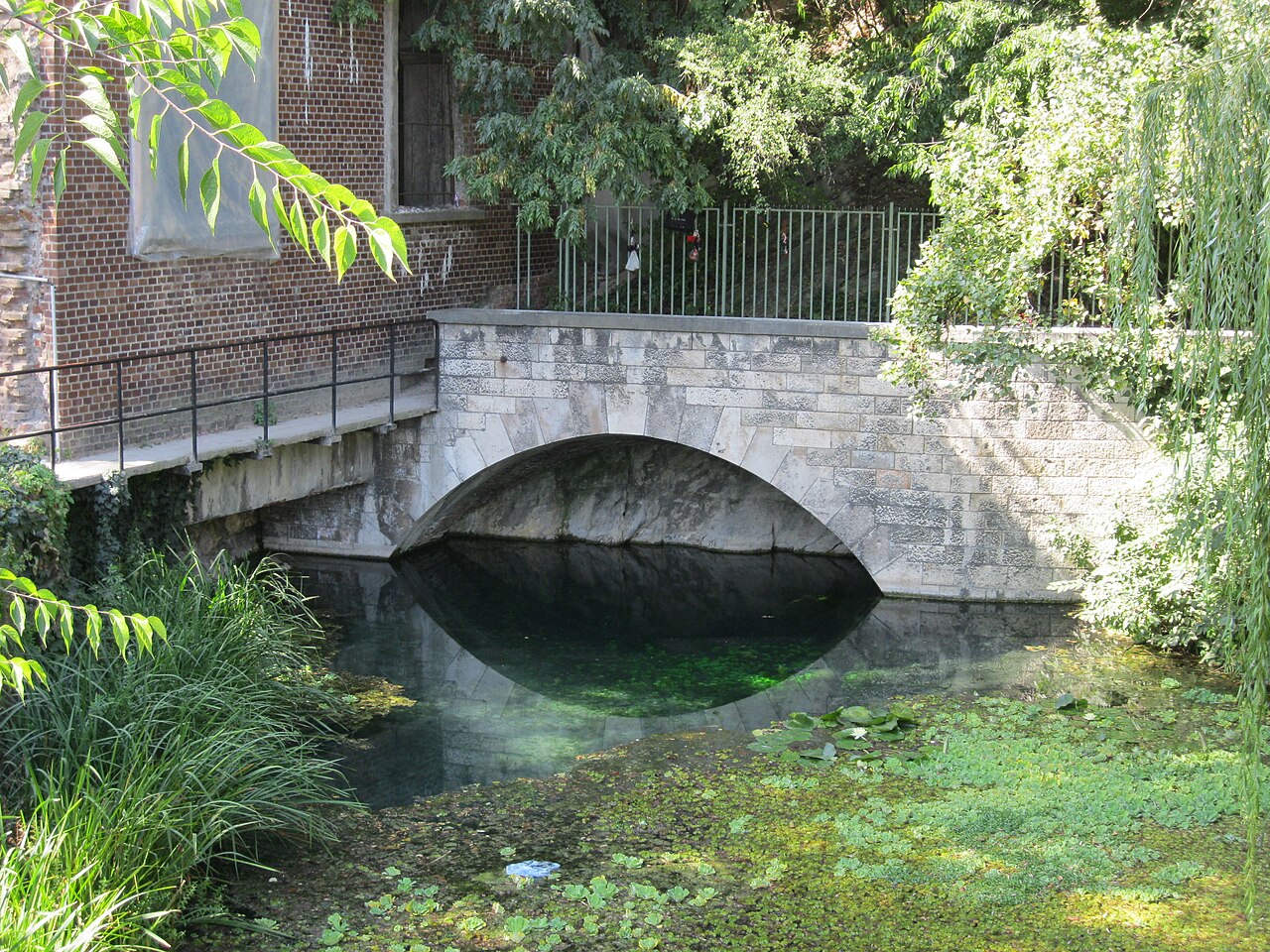
Molnár János Cave
Research report to the nature conservation authority: 6,025 m at the start of the 2025 reporting period plus about 200 m of new passage found in 2025, giving 6,225 m at 2025-12-31. No overall maximum depth was found in the official or operator sources opened. The operator's 2026 price list sells standard guided dives to 40 m, deep dives to 60 m and dives below 60 m on request.
A largely water-filled, actively forming thermal cave beneath the Buda side of Budapest, surveyed to about 6.2 km by the end of 2025. Recreational diving is offered only as guided dives through one licensed dive centre.
The Molnár János Cave opens on the Buda side of central Budapest, where warm spring water feeds the artificial Malom-tó (Mill Lake) beside Frankel Leó út. Almost the whole known cave lies below the water table, so nearly all exploration and survey work has been done by divers.
The cave is named after János Molnár, a 19th-century pharmacist who explored the small dry section above the lake and studied the spring water. Diving exploration began in the 1950s; in the 1970s and 1980s the FTSK Delfin club explored and mapped more than 400 m of passage. A breakthrough in 2002 opened large new sections, including a hall about 86 m long, 27 m wide and 15 m high, and the surveyed length has since grown to more than 6 km.
For visiting divers the cave is unusual in two ways: it sits inside a capital city, and the water is warm by cave-diving standards, with measured temperatures between roughly 20 and 26 °C in different passages. Diving is organised exclusively as guided dives by the licensed on-site dive centre, which publishes its own equipment rules, group-size limits and prices.
The cave is strictly protected. Scientific work (water chemistry, flow measurements, biology and new exploration) continues under research permits issued by the Duna-Ipoly National Park Directorate, and the research team files annual reports with the national nature conservation authority.
Geology
The cave is described by its operator as a hypogenic cave: it was dissolved from below by rising thermal water, mainly through mixing corrosion where water bodies of different temperature and chemistry meet along fractures. Passages follow tectonic lines in Upper Eocene limestone and marl (the Buda Marl), and the cave is still actively forming.
Water, flow and flooding
Spring water discharges from the cave into Malom-tó, which drains through a sluice and canal towards the Danube beneath the Lukács Baths. Temperatures inside vary by passage: in autumn 2025 the research team measured about 20 to 26 °C, with the warmest water in the Kessler Hall and cooler inflows elsewhere. The same report describes a newly observed temperature layering near the old entrance from August 2025, with a cooler bottom layer flowing back into the cave.
Why it matters
Listed by showcaves.com as the longest active thermal cave in Hungary, and a long-running research site for thermal-karst hydrology and water chemistry (sampling series since 2014). Three Hungarian Niphargus species (small cave crustaceans) and other aquatic invertebrates have been recorded.
Conditions
Thermal water, warm for a cave. The operator gives 20-28 °C year-round; 2025 research measurements ranged from about 20 to 26 °C depending on the passage. The operator reports very slow flow and no strong currents. Its rules allow wetsuits only in Zone 1; deeper zones require a drysuit.
Typical ranges from published sources, not current conditions.
Survey and exploration history
| 1856 | János Molnár explores the dry passages above the spring lake. [6] |
| 2002 | A new passage is discovered, including a hall charted at about 86 m long, 27 m wide and 15 m high. [5] |
| 2025 | A new lead from survey point D12 yields about 200 m of passage, bringing the surveyed length to 6,225 m. [4] |
Entrances and dive sites
The diving entrance is the spring in Malom-tó at Frankel Leó út 48, used by the licensed dive centre. A second, dry entrance on the hillside leads down to the water table. Divers enter only via the dive centre.
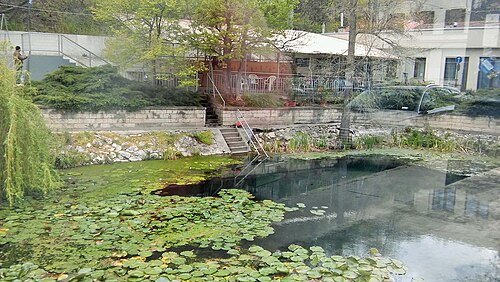
For orientation, not navigation. Hollow dots are approximate.
Every fact on this page, with its source (12)
| Fact | Status | Source |
|---|---|---|
| The surveyed length was 6,225 m at 2025-12-31, after about 200 m of new passage was found in 2025.Figure from the research team's annual report filed under permit DINPI/4464-0/2025. | Verified | [4] |
| Water temperature is about 20-28 °C year-round according to the operator; research measurements in September-November 2025 ranged from about 20.2 to 26.3 °C.Operator range is a provider claim; the 2025 measurements are from the research report. | Verified | [1] [4] |
| Only guided dives are available in the cave, booked through the dive centre, which describes itself as the only licensed dive centre there.Operator statements; rules document valid from 2016-08-08, diving page viewed 2026-10-14. | Reported | [1] [2] |
| Research in the cave is permitted by the Duna-Ipoly National Park Directorate under permit DINPI/4464-0/2025, valid until 2027-12-31, held by the Barlangkutató Búvár és Természetvédő Társaság. | Verified | [4] |
| All divers must provide a medical certificate, valid cave-diving insurance and the certification needed for the specific dive.Operator rules valid from 2016-08-08; may have been updated since. | Reported | [2] |
| Divers without cave certification need at least Advanced Open Water certification and experience, and can join an intro dive; groups are 2-3 non-cave divers plus a guide.The 2016 rules require cave certification for cave dives; the current diving page and 2026 price list add an intro option for non-cave divers. | Reported | [1] [3] |
| Standard guided dives are limited to 40 m and deep dives to 60 m, with dives below 60 m arranged on request.Operator price list valid from 2026-08-12. | Reported | [3] |
| FTSK Delfin divers explored and charted more than 400 m in the 1970s and 1980s, and a 2002 discovery opened a hall about 86 m long, 27 m wide and 15 m high.Operator history page and a reference site agree. | Reported | [5] [6] |
| The cave has been protected since 1982.Stated by the operator and showcaves.com; the official protection register was not opened. | Reported | [5] [6] |
| From August 2025 the research team observed persistent temperature layering near the old entrance, with a cooler bottom layer flowing back into the cave. | Verified | [4] |
| showcaves.com lists the cave as the longest active thermal cave in Hungary.Reference site only; no official ranking opened. | Reported | [6] |
| showcaves.com gives 47.5181319, 19.0359332 for the cave at Frankel Leó út 48, the public dive-centre address.Public address of the dive centre. | Reported | [6] [1] |
Verified: stated by an official or primary source we opened. Reported: from a secondary source only. Sources conflict: the note gives both versions. May be out of date: the newest source we found is old.
Written in our own words from the sources above. Report a correction