Dive sites, seasons and marine life — researched, mapped, planned.
Menu
Destinations Dive Sites Marine Life Wrecks News
Plan a trip Trip planner When to dive Cost calculator Comparisons Marine-life calendar Water temperature Liveaboards Operators & resorts Marine parks Hyperbaric chambers World map
Regions Australia, New Zealand & East AsiaCaribbean & Western AtlanticEurope, Atlantic & MediterraneanIndian Ocean & East AfricaPacific Islands & MicronesiaRed Sea & Middle EastSoutheast Asia & Coral TriangleThe Americas & Eastern Pacific Countries
Learn & Tools All guides Certifications Gear guides Videos Ask the Data AI Agents API
About About us Methodology Disclaimer Contact
Your view
★ Saved

Your starred destinations, sites and species — stored in this browser.

API GATEWAY

Free read-only JSON access to the atlas's cached data.

Dark mode

🧭 Guided View
New to diving — depths, currents, certification levels? We explain every term as you browse, in plain English. Same data, with the help built in.

⚡ Expert View
You already know the difference between a wall and a drift. Just the data — clean, fast and compact. This is the default view.

Interface language

Comparison

Raja Ampat vs Komodo
Raja Ampat

Raja Ampat

Indonesia
Komodo

Komodo

Indonesia
The short answerRaja Ampat is the deeper commitment — extra flights to Sorong, liveaboard-or-remote-resort prices, and an October-to-April prime season — repaid with the richest reef life yet surveyed. Komodo answers with easier logistics, day boats from Labuan Bajo, fiercer currents, and more big-animal action per dollar, plus Komodo dragons on land between dives. Choose by appetite: maximum biodiversity and remoteness against adrenaline drift diving on a manageable budget and timeline. Neither disappoints; they reward different tolerances for cost, current, and travel time.
Pick Raja Ampat Pick Raja Ampat if you want the richest reefs on Earth and will pay in flights, days, and dollars to drift over them.
Pick Komodo Pick Komodo if you want big animals, ripping drift dives, and dragons on shore, all a short hop from Bali on a friendlier budget.

The numbers, side by side

Raja AmpatKomodo
Best monthsOct–AprApr–Oct
Water (documented range)26–30 °C / 79–86 °F20–29 °C / 68–84 °F
Visibility10–25 m5–30 m
LevelModerateModerate
Two-tank boat dive$80–$140$90–$140
Charted sites88
Shore sites00
Wrecks00
Liveaboards serving85
Reliable big-ticket species LionfishTasselled WobbegongGiant ClamBumphead ParrotfishClownfish & AnemonefishPinnate Batfish Blacktip Reef SharkReef Manta RayTitan Triggerfish

Every figure pulled live from the two destination records — ranges and confidence labels apply as on their own pages.

The longer answer

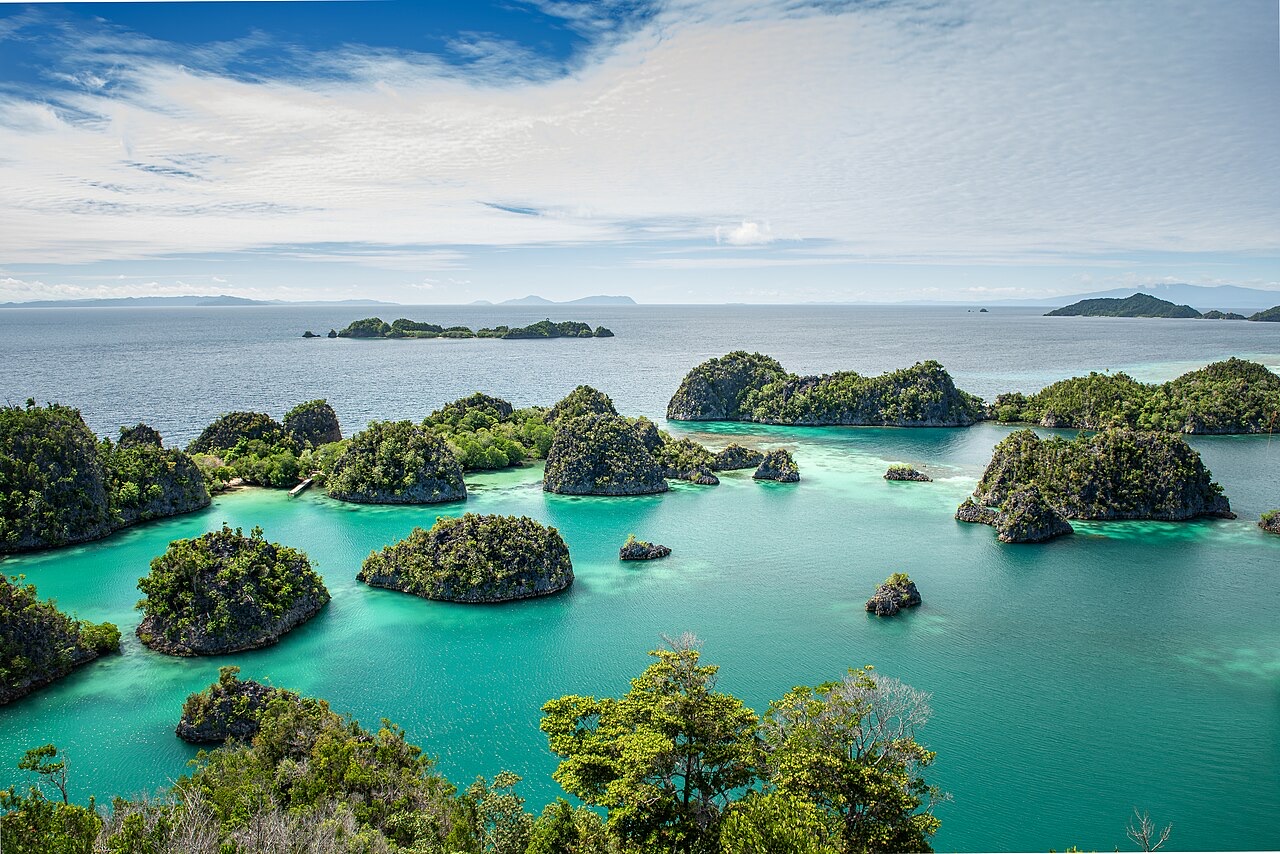
Indonesia holds both of these, and the country's embarrassment of riches makes the choice honest rather than obvious. Raja Ampat, off the Bird's Head of West Papua, is where reef diversity peaks — ichthyologist Gerald Allen famously logged 374 fish species on a single dive at Cape Kri. The signature experience is abundance: bait balls over unbroken coral, reef mantas at cleaning stations, and a tasselled wobbegong flattened under a table coral on most dives. Getting there means flying to Sorong via Jakarta or Makassar, then a ferry or a liveaboard pickup; the classic season runs October to April, when boats also reach Misool's southern reefs.

Komodo is a different animal in every sense. A short flight from Bali lands you in Labuan Bajo, where day boats reach the central park in a morning and liveaboards need only a few nights. Tidal water squeezes between islands here, so the marquee dives — Batu Bolong, Castle Rock, the manta aggregations at Karang Makassar — run on current: exhilarating, occasionally humbling, and best treated with a guide who reads the tides. The north dives best roughly April through November, the cooler south picks up the slack in other months, and no other world-class destination lets you watch a three-meter monitor lizard between dives.

Budget separates them further: Komodo supports backpacker day trips through mid-range liveaboards, while Raja Ampat starts at expensive and climbs. Skill separates them less than reputation suggests — both demand honest buoyancy and current sense, though Komodo's washing-machine moments are the sharper test. Reef obsessives go west; adrenaline and value go east.

Editorial estimate

Go deeper

Australia, New Zealand & East Asia

Cairns & the Ribbon ReefsNingaloo ReefCoral Sea & Osprey ReefOkinawa & the Kerama IslandsPoor Knights IslandsTownsville & the YongalaGreen IslandIzu Peninsula

Caribbean & Western Atlantic

BonaireCozumelRiviera Maya & the CenotesBelize Barrier ReefGrand CaymanIsla Mujeres & CancúnRoatánTiger Beach & Grand Bahama

Europe, Atlantic & Mediterranean

Malta & GozoSilfra & IcelandThe AzoresCanary IslandsLarnaca & the ZenobiaScapa FlowArctic NorwayMadeira

Indian Ocean & East Africa

North & South Malé AtollsAri AtollBaa Atoll & Hanifaru BayAliwal Shoal & UmkomaasMafia IslandMauritiusSeychellesSodwana Bay

Pacific Islands & Micronesia

PalauChuuk (Truk) LagoonFakaravaKona, HawaiʻiRangiroaTaveuni & Rainbow ReefBeqa Lagoon & Pacific HarbourEspiritu Santo

Red Sea & Middle East

Sharm El Sheikh & Ras MohammedBrothers, Daedalus & St John'sDahabHurghada & El GounaMarsa Alam & the Deep SouthAqabaDaymaniyat IslandsMusandam Peninsula

Southeast Asia & Coral Triangle

Bali & Nusa PenidaKomodoRaja AmpatSipadan & MabulAnilaoCoronKoh TaoLembeh Strait

The Americas & Eastern Pacific

Galápagos IslandsCocos IslandFlorida KeysSea of Cortez & Cabo PulmoSocorro & the RevillagigedosBritish ColumbiaCalifornia Channel IslandsCosta Rica Pacific Coast