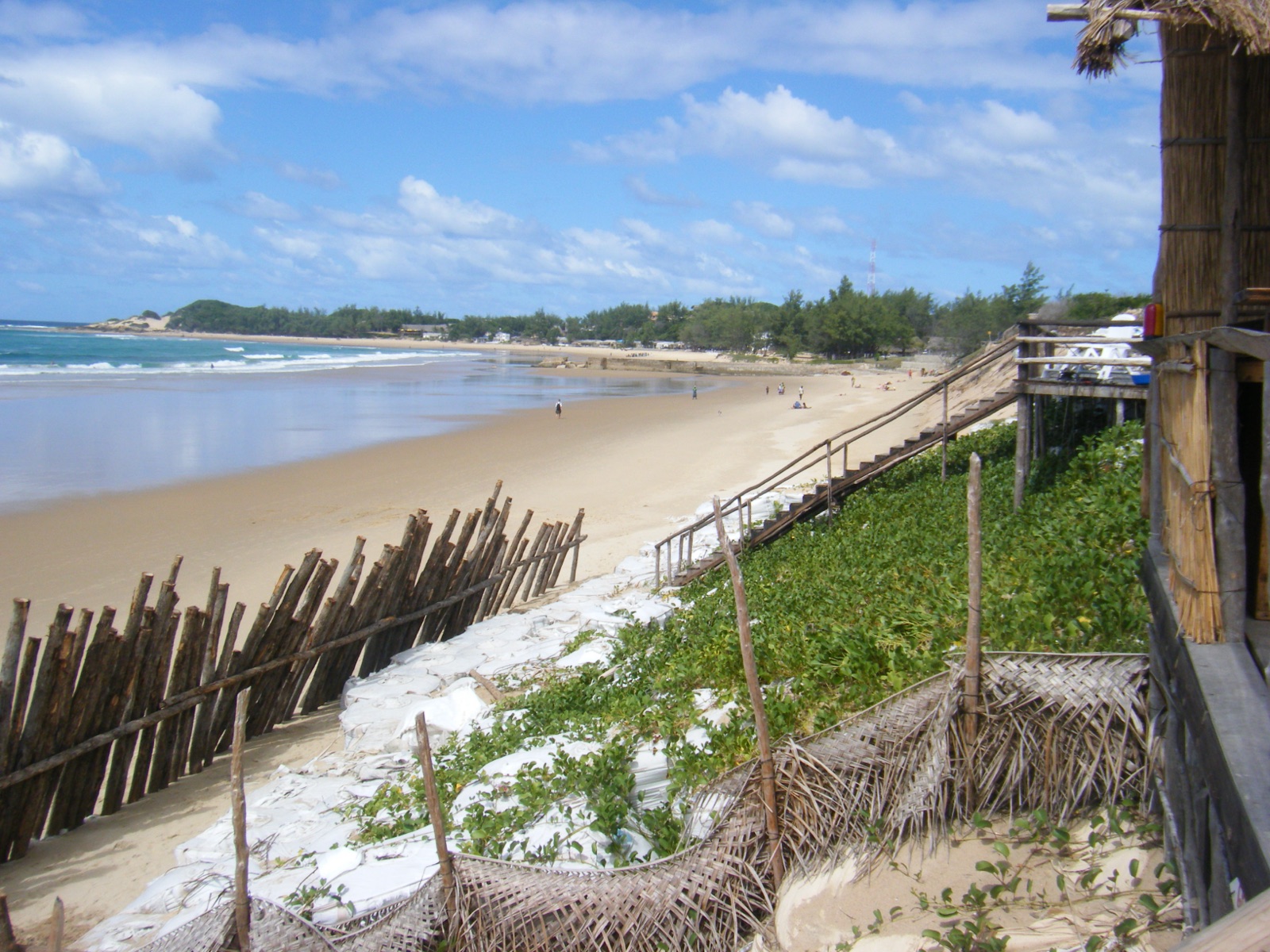
Tofo Beach
Tofo Beach, on Mozambique's Inhambane peninsula, built its name on megafauna: reef and oceanic mantas at deep cleaning stations, whale sharks cruising the coastal plankton lines, humpbacks from June to October, and smalleye stingrays seen more often here than almost anywhere. Launches punch out through the surf, sites run deep, and sightings are wild-ocean honest: extraordinary on the good days, quiet on others, with manta numbers well below their mid-2000s peak.
Why dive here
This stretch of coast is one of the world's longest-running manta research sites (the work that separated reef and oceanic mantas as species drew heavily on Tofo animals), and the reason is structural: deep reefs like Manta Reef and Giant's Castle sit in nutrient-rich water where big filter feeders come to be cleaned and to feed. On a strong day you may share a cleaning station with a four-meter oceanic manta while a smalleye stingray the size of a dinner table glides past the sand. Whale sharks patrol the plankton bands year-round and are usually met snorkeling on 'ocean safari' boat runs. Honesty matters here: long-term monitoring shows steep declines in manta sightings since the mid-2000s, and no dive guarantees the headline animals. What Tofo guarantees instead is proper ocean diving (surf launches, blue water, deep reef architecture, whale song humming through your wetsuit in season) plus a barefoot beach town that has stayed cheap and unpolished in the best way.
Month by month
June-October adds humpbacks to the year-round mantas and whale sharks, with dry, cooler weather; October-February has historically been the strongest whale shark window. January-March is hot and wet with cyclone risk.
| Month | Water | Visibility | What it's like |
|---|---|---|---|
| January●●●●○ | 26–29 °C / 79–84 °F | 8–20 m | Hot, rainy spells; plankton-rich whale shark water. |
| February●●●○○ | 26–29 °C / 79–84 °F | 8–20 m | Cyclone-watch month; warm and green. |
| March●●●●○ | 26–29 °C / 79–84 °F | 8–20 m | Rains ease; ocean still warm. |
| April●●●●○ | 25–28 °C / 77–82 °F | 10–25 m | Settling weather; comfortable diving. |
| May●●●●○ | 24–27 °C / 75–81 °F | 10–25 m | Dry season begins; clean southern water arrives. |
| June●●●●○ | 22–25 °C / 72–77 °F | 10–25 m | First humpbacks; cooler and drier. |
| July●●●●○ | 22–25 °C / 72–77 °F | 10–25 m | Whale song audible on most dives. |
| August●●●●○ | 22–25 °C / 72–77 °F | 10–25 m | Humpback peak; breaches on the boat rides. |
| September●●●●○ | 23–26 °C / 73–79 °F | 10–25 m | Mothers and calves close inshore. |
| October●●●●○ | 24–27 °C / 75–81 °F | 10–25 m | Warming; whale shark encounters pick up. |
| November●●●●○ | 25–28 °C / 77–82 °F | 8–20 m | Historically strong whale shark month. |
| December●●●●○ | 26–29 °C / 79–84 °F | 8–20 m | Hot, with afternoon storms; big-animal lottery continues. |
Monthly figures confidence: Documented. Months without a row have no verified data. We would rather show a gap than invent one.
The dive sites (4)
| Site | Type | Depth | Level | Access | |
|---|---|---|---|---|---|
| Giant's Castle Smalleye stingray territory; deep-passage mantas; humpback song in winter | Reef | 21–33 m | Advanced | Boat | |
| Manta Reef Historic manta cleaning stations visited by both manta species | Reef | 16–30 m | Advanced | Boat | |
| Sherwood Forest Green tree coral groves; slow-lane macro at depth with big-ray flybys | Reef | 24–32 m | Advanced | Boat | |
| The Office Relaxed ledge reef with dense mid-size life; surprise ray flybys | Reef | 14–22 m | Intermediate | Boat |
Marine life you can plan around
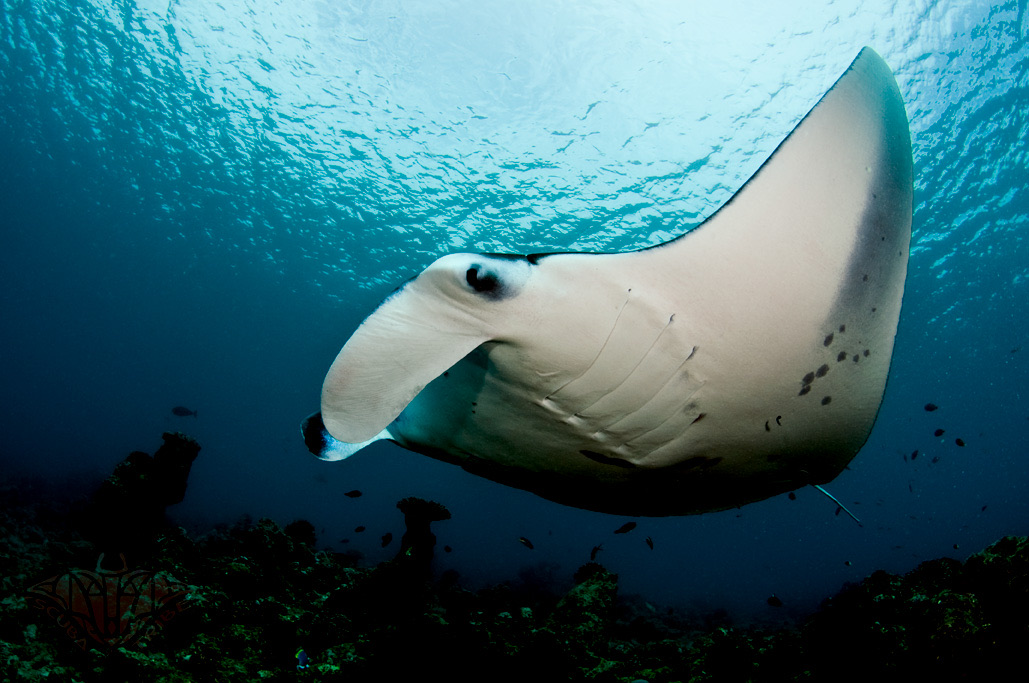
Reef Manta Ray
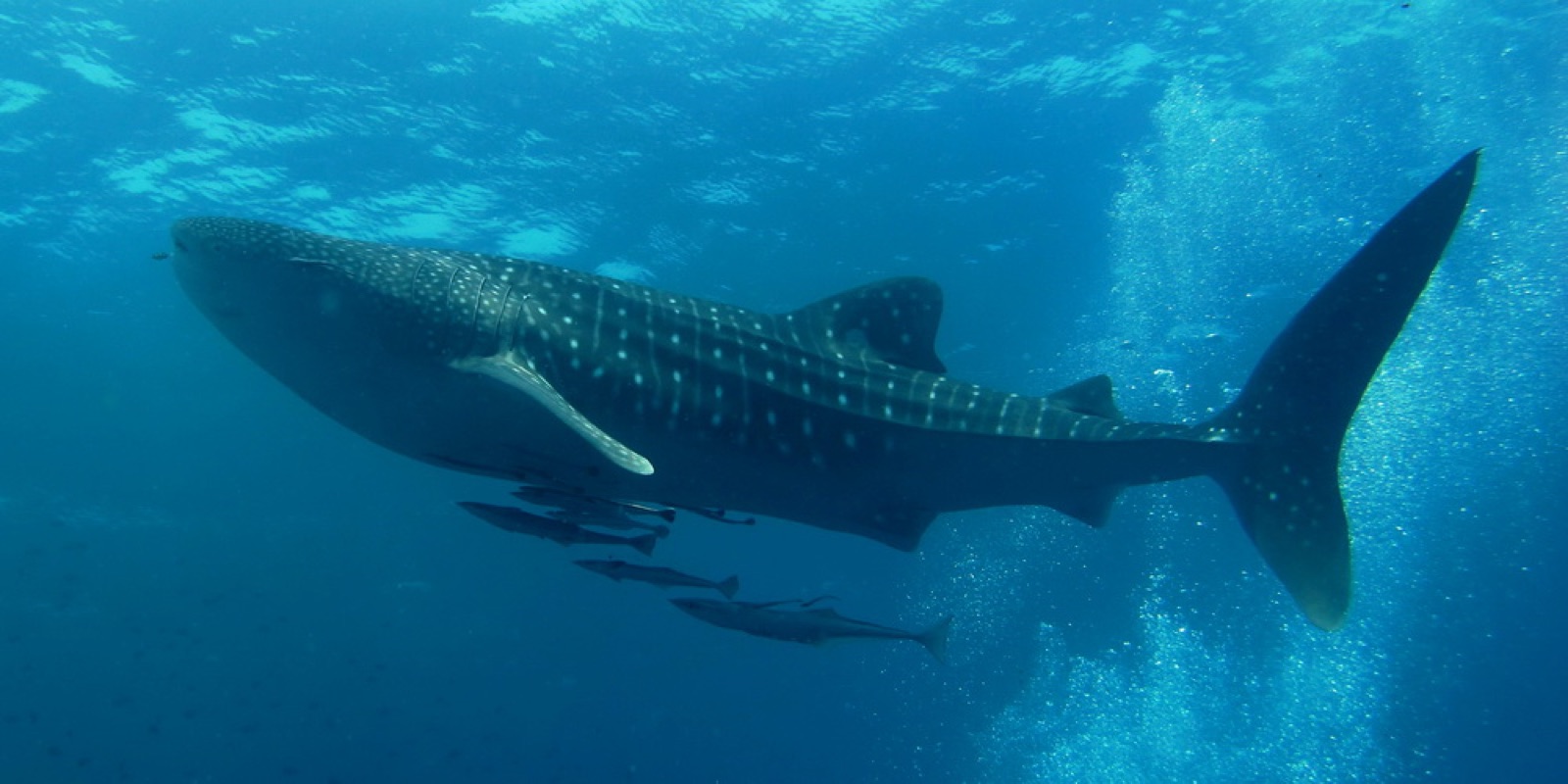
Whale Shark
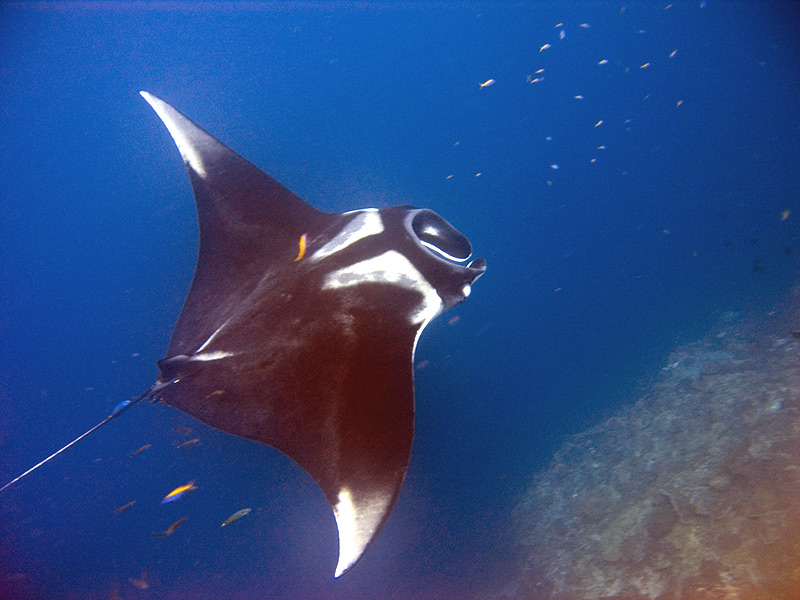
Oceanic Manta Ray
Reef and oceanic mantas, whale sharks, humpback whales June-October, smalleye and marbled rays, turtles, big morays, and seasonal baitfish action along the drop-offs.
Getting there & staying
Getting there: Fly to Inhambane via Maputo or Johannesburg, then 30-40 minutes by road to Tofo; overlanders drive the EN1 from Maputo in about seven hours.
Where to stay: Tofo village is backpacker-to-boutique: beach lodges, casitas, and a handful of small resorts, with Barra's quieter dunes next door.
Costs: Diving is good value by Indian Ocean standards; ocean-safari snorkel trips price separately, and marine-conservation fees may be added.
Between dives: Ocean safaris, surfing, dune walks at Barra, Inhambane's old town and market, horse rides on the beach, and very good seafood shacks.
Snorkeling: Ocean-safari snorkel trips search the plankton lines for whale sharks, mantas, and dolphins and are the standard way to meet whale sharks here.
Safety & practicalities
Hazards: Surf launches and re-entries, current and surge on deep exposed reefs, long boat rides in open ocean, and depth (several signature sites sit beyond 25 meters).
Advanced certification and solid air management pay off at Manta Reef and Giant's Castle; nitrox extends short deep bottom times. Follow crew instructions closely on every launch.
Nearest recompression: There is no recompression chamber at Tofo or Inhambane; the nearest reliable facilities are in South Africa, so dive conservatively. Emergencies go through local EMS and DAN.