Снаряжение · Core
BCDs (Buoyancy Compensators)
Jacket, back-inflate, and backplate-and-wing designs compared: lift, fit, integrated weights, and travel weight, with honest guidance on when owning one starts to pay.
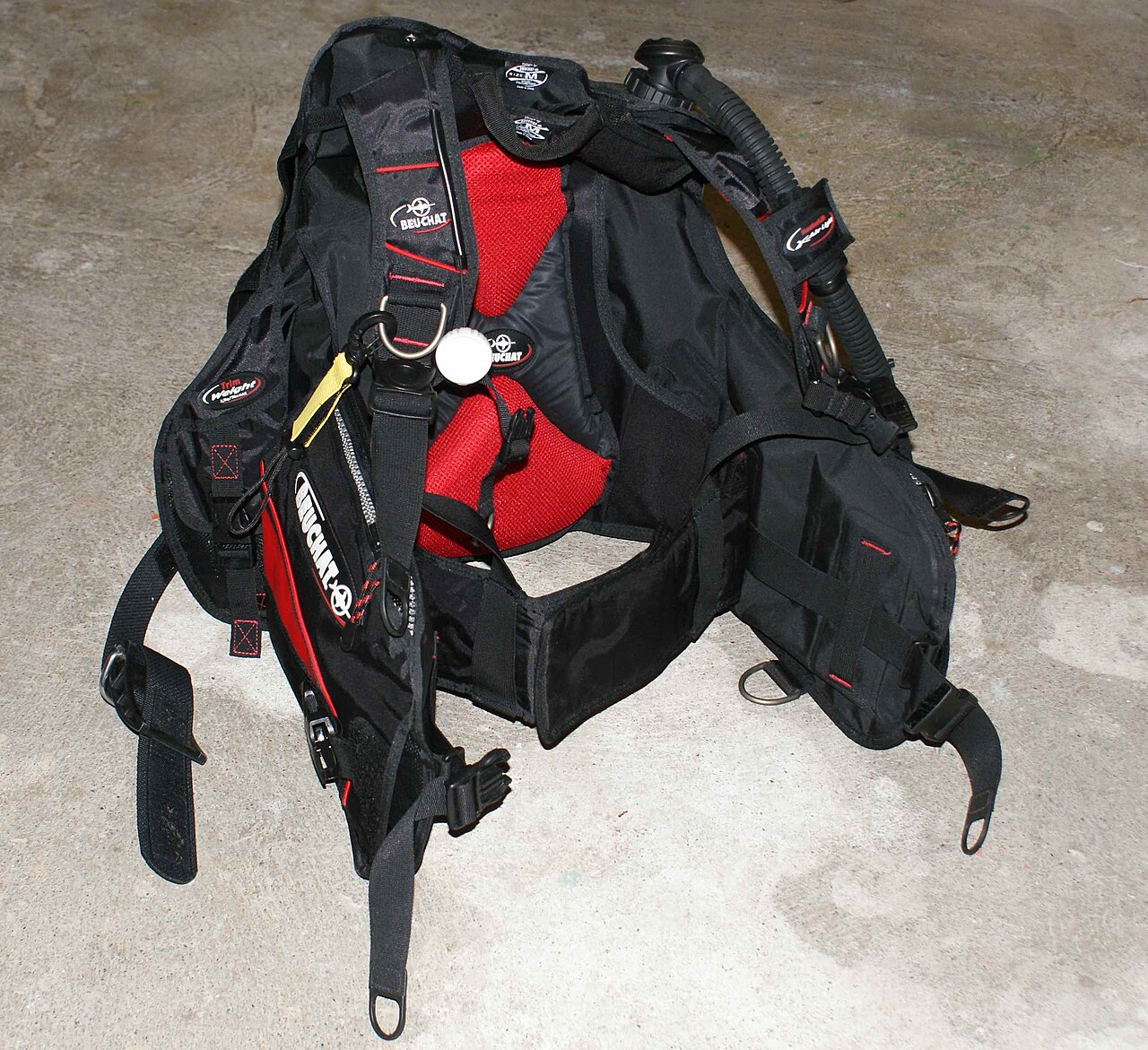
The buoyancy compensator is your position in the water made adjustable: an air cell you inflate from the tank or by mouth and vent through dumps, wrapped in a harness that also carries the cylinder and, on most modern designs, your weights. Small additions of air offset the compression of your wetsuit as you descend; small releases keep the ascent honest. Every other feature - pockets, rings, padding - hangs off that core function, and the differences between styles are really differences in where the air sits.
Jacket-style BCDs wrap the bladder around your torso, float you comfortably upright at the surface, and remain the rental and training standard because they are intuitive and forgiving. Back-inflate designs move the bladder behind you, freeing your chest and pushing you naturally toward the flat, horizontal trim that efficient diving rewards, at the cost of a slight face-forward push at the surface until you learn to lean back. Backplate-and-wing systems take the same idea further: a bare metal plate and webbing harness with a doughnut bladder behind, modular and repairable part by part, sized by assembly rather than by S-M-L, and standard in technical circles - increasingly common among recreational divers who want minimalism and durability. Travel BCDs strip padding and hardware from any of these shapes to save two kilograms or more.
Fit matters more than format. The right size holds the tank steady without the jacket riding up at the surface or squeezing your ribs when inflated; torso length matters more than waist size, women's cuts fit many women far better than unisex smalls, and a BCD tried with a cylinder and weights in a pool tells you more than any showroom. Check that dumps fall under your hands, that integrated-weight pockets click in positively and release with one motion, and that lift capacity suits your diving - warm-water single-tank divers rarely need the huge bladders sold for cold-water kit.
Money: entry jackets run roughly US$250-400, mid-range and travel models US$350-600, and premium jackets or complete backplate-and-wing rigs US$500-900, with technical systems beyond. Rental fleets are genuinely fine for occasional divers - this is the least personal of the core items - so the buying trigger is frequency and consistency: divers logging a few trips a year start to value muscle memory, their own inflator behavior, and weight pockets they trust. Resale value is modest, so buy deliberately.
Care rewards small habits. After diving, rinse the outside, then flush the inside of the bladder through the inflator with fresh water, slosh, and drain - salt crystals inside are what kill BCDs. Store partially inflated, out of sunlight, hanging if possible. Have the inflator and dump valves serviced when they stick or seep; an annual check alongside your regulator service is cheap insurance. For flying, empty it completely and let it ride in checked baggage; it doubles usefully as padding around the rest of your kit.
Цены, это честные рыночные диапазоны, а не предложения; ни один производитель не платит за размещение здесь.