Ausrüstung · Core
Dive Computers
The instrument that tracks your depth, time, and nitrogen in real time: modes, conservatism, air integration, and why a computer is most divers' smartest first major purchase.
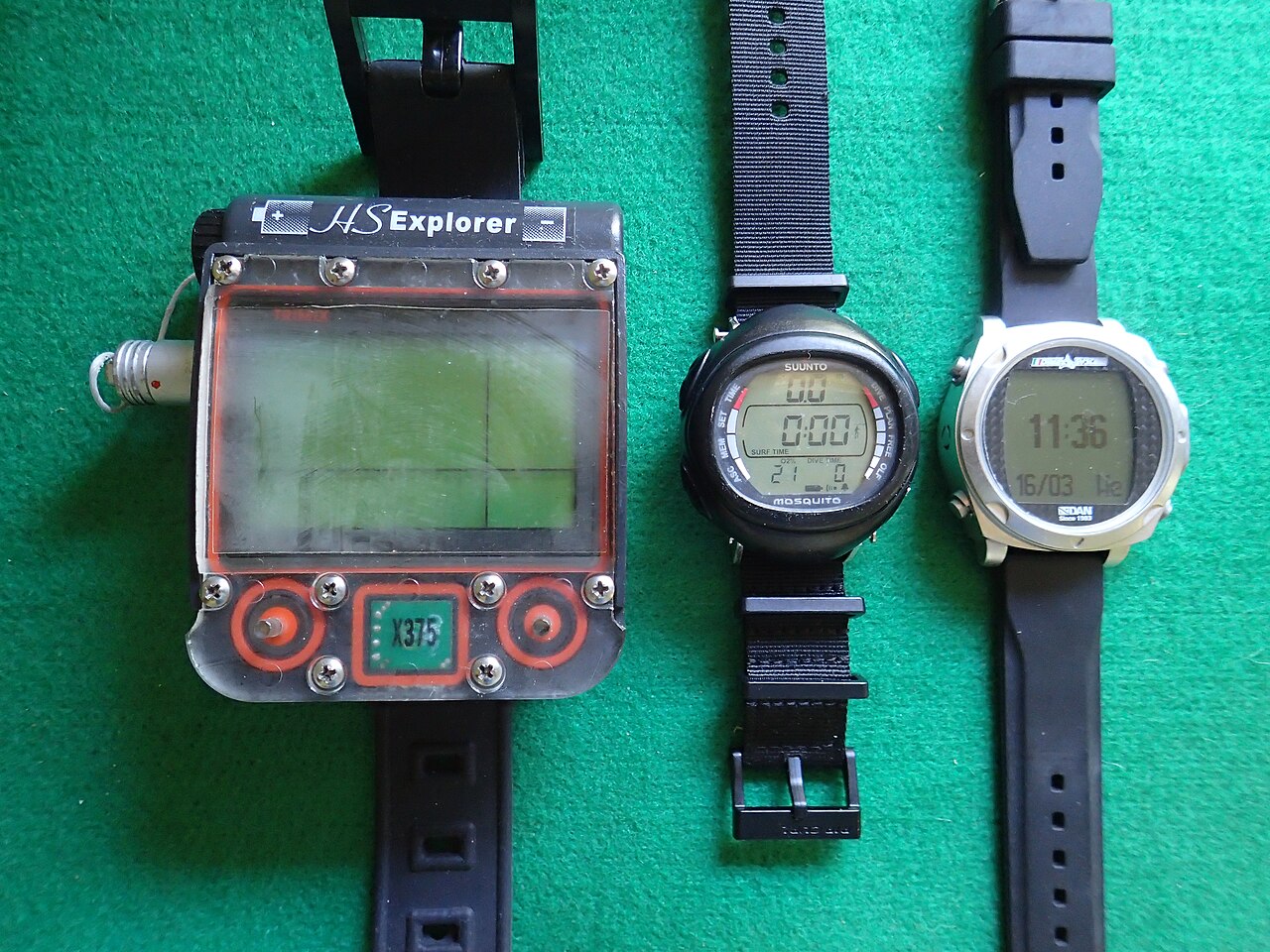
A dive computer continuously answers the question that used to require tables, a watch, and faith: how much longer can I stay at this depth and still surface without mandatory stops. It samples depth and time every few seconds, runs them through a decompression model, and displays remaining no-stop time, ascent-rate warnings, safety-stop timing, and surface-interval bookkeeping across repetitive dives - arithmetic no human does honestly at 30 m. Modern units add nitrox handling as standard, and most also log every dive for download to a phone or app.
Choosing one is mostly choosing which extras you will actually use. Every current computer handles recreational air and nitrox diving competently, so the differences live elsewhere. Display: big bright color screens are effortless to read but hungrier for battery; segment displays run for years on a coin cell. Form: watch-sized units wear all day and double as timepieces; larger wrist units and consoles favor aging eyes and gloved wrists. Adjustable conservatism - often expressed as gradient factors or low/medium/high settings - lets cautious divers pad their margins, and is worth understanding whichever unit you buy, because two computers on the same dive can legitimately disagree. Air integration reads tank pressure from a transmitter on your first stage, folding gas planning into the same screen; it is genuinely useful and genuinely optional. Freediving, gauge, and technical multi-gas modes matter only if those futures are plausibly yours - but buying one step ahead of your training is cheaper than buying twice.
Money maps to those tiers. Reliable entry-level computers run roughly US$150-350; mid-range units with color screens, rechargeable batteries, and optional air integration sit around US$350-800; and premium or technical instruments run US$800-1,500 before transmitters, which add a few hundred more. All of them keep you inside the same physics; the extra money buys legibility, battery convenience, and headroom.
The ownership argument is stronger here than for any other big item. A rental computer resets your nitrogen history to unknown every time you swap units, mid-trip swaps muddle repetitive-dive tracking, and unfamiliar menus at depth are their own small hazard - while your own unit knows your week, your settings, and your logbook. That is why the standard advice puts a computer, with mask and exposure protection, in the first wave of purchases even for divers who happily rent everything else.
Care is light but specific. Rinse after diving, especially the contacts and buttons; soak off salt periodically. User-changeable batteries invite a new O-ring with each change and dry hands doing it; sealed rechargeables want charging discipline before trips; and units with shop-changed batteries should get pressure-tested at the swap. Firmware updates arrive via the app - install them at home, never the night before a dive day. Carry it in hand luggage when flying, set your nitrox mix only after analyzing the actual tank, and treat any computer that has sat unused for years to a checkup, because the instrument that watches your nitrogen deserves the same diligence it gives you.
Preise sind ehrliche Marktspannen, keine Angebote; kein Hersteller bezahlt hier für eine Platzierung.