Uitrusting · Core
Fins
Your engine underwater: blade styles, open-heel versus full-foot designs, stiffness matched to your legs, and why fit and fatigue matter more than propulsion marketing.
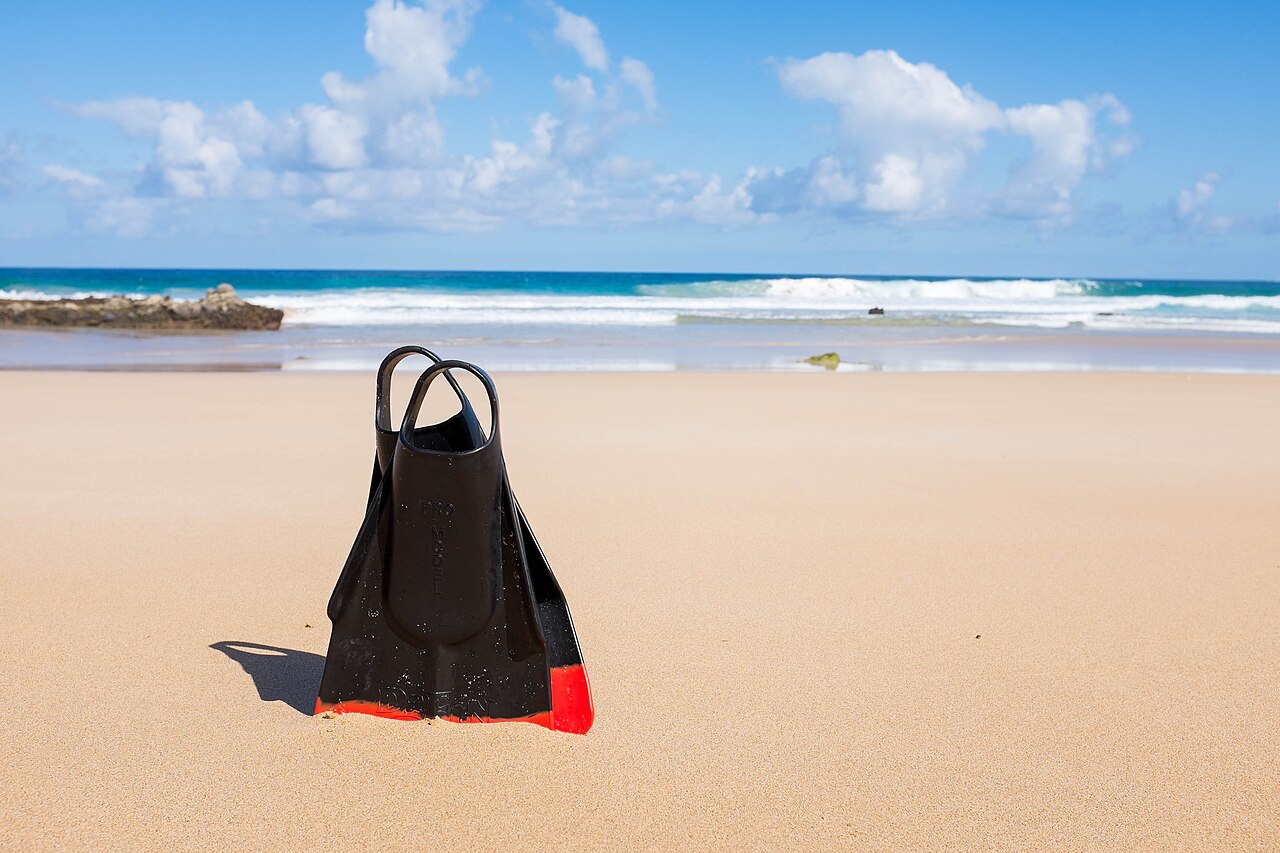
Fins convert leg muscle into motion, and the physics is unforgiving of poor matches: a blade too stiff for your legs burns thigh muscle and cramps calves, one too soft leaves you flutter-kicking hard against a current that a stiffer blade would have handled calmly. Choosing fins is therefore less about finding the best fin than about finding the right spring for your engine - strong kickers can load up stiff paddle blades, while lighter or newer divers usually travel further on medium-flex designs.
The first fork in the road is heel style. Open-heel fins wear over neoprene boots and adjust with straps - the standard for temperate and cold water, for shore entries where you walk over rocks, and for anyone whose feet appreciate insulation. Full-foot fins slip on like shoes over bare feet or thin socks: lighter, cheaper, efficient, and the natural choice for warm-water boat diving and travel. The second fork is blade design. Classic paddle blades give direct power and precise control, and their shorter, stiffer variants have become the standard for frog kicks, back kicks, and the precision finning that wreck, cave, and photography diving reward. Split fins reduce load on knees and ankles and suit relaxed flutter kicking, at some cost in maneuvering authority. Long freediving blades trade all maneuverability for cruising efficiency and stay in that discipline. Channel and vented designs sit between the camps.
Fit rules are simple. In open-heel fins, your boot should seat snugly with no side-to-side slop and the strap should hold without crushing; buy the fins after the boots, never before. Full-foot pockets should fit like a firm shoe - a loose pocket rubs blisters by the second dive, a tight one goes numb. Spring or bungee straps are the one upgrade nearly everyone endorses: they never need adjusting, cannot be over-tightened, and remove the classic failure of a rubber strap snapping at the boat ladder.
Money and travel: decent full-foot fins start around US$50-90, quality open-heel designs run roughly US$100-180, and premium or technical models reach US$180-250. Weight matters to travelers - a pair can range from under a kilogram to well over two - and long stiff fins fight with airline duffels, which is why many traveling divers keep a compact pair alongside their home set. Rental fins are perfectly serviceable for occasional warm-water divers; buy your own when you notice cramping, blisters, or the feeling of an engine that does not answer the throttle, because those are fit problems rentals will keep repeating.
Maintenance is the easiest in your bag: rinse fresh, dry out of the sun, store flat or hanging so blades do not warp, and inspect straps and buckles a couple of times a year. Keep the pocket dusted with talc if the rubber grips bare skin. A good pair lasts a decade or more, which makes fins one of the cheapest cost-per-dive items you will ever own - and one where a single afternoon of trying different blades in a pool teaches more than any specification chart.
Prijzen zijn eerlijke marktbandbreedtes, geen aanbiedingen; geen enkele fabrikant betaalt voor vermelding hier.