المعدات · Core
Tanks & Cylinders
Aluminum versus steel, sizes and working pressures, valve fittings, and the honest news for travelers: this is the one core item most divers never need to own.
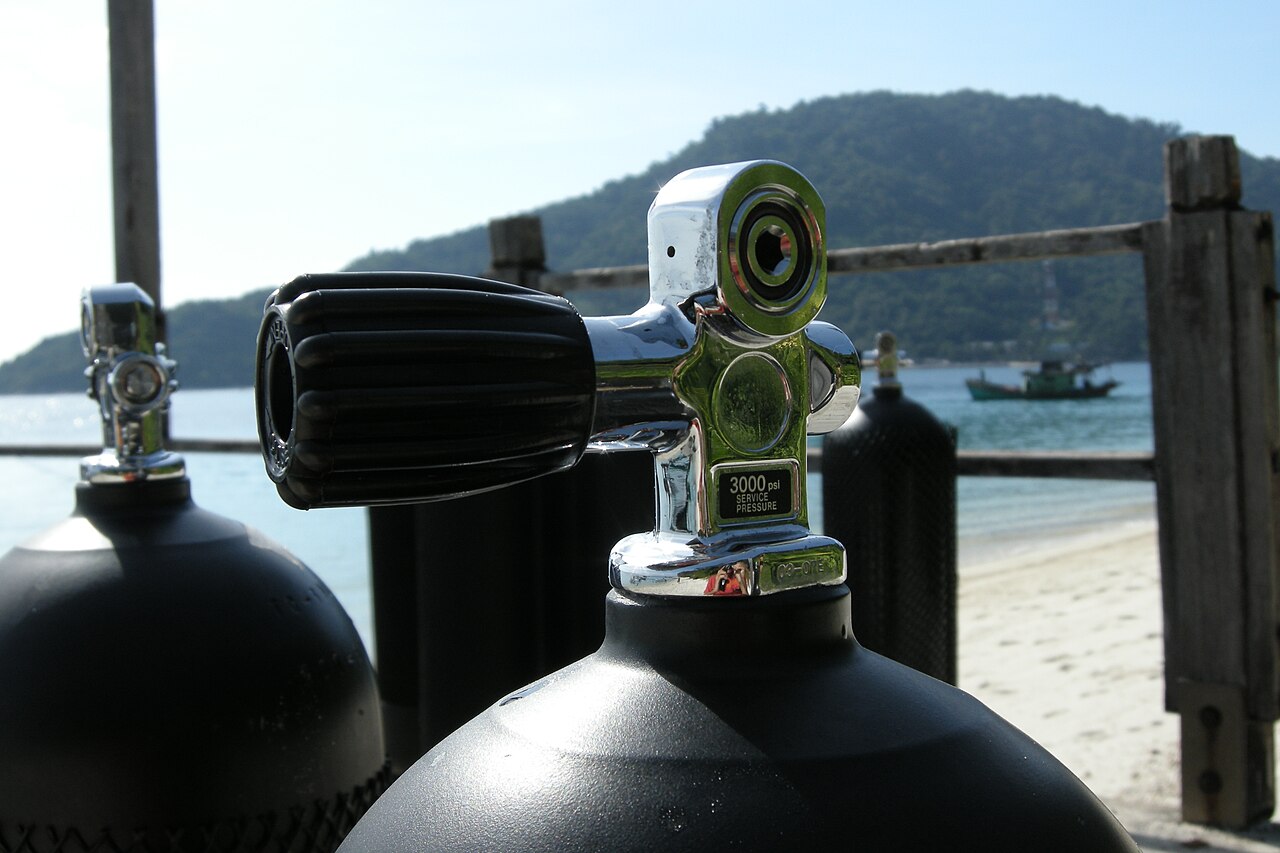
The cylinder is the one piece of core equipment the industry assumes you will not bring: every dive operation on earth supplies them, filled and tested, because flying with pressurized cylinders is impractical and shipping them pointless. That makes tank knowledge less about shopping and more about understanding what you are handed - with ownership entering the picture only for divers who fill and dive locally.
The material split drives everything. Aluminum cylinders are cheaper and corrosion-tolerant but thicker-walled and bulkier for the same gas, and their buoyancy swings matter: the ubiquitous aluminum 80 - about 11 L of water capacity at roughly 207 bar - starts a dive slightly negative and ends it distinctly positive, which is why divers feel light at the safety stop and why weighting checks should happen with a near-empty tank. Steel cylinders pack more gas into less bulk, stay negatively buoyant throughout, and let many divers strip lead off their belts - but they cost more and demand vigilance against internal rust, which is why they dominate cold-water and technical scenes where owners control their fills, while aluminum rules rental fleets and the tropics. Common sizes run from 10-litre-class tanks for smaller divers, through the 11-12 L standards, to 15 L for the gas-hungry; working pressures cluster around 200-232 bar with 300 bar steel available in Europe. If you run low before the group, asking the shop for a larger tank is routine and usually cheap.
Valves come in yoke and DIN patterns, with many modern valves convertible via an insert - carry the adapter your regulator needs when traveling. Nitrox users will meet oxygen-service rules: cylinders and valves must be marked and maintained for enriched mixes at some fill stations, especially where blending is done with pure oxygen; local practice varies, so follow the shop's lead.
Ownership economics are simple where they apply. New aluminum cylinders run roughly US$200-350 and steel US$350-600; secondhand tanks are plentiful and fine if their test dates are current and an internal inspection is clean - price the tests into any purchase. Ongoing costs are the point: nearly everywhere, cylinders require periodic hydrostatic testing (intervals vary by country, commonly every few years) plus annual visual inspections, at tens of dollars each, and fills run a few dollars apiece. For a local diver filling weekly, ownership pays for itself quickly; for a traveler diving abroad twice a year, it never does, and that is the honest answer most readers need.
Care, for owners: store cylinders with pressure in them (never empty, which invites moisture), upright and secured, out of heat; drain and inspect any tank that hits empty underwater or takes on water; rinse valves after boat days; and retire tanks that fail tests without sentiment. For everyone else, tank etiquette is the skill - check the fill pressure and smell the gas at analysis, carry the tank low, keep valves protected in transit, and hand it back secured, because the cylinder is the one piece of kit that is always someone else's baby.
الأسعار نطاقات سوقية حقيقية لا عروض للبيع؛ ولا يدفع أي مورّد مقابل الظهور هنا.