Equipo · Core
Weights & Weight Systems
Belts, integrated pockets, and trim weights; how much lead you actually need, why nobody flies with it, and the weight check that fixes most divers' buoyancy problems at the source.
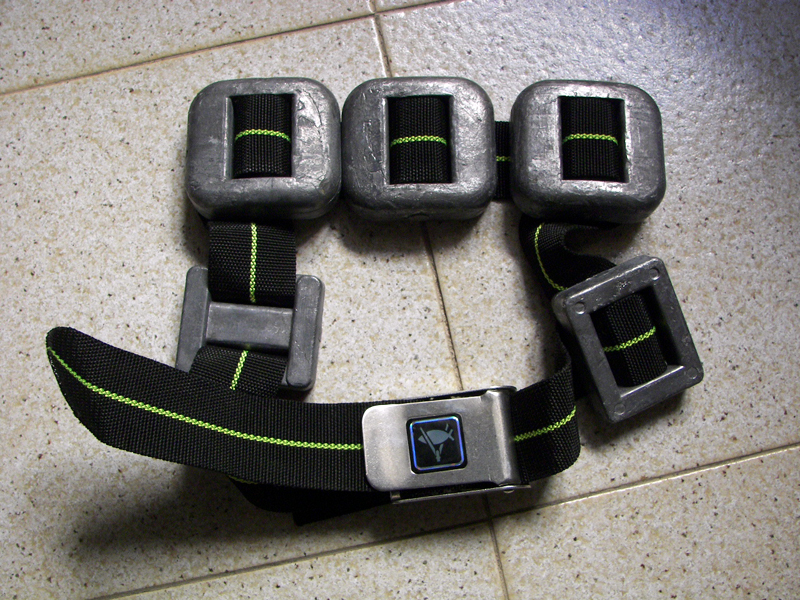
Lead exists to cancel buoyancy you brought with you - mostly the wetsuit's, partly your body's and gear's - and the goal is exactly enough to hold a safety stop with a near-empty cylinder, not a gram more. Overweighting is the most common equipment fault in recreational diving: it forces air into the BCD, which expands and contracts with every depth change, which makes buoyancy twitchy, which burns gas and patience. The fix costs nothing. Float vertically at the surface with an empty BCD holding a normal breath: properly weighted, you hang at eye level and sink when you exhale. Do the check at the end of a dive, when the tank is light, and log the number for that suit-tank-water combination; your future self will thank you at every unfamiliar dive shop, because the first question is always how much lead you take.
How much is normal varies too widely for any honest rule of thumb to serve everyone - body composition, suit thickness, tank material, and salt versus fresh water all move the number by kilograms. Thick cold-water suits demand substantially more lead than tropical skins; steel tanks replace some of it; aluminum tanks give some back late in the dive. Treat any formula as a starting guess for the check, never a substitute.
The systems for carrying it are three, freely mixed. The classic webbing belt with threaded hard weights is cheap, universal, and slightly out of fashion; its quick-release buckle is the entire safety feature and deserves inspection. Integrated BCD pockets carry the lead on the jacket with pop-out handles for emergency ditching - most comfortable for most divers, provided the pockets click home positively and you rehearse the release. Trim weights - small pouches on the tank strap or shoulder - do not add capacity so much as move it, flattening the feet-down posture that a belt at the hips can cause; two kilograms relocated often improves a diver more than any purchase. Soft-shot pouches spare hips and boat decks alike; hard block weights are cheaper and slimmer.
Prices are trivial next to everything else in the bag: belts a few dollars to US$30, soft pouches and trim kits US$15-50, and lead itself typically a few dollars per kilogram new, less secondhand from any dive club noticeboard. Which raises the traveler's rule, and it is absolute: nobody flies with lead. Every operator on earth rents or lends weights, usually included with tank and boat fees, so weights and cylinders form the standing exception to bring-your-own-gear doctrine. Local divers, by contrast, should simply buy - lead neither wears out nor goes out of date, and secondhand is as good as new.
Care is nearly beneath mention - rinse the salt off, check belt webbing and pocket stitching yearly, repaint chipped blocks if you like - but one habit matters: ditchable means rehearsed. Whatever system you carry, practice the release until your hands know it, because lead you cannot drop in an emergency is the wrong kind of security.
Los precios son rangos de mercado reales, no ofertas; ningún fabricante paga por aparecer aquí.