Редакционное · 4 мин. чтения
The Best Manta Ray Diving and Snorkeling
Where reef and oceanic mantas actually show up on schedule (cleaning stations, feeding aggregations, and night dives), plus the etiquette that keeps them coming back.
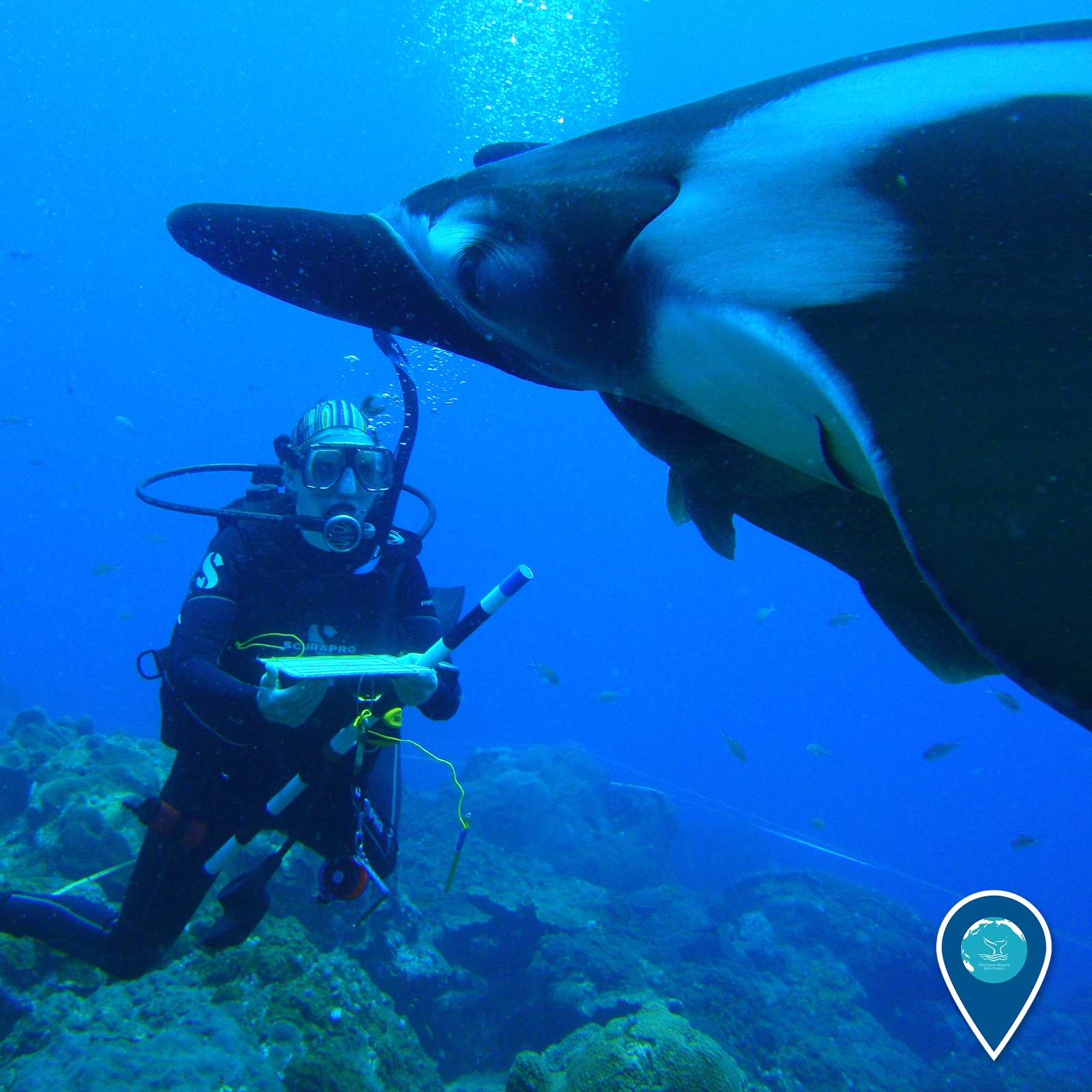
Two animals hide behind the word manta. The reef manta, to about 4–5 m across, gathers at coastal cleaning stations and feeding sites; the larger oceanic manta roams offshore seamounts and islands. Both are threatened, both are protected in the best destinations below, and both reward the diver who holds still. Seasons here are load-bearing: a manta trip in the wrong month is just a boat ride. Both species are listed as threatened, the oceanic manta most severely, which is why the best sites pair their spectacle with firm rules.
Hanifaru Bay, Baa Atoll, Maldives
When the southwest monsoon concentrates plankton between roughly June and November, Hanifaru Bay can hold dozens of reef mantas barrel-rolling in a bathtub-sized cove (at peak, over a hundred). Know before booking: Hanifaru is snorkel-only by rule, ranger-supervised, with limited daily numbers. You float; the mantas feed; scuba happens elsewhere in the atoll.
Kona, Hawaiʻi
The Kona manta night dive is the most reliable manta encounter in scuba: dive lights draw plankton, and resident reef mantas loop through the beams close enough to count gill slits. It is a managed spectacle with campfire-style light rigs and firm no-touch rules, and on a blank night, mantas owe nobody an appearance.
Yap, Micronesia
The channels of Yap host reef mantas year-round at dependable cleaning stations, with numbers and courtship behavior peaking in the winter months. Operators have decades of protocol here: settle low on the rubble, breathe slowly, and let the trains of mantas make the approach.
Socorro and the Revillagigedos, Mexico
The volcanic islands of Socorro are the world's best bet for oceanic mantas, animals that approach divers deliberately and stay. Liveaboard-only, with a long Pacific crossing, and a season running roughly November to May. Expect big seas some days and dives shared with dolphins and sharks.
Raja Ampat, Indonesia
Raja Ampat is one of few places both manta species appear on the same trip: reef mantas at cleaning stations like those off Arborek, oceanics in deeper blue. The mantas concentrate in the October-to-April season, when the region's currents and plankton do their work.
Nusa Penida, Bali
Manta Point off Nusa Penida gives Bali day-trippers a genuine year-round reef manta site. The exchange rate: exposed swell on the entry, cool upwellings in the austral winter, and shoulder-to-shoulder boats in high season. Early departures beat both the chop and the crowd.
Tofo, Mozambique
Tofo built its name on giant mantas and remains an important research site, but honesty requires the caveat: sightings are less frequent than in its famous early-2000s heyday, and long-term studies document regional declines. Go for the wider megafauna mix, and treat a manta as the bonus it now is.
Timing a manta trip
Manta encounters sort into two kinds, and they time differently. Feeding events follow plankton, which follows monsoon winds and tides. Productive weeks cluster inside each site's stated season rather than spreading evenly across it, so give a feeding site like Hanifaru a full week rather than a weekend. Cleaning-station behavior is steadier: stations such as Yap's channels and Nusa Penida's Manta Point work most days year-round, with individual animals rotating through, and reward calm patience over extra days. Photographers should plan for ambient light at dusk and night encounters: restraint with strobes and torches spares the animals and usually makes the stronger picture anyway.
Manta etiquette, briefly
Every serious manta operation briefs the same code, expanded in responsible wildlife interactions: stay low and still at cleaning stations, never block a manta's path or swim at it, keep clear of the animal's line of travel, and touch nothing. Mantas abandon harassed cleaning stations; the etiquette is what keeps these sites alive.

