Naturschutz · 4 Min. Lesezeit
Citizen Science for Divers: Your Logbook Can Be Data
Scientists cannot be on every reef, but divers already are. The established programs that turn ordinary dives into usable data, from fish surveys to whale shark photo-ID.
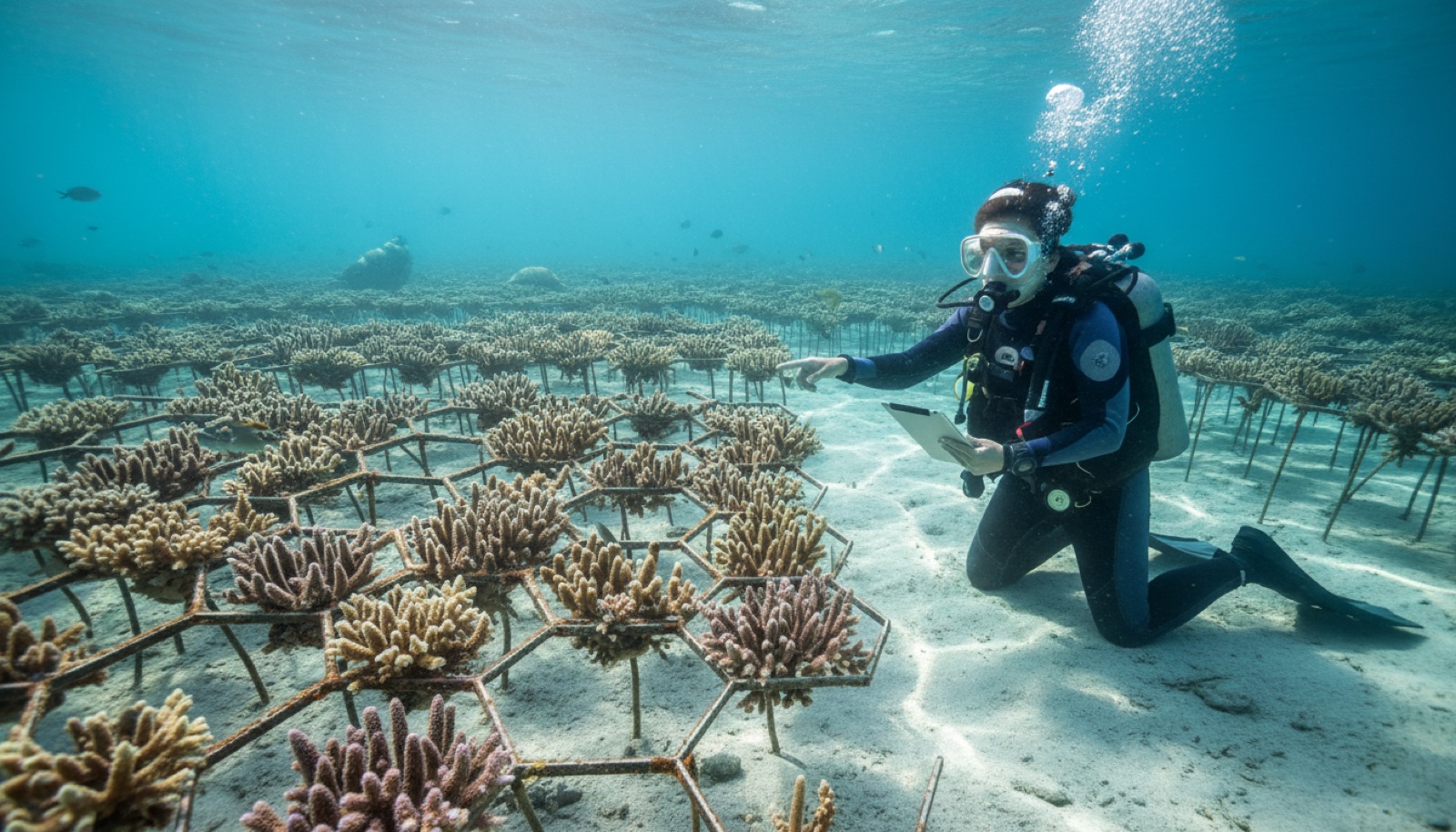
Marine science has a coverage problem: too much ocean, too few funded field days. Recreational divers are the obvious workaround: millions of trained observers already in the water, at their own expense, often returning to the same sites for years. Citizen science is the machinery that turns those dives into data, and several long-running programs have proven the data holds up in peer-reviewed research.
Programs that want your dives
- REEF's volunteer fish surveys have divers record species and abundance on ordinary dives; decades of accumulated surveys now underpin published studies and stock assessments, especially in the tropical western Atlantic.
- Reef Check trains divers to run standardized reef-health transects, producing comparable data across countries and years.
- CoralWatch, run from the University of Queensland, uses a simple waterproof color chart to score coral bleaching severity, no training beyond reading the card.
- Dive Against Debris, run through PADI's conservation foundation, logs the type and quantity of trash divers remove, building one of the few global underwater debris datasets.
- iNaturalist happily swallows any identifiable photo, and its records feed biodiversity databases used by researchers worldwide.
- Dive-medicine research runs its own version: programs collecting volunteered dive-profile data from divers' computers have fed decompression research for years.
Your camera is an ID tag
Some animals carry lifelong identification in their skin. Whale shark spot patterns are individually unique, and global matching platforms compare submitted photos using pattern-recognition methods adapted from star-mapping astronomy software: a tourist's flank shot can establish that one shark traveled between countries or returned to the same aggregation for a decade. Manta rays are identified by the spot patterns on their bellies, and dedicated research groups maintain catalogs holding thousands of individuals. The submission that helps has three properties: the standard angle for the species, a date, and an honest location. The code of conduct still wins, always: no ID photograph justifies chasing or crowding an animal.
Doing it well
Data quality beats data quantity, and the habits are easy. Record the exact site, date, and depth. Report the empty surveys too: absence is data, and a survey that only logs exciting days quietly poisons the dataset. Do not move, bait, or stress animals to improve an observation. Learn your local invasives and report them: lionfish sightings in the Caribbean and Mediterranean feed removal programs in which trained volunteer divers play a central, sanctioned role. And stick with one program long enough to get good at it: a diver's hundredth fish survey is worth far more than a hundred divers' first.
Why bother
Because it works. Long-run volunteer datasets have documented species range shifts, tracked invasion fronts, and mapped bleaching events at scales no research team could cover; debris surveys have informed policy on plastic and lost fishing gear; photo-ID catalogs underpin population estimates used in protection decisions. None of it requires a degree, just the discipline to look carefully and report honestly, which is most of what science ever was. The reef gets a witness; the diver gets sharper eyes. Both leave the water better than they entered.