Kỹ năng · 5 phút đọc
Night Diving: A Practical Guide
Why the reef after dark is a different ecosystem, the lights and signals that make night dives orderly, and how to run your first ones so they enchant rather than rattle.
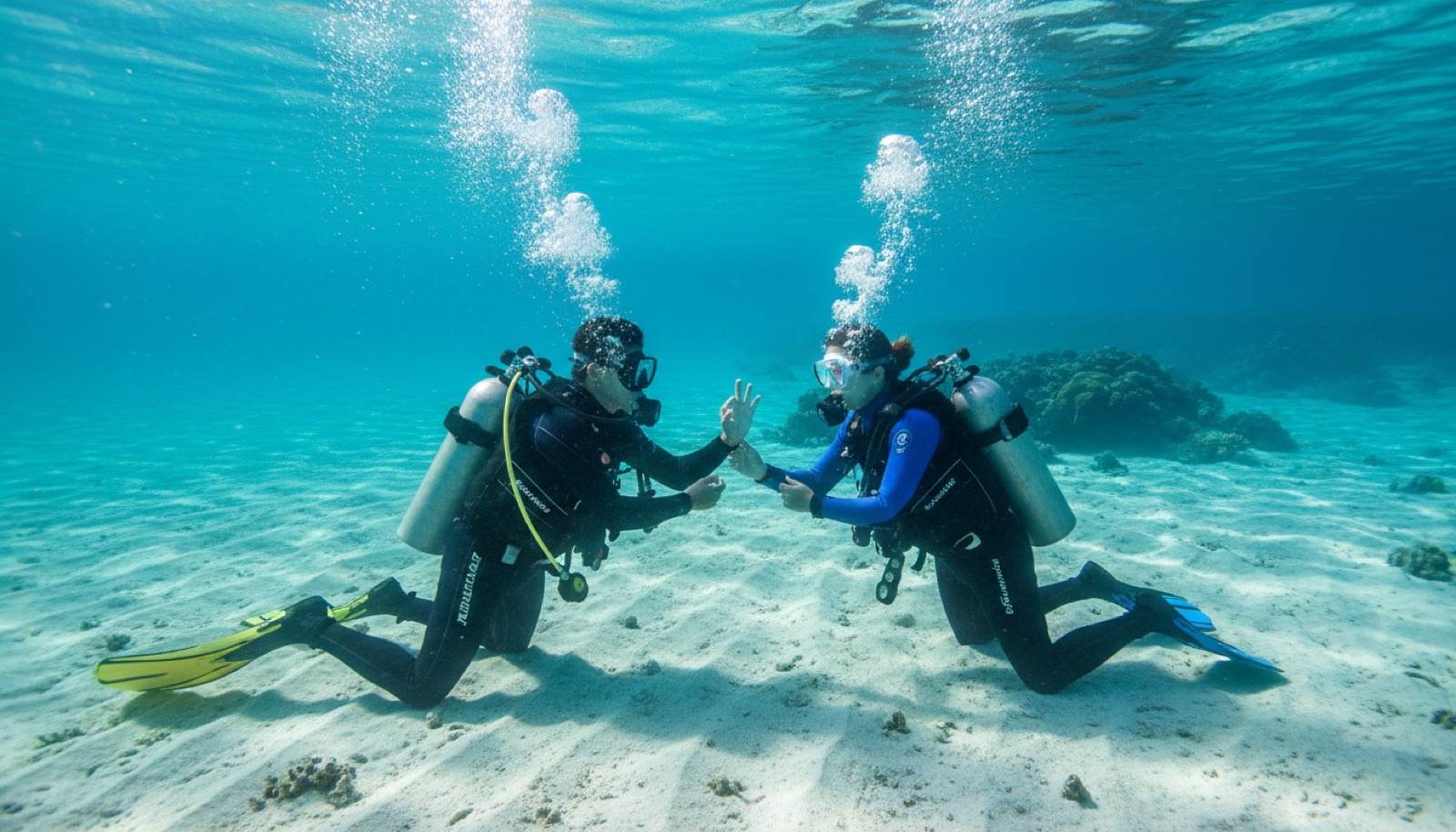
The site you dived at two in the afternoon is not the site you enter at eight in the evening. Darkness swaps the cast: parrotfish tuck into mucus cocoons in the crevices, hunting morays swim free and uncoiled, octopus and cuttlefish come out to work the rubble, basket stars unfurl, Spanish dancers ripple across the sand, and crustaceans own every ledge, their eyes glittering back at your beam. Off Kona, the famous evening dives revolve around manta rays looping through plankton drawn by lights. Night diving is less a harder version of day diving than a second, stranger sport using the same gear, plus lights and a little discipline.
Lights: the equipment that matters
- Primary light: a solid handheld torch is the night diver's core tool. Warm, medium-wide beams render color and reach far enough in clear water; sheer maximum lumens matter less than a dependable burn time comfortably exceeding the dive.
- Backup light: mandatory in practice, small, stowed, and tested before the dive. A failed primary with no backup converts a lovely dive into a controlled problem; the trained response is to signal, switch to backup, and calmly end the dive with your buddy.
- Marker light: a small steady or flashing beacon on your tank valve or BCD lets guide and buddy identify you at a glance; boats often hang a strobe on the down line or keep deck lights bright to mark home.
- Discipline with beams: never shine a light in anyone's eyes; night vision takes long minutes to rebuild. Signal by pointing your beam where you want attention and circling it.
Communication and orientation after dark
Hand signals move to the light: an OK becomes a slow circle drawn on the bottom or a lit hand signal in your own beam; distress is the classic side-to-side sweep, reserved seriously for actual problems. Buddy contact tightens to a few meters, and losing sight of a buddy at night means looking around for the glow, usually obvious, before falling back on the standard one-minute-then-surface rule. Navigation simplifies rather than complicates: night dives are typically planned short, shallow and simple, often out-and-back along a wall or reef edge on a site you have already seen in daylight, with the boat's lights and the down line as anchors. Cover your torch briefly against your palm at some point mid-dive and let your eyes adjust; on a moonless tropical night the bioluminescence alone, green sparks streaming off every fin stroke, justifies the whole exercise.
Running your first ones well
Take the specialty course or join a guided night dive for the first few; agencies run night specialties precisely because the skills (light handling, signaling, navigation, managing the occasional surge of what am I doing out here) benefit from structure. Choose a calm, familiar, shallow site and enter at dusk rather than full dark; the fade-in makes the transition gentle and shows you the changeover hour when day and night shifts trade places. Slow everything down: night diving rewards moving at half speed and looking at one square meter at a time. Mind the fauna courtesies: beams cooked onto a resting fish attract predators to it, so light animals briefly and obliquely. And expect the surprising psychological note most night divers report: inside your beam, the dive feels calmer and more focused than daytime, the world reduced to a bright, slow circle of attention. Many divers try one night dive for the novelty and then discover it has become the dive they plan trips around.