Twilight Zone (Laha)
Die Tiefe gibt den Bereich von der Oberkante des Tauchplatzes bis zur üblichen Maximaltiefe an; „empfohlene Zertifizierung" ist das von Anbietern üblicherweise geforderte Mainstream-Agenturniveau – keine gesetzliche Vorschrift. Strömungen und Sichtweite ändern sich täglich – behandle alle Angaben hier als Planungsbereiche.
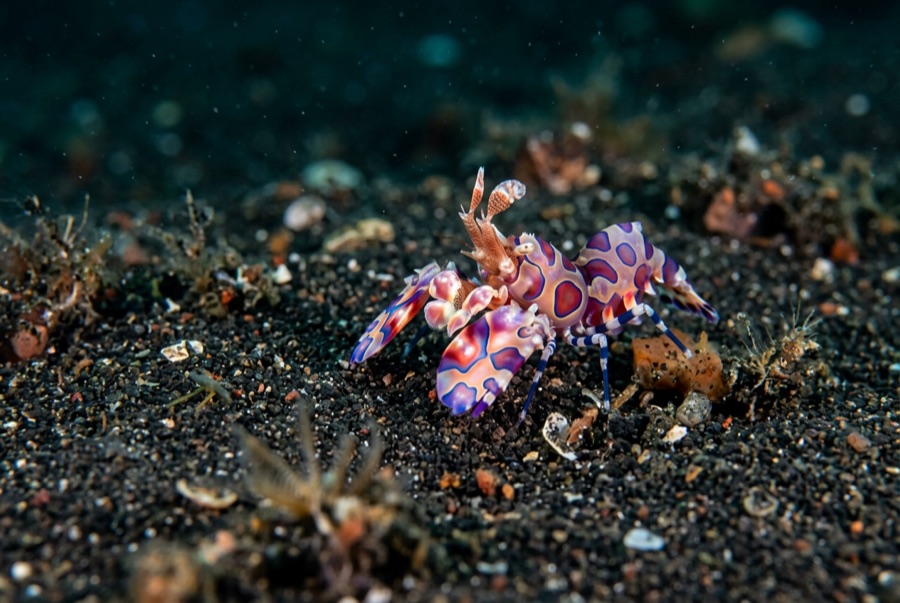
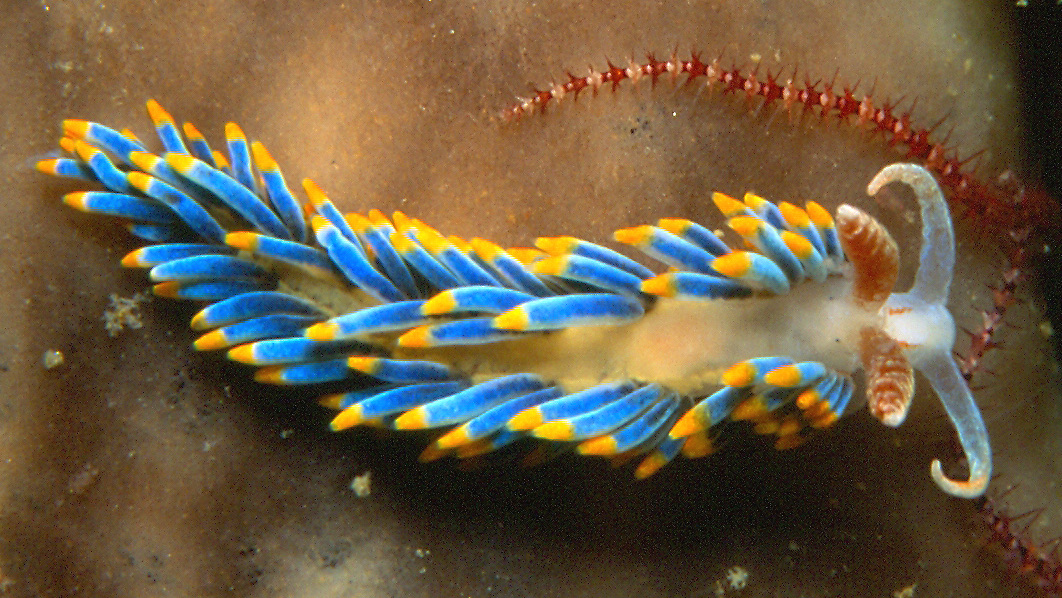
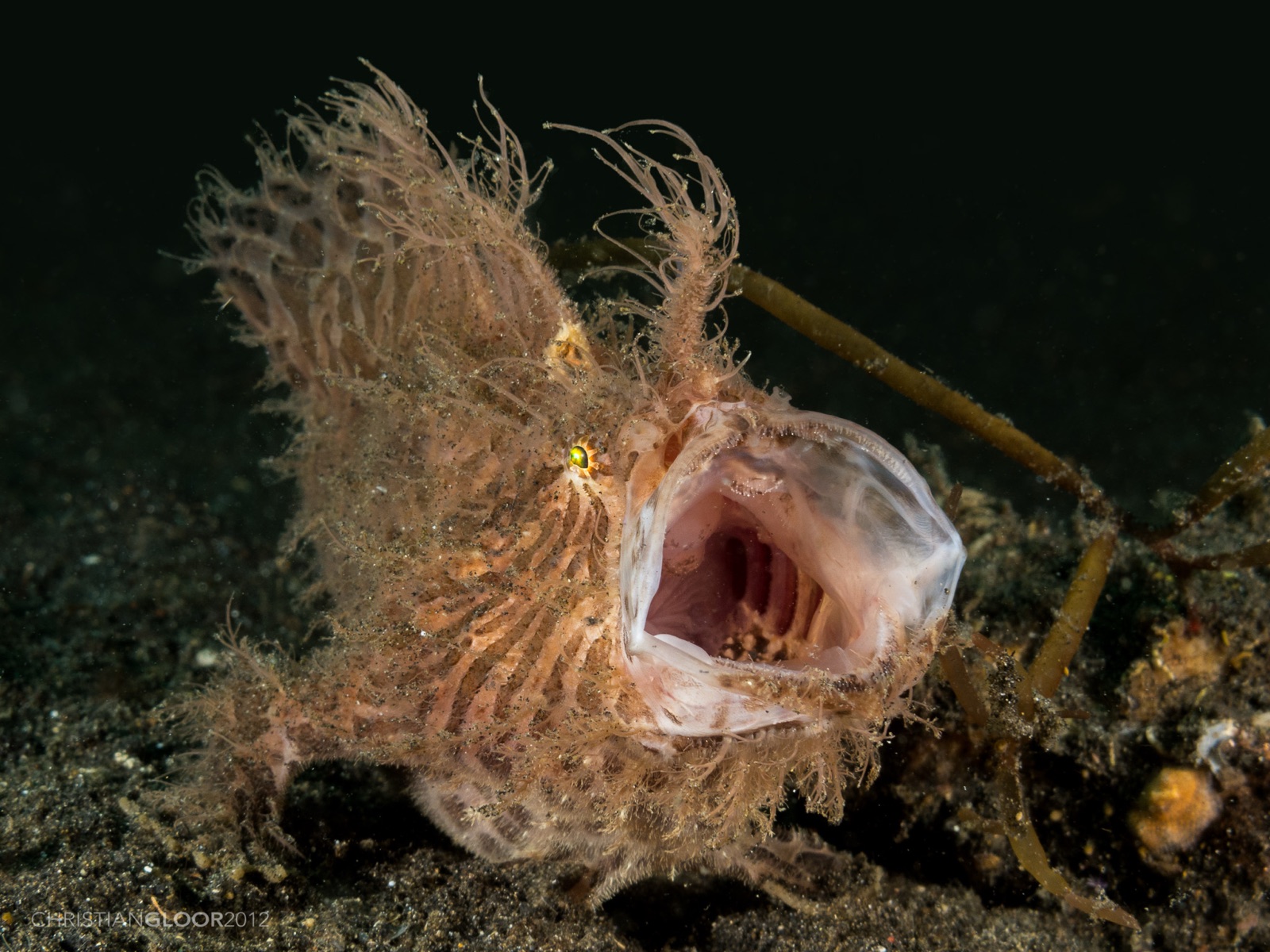
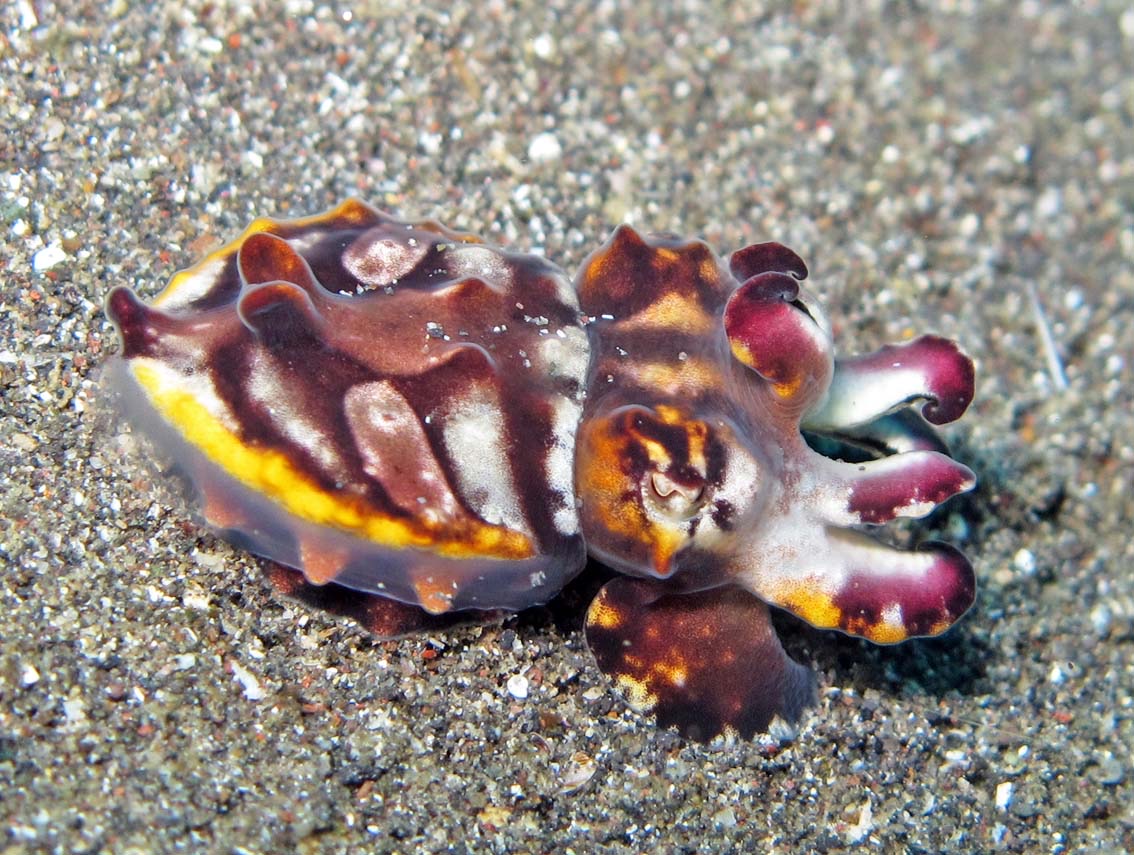
The Twilight Zone at Laha is Ambon Bay's famous contradiction: a cluttered, low-visibility slope under a working jetty that ranks with Lembeh among the world's great muck dives. This stretch of silt produced the psychedelic frogfish, the swirl-faced species described to science in 2009 after being found here, and the supporting cast keeps the legend running: rhinopias in multiple colors, frogfish at every scale, mimic and wonderpus octopus, flamboyant cuttlefish, and nudibranchs cataloged by the hundred. Fishing boats creak overhead while guides work the debris line like archivists. Sheltered inside the bay, it dives in almost any weather, bookending Banda crossings with some of the best small-animal hours in the country.
Der Moment, für den du kommst: Rhinopias reliability; the psychedelic frogfish's home ground; jetty debris crawling with cephalopods.
Topografie: Silty dark-sand slope beneath a fishing jetty, strewn with debris that functions as premium critter housing.
Einstieg: Dived from Ambon-based operators or as the first and last dives of Banda liveaboard itineraries; the site sits near the airport end of the bay.
Was du wissen solltest, bevor du ins Wasser gehst
Gefahren: Poor visibility, jetty traffic overhead, sharp debris, and venomous ambush predators in the silt.
Naturschutz: A working fishing waterfront: take nothing, move nothing, and leave the debris habitat exactly as found.
Wen du triffst
Nudibranchs
Frogfish
Flamboyant Cuttlefish
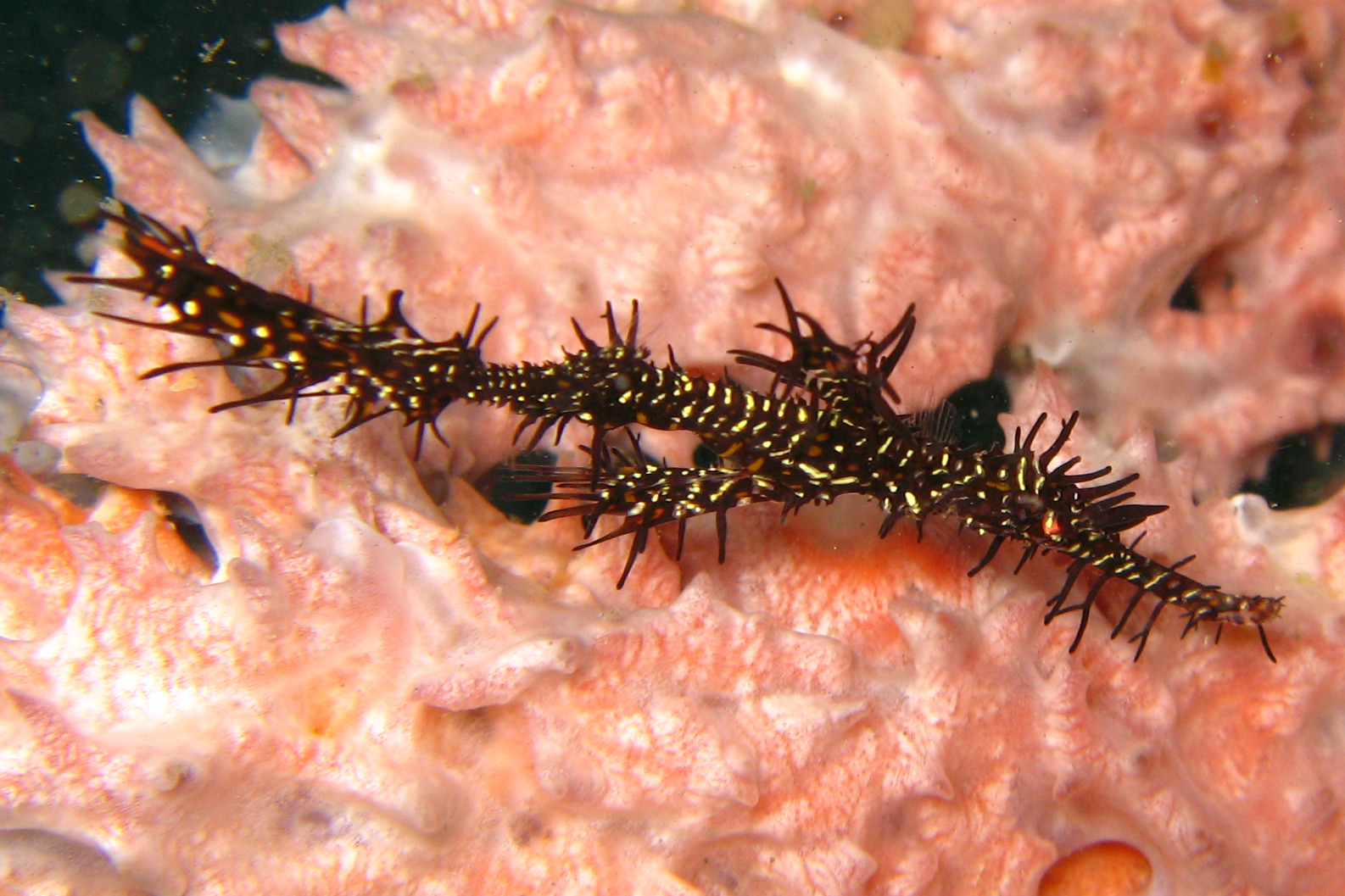
Ornate Ghost Pipefish
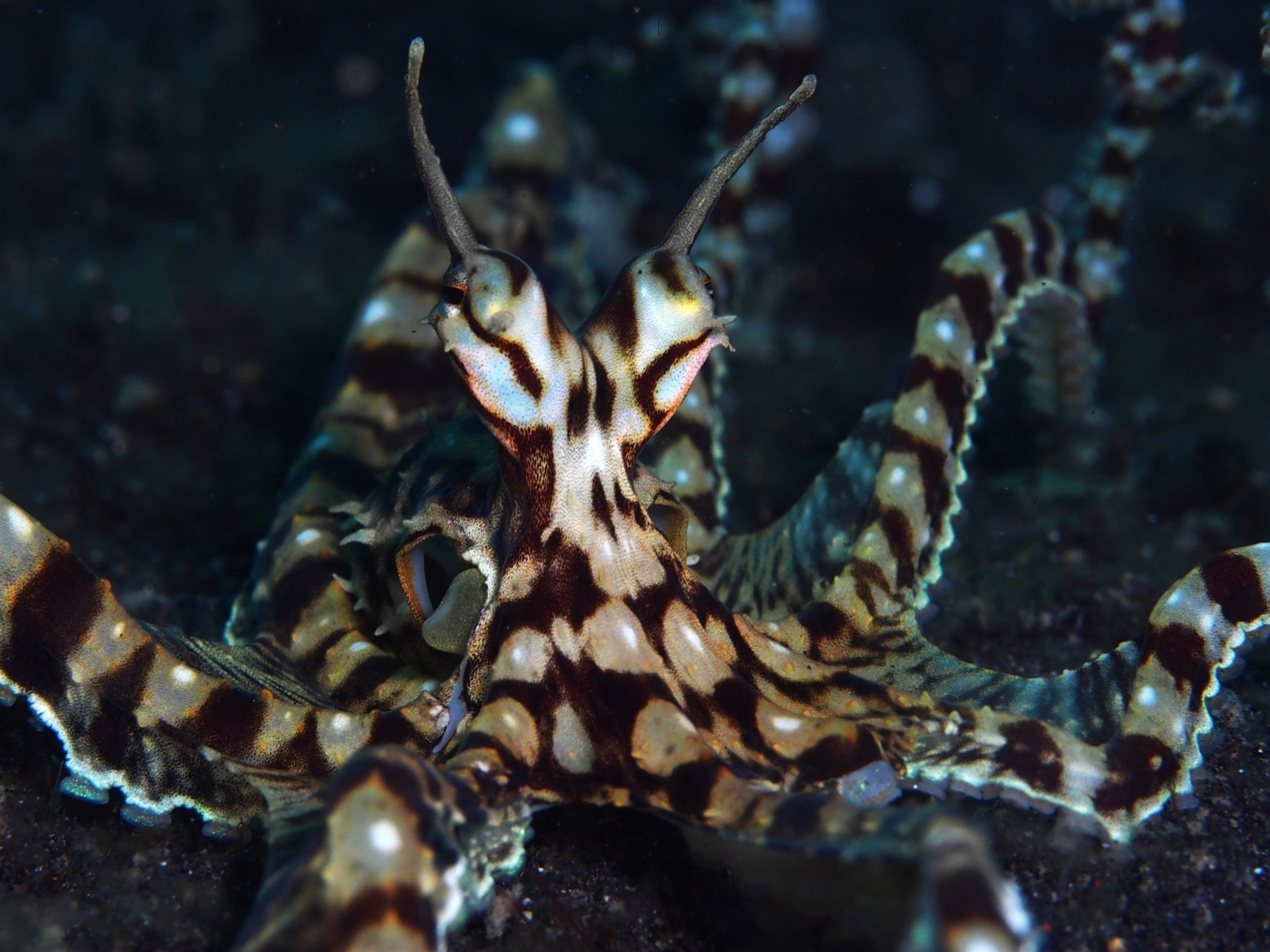
Mimic Octopus
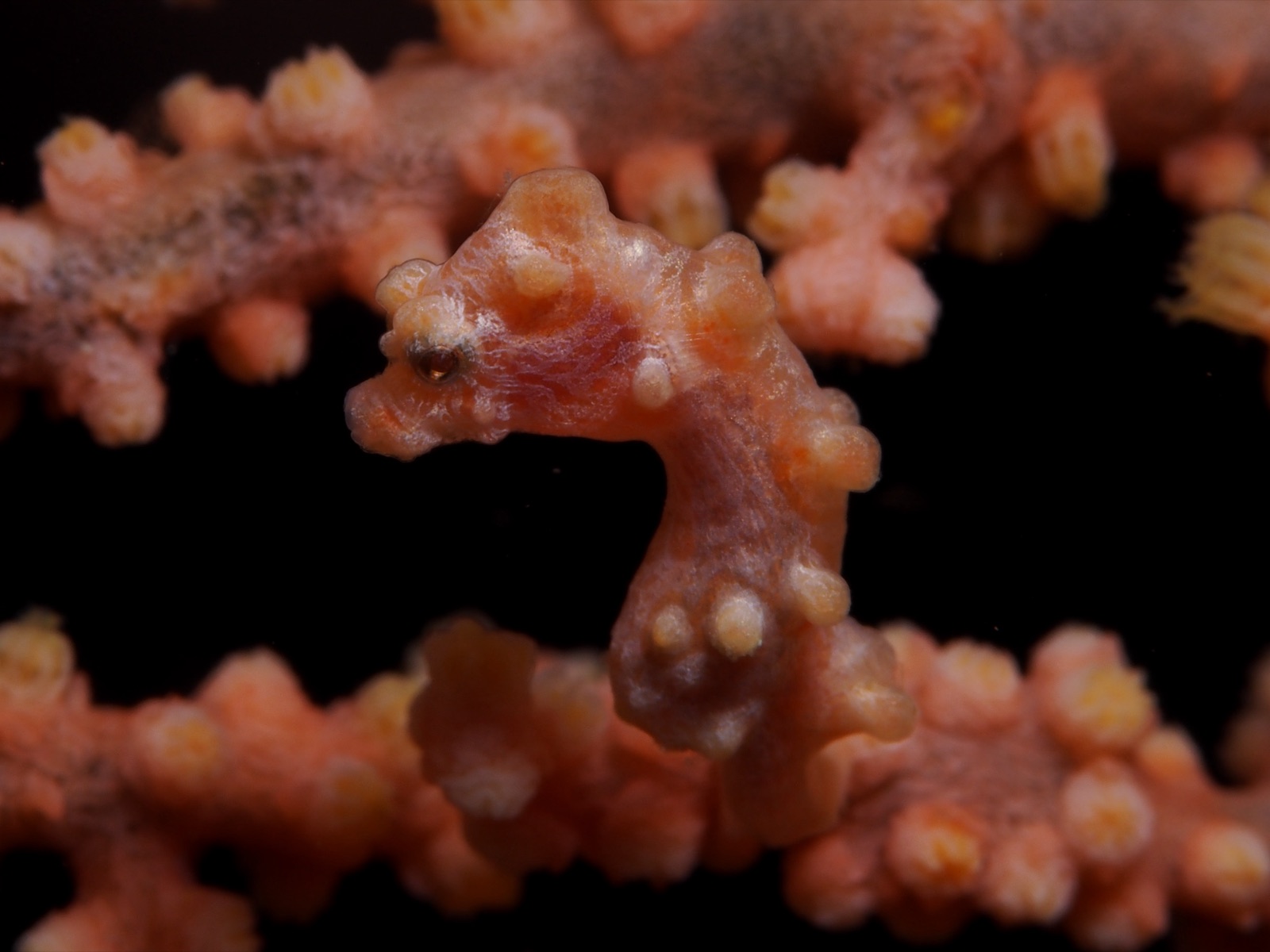
Seahorses
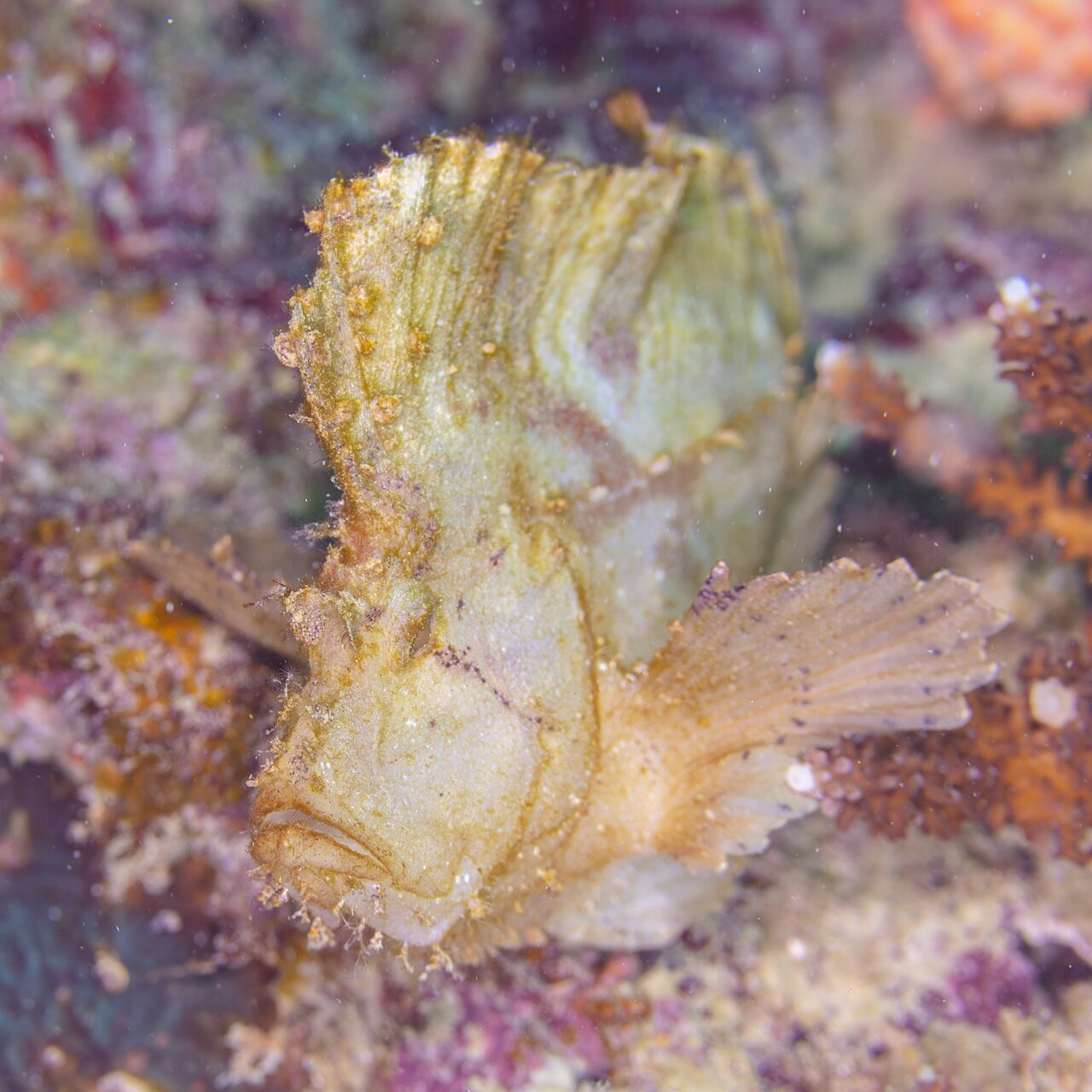
Leaf Scorpionfish
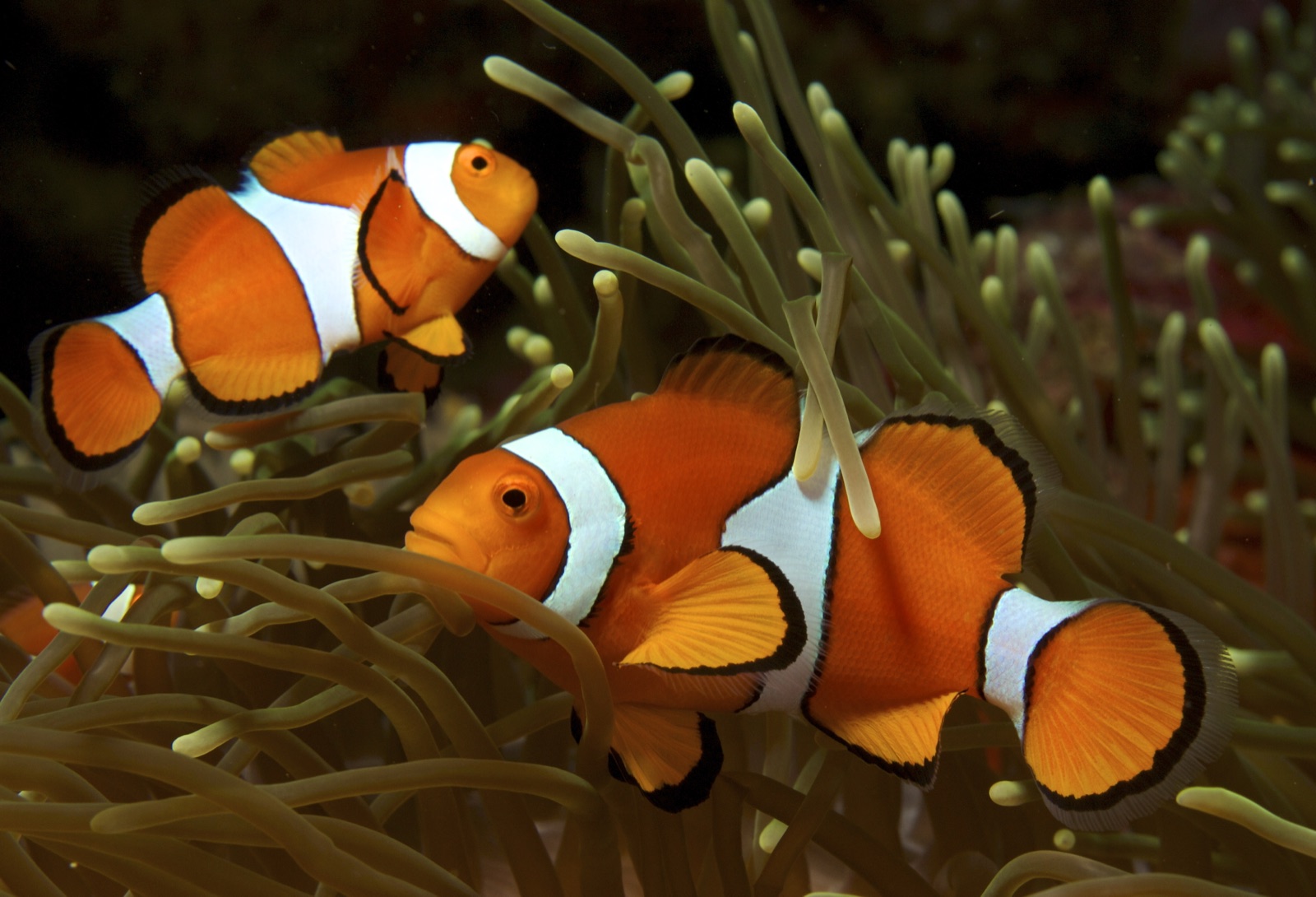
Clownfish & Anemonefish
Auch in der Nähe nachgewiesen
„Hier kartiert" – Arten wurden von unseren Redakteuren anhand der Quellen auf dieser Seite erfasst. Die Zahlen sind GBIF-Vorkommensdatensätze: Beobachtungen, die seit 1990 im Umkreis von etwa 5 km um die kartierte Position protokolliert wurden, ausschließlich abgeglichen mit den Arten in unserem Katalog. Sie zeigen, was dort gesichtet wurde – keine Garantie, was du sehen wirst.
Für Fotografen
Weitwinkel: ★☆☆☆☆ · Makro: ★★★★★ (Redaktionelle 1–5-Bewertung, was dieser Platz für jeden Fotografie-Stil bietet)