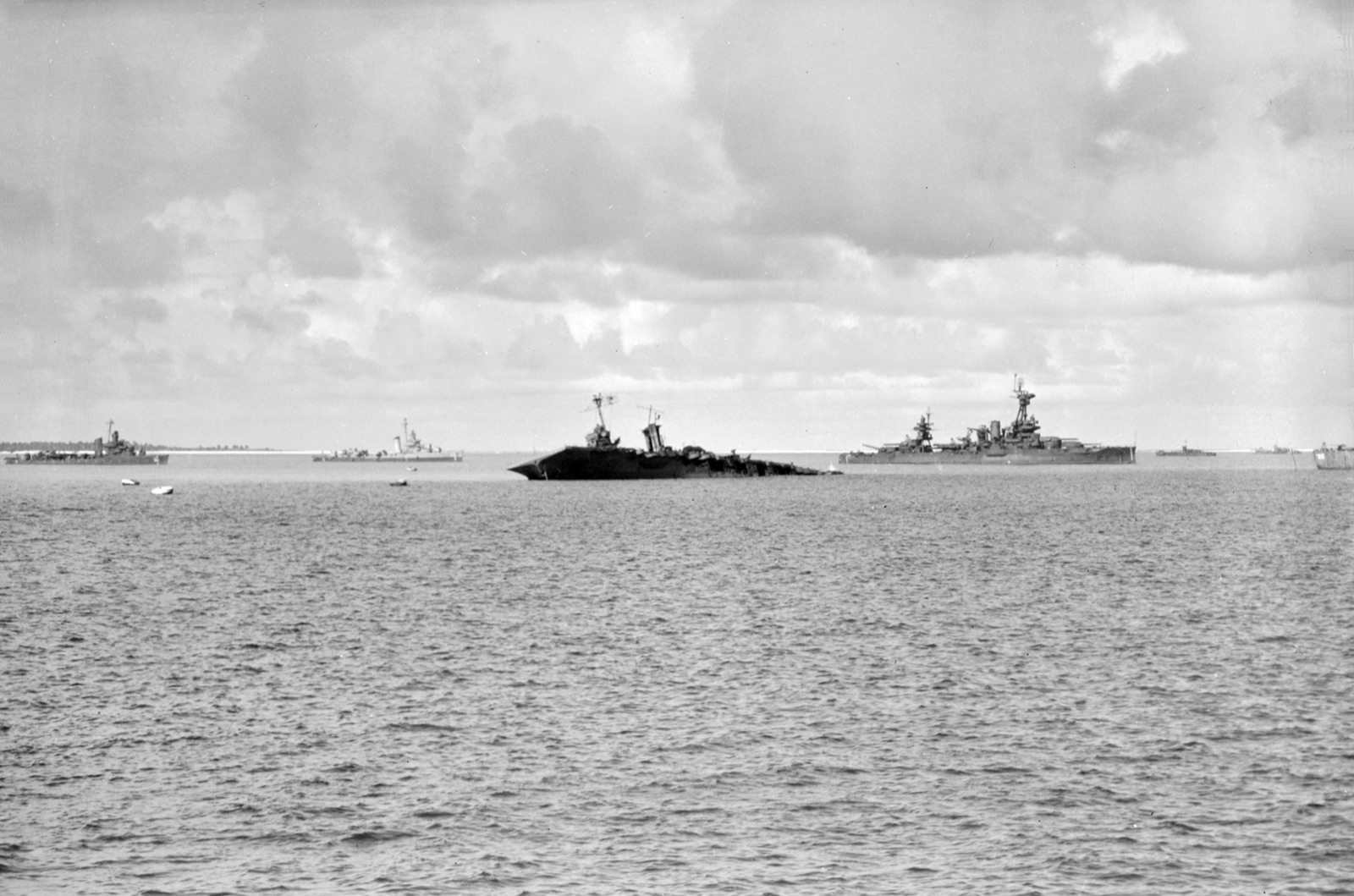
USS Saratoga
Depth is the range from the top of the site to its usual maximum; "recommended cert" is the mainstream-agency level operators usually ask for, not a legal rule. Currents and visibility change daily, so treat everything here as planning ranges.
Nothing else in diving prepares you for an aircraft carrier. The Saratoga, a 270-meter veteran of the Pacific war, was expended as a target in the July 1946 Baker test and settled upright, her island still standing watch over an empty flight deck. Technical teams drop through weeks of planning onto a ship that takes an entire expedition to sample: Helldiver aircraft and bombs in the hangar spaces, the bridge with instruments in place, five-inch gun mounts, and living quarters receding into darkness. The scale rearranges your sense of what a wreck is; the deco hangs give you time to think about it.
The moment you come for: The island and bridge; aircraft and ordnance in the hangar; a flight deck the size of a runway emerging from blue haze.
Topography: Upright hull on the lagoon floor around 50 m, flight deck near 27–30 m and island rising shallower
Entry: Dived from expedition liveaboards only; teams stage decompression on fixed lines.
Know before you splash
Hazards: Depth and mandatory decompression; degrading steel overhead; ordnance and aviation fuel residues; remoteness measured in days, not hours.
Conservation: Part of the UNESCO-listed nuclear test site; every object aboard is protected, and expedition rules on penetration and artifacts are absolute.
Who you'll meet
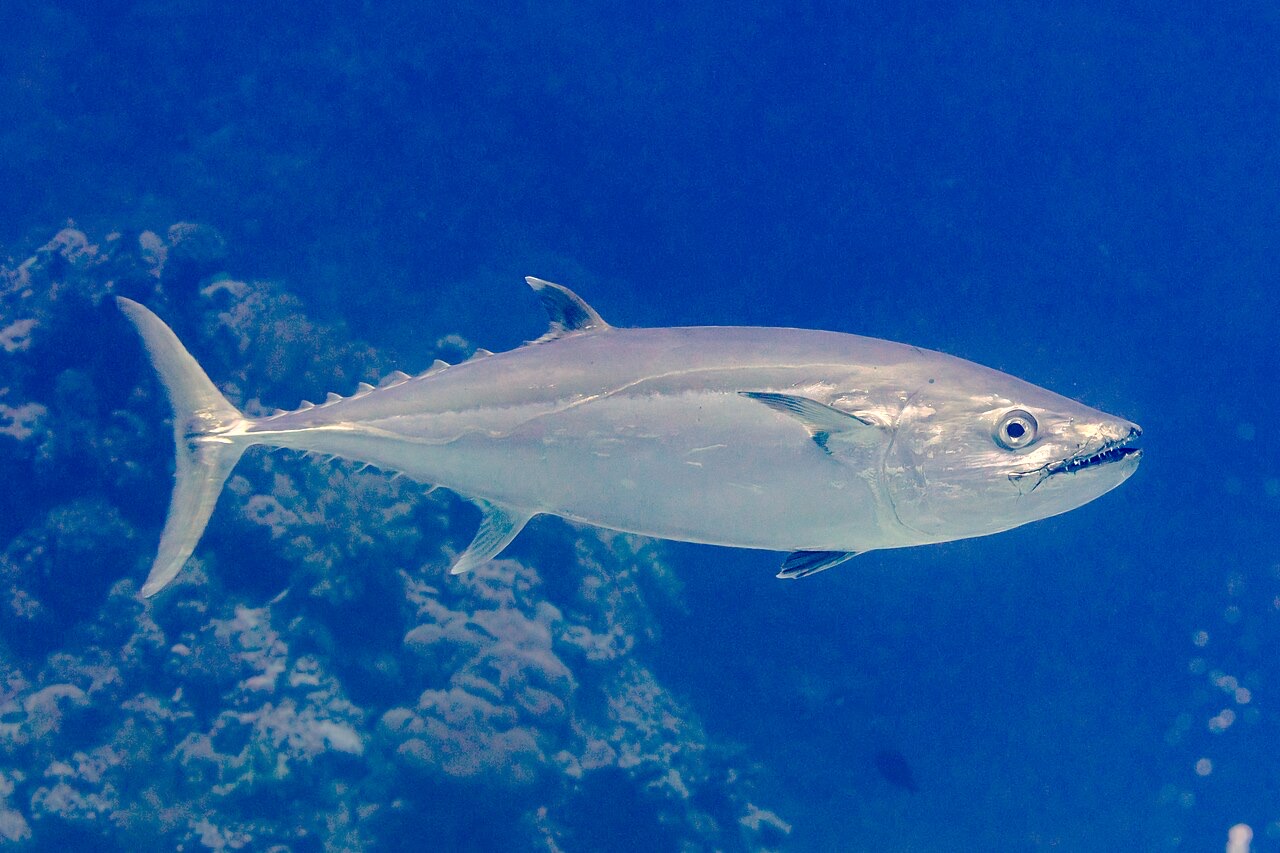
Dogtooth Tuna
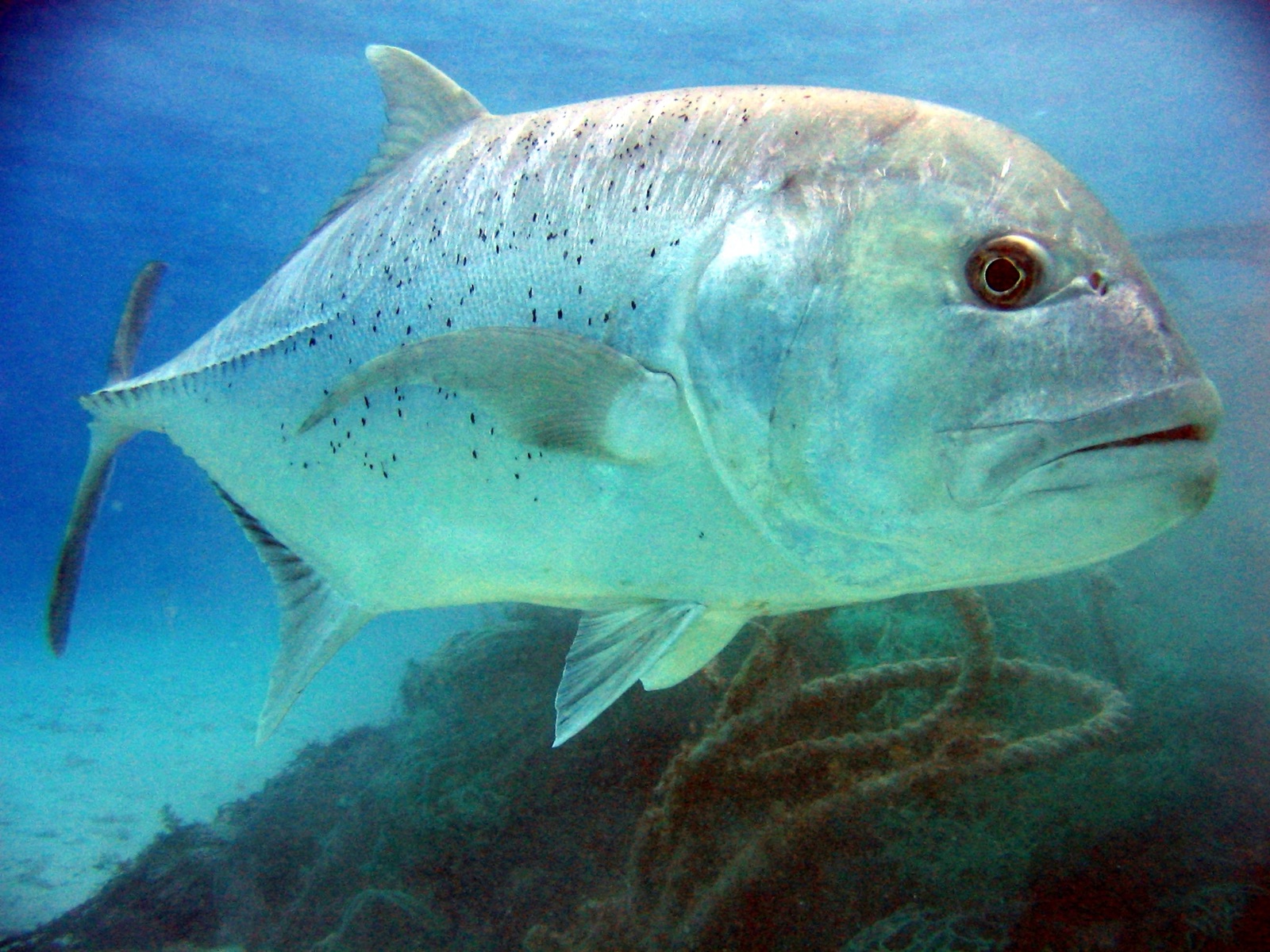
Giant Trevally
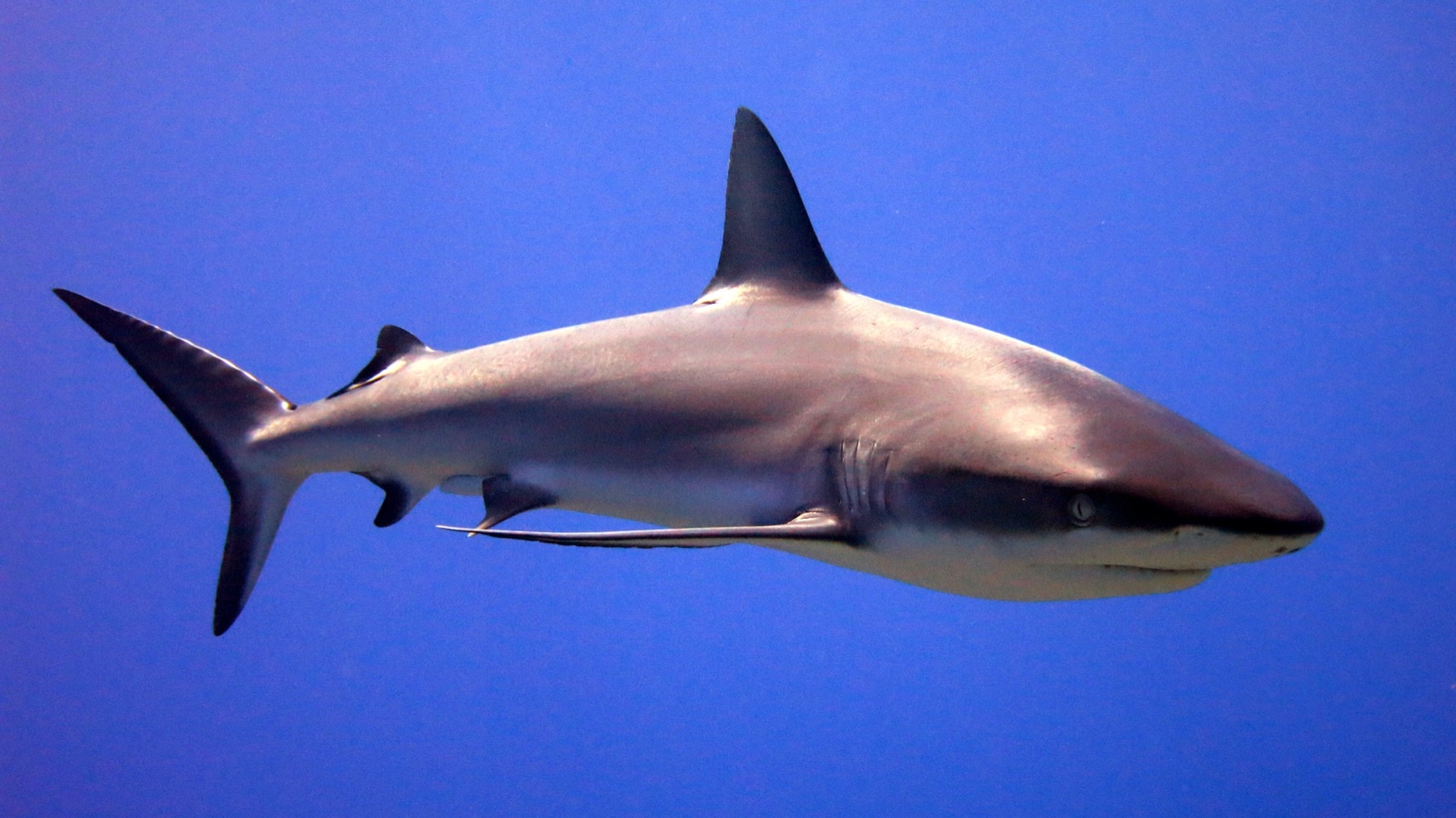
Grey Reef Shark
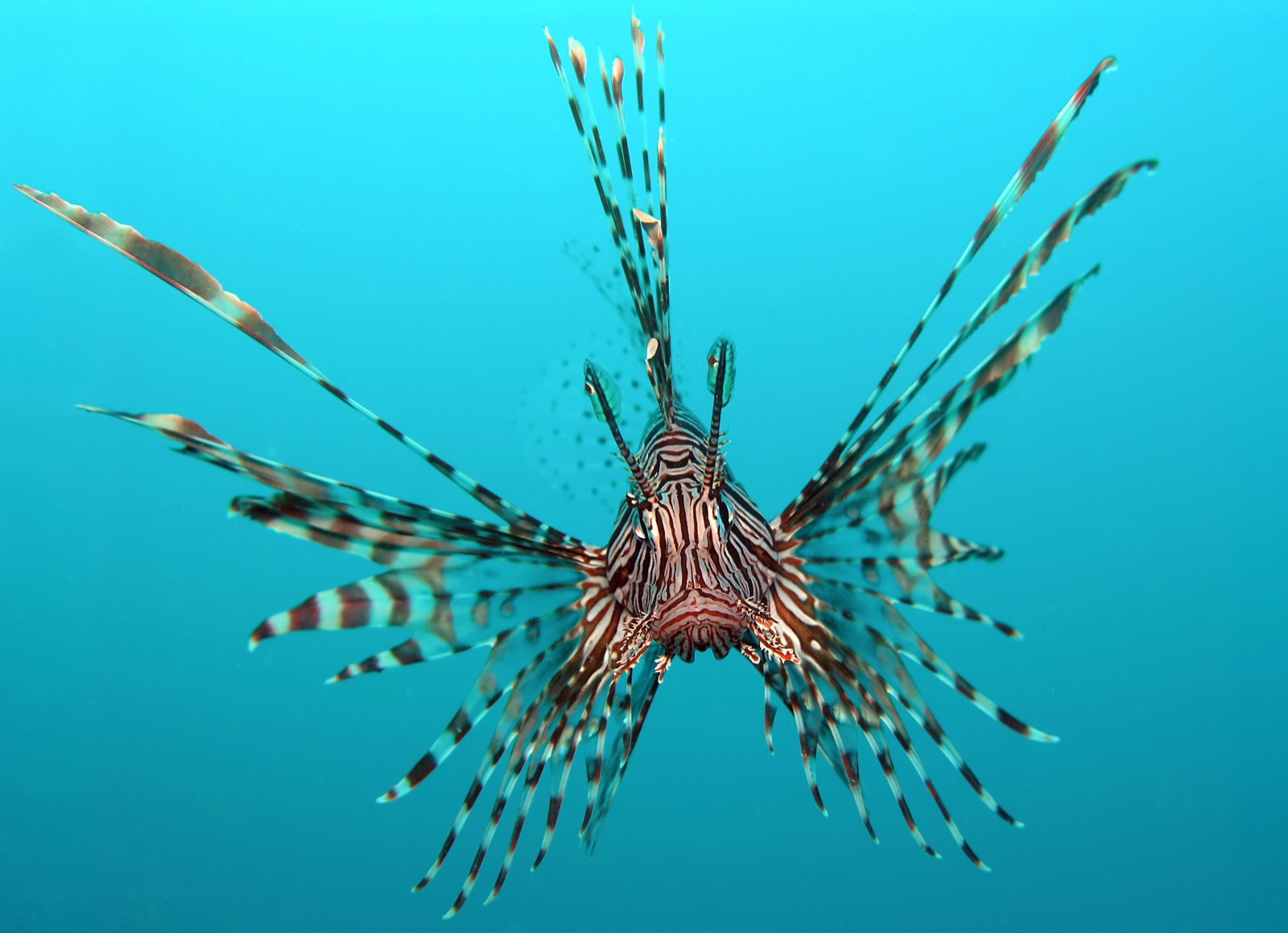
Lionfish
"Charted here" species were listed by our editors from the sources on this page. Counts are GBIF occurrence records: observations logged within about 5 km of the charted position since 1990, matched only against the species in our catalogue. They show what has been seen there, not a promise of what you will see.
For photographers
Wide angle: ★★★★★ · Macro: ★☆☆☆☆ (editors' 1–5 rating of what this site gives each style of shooting)