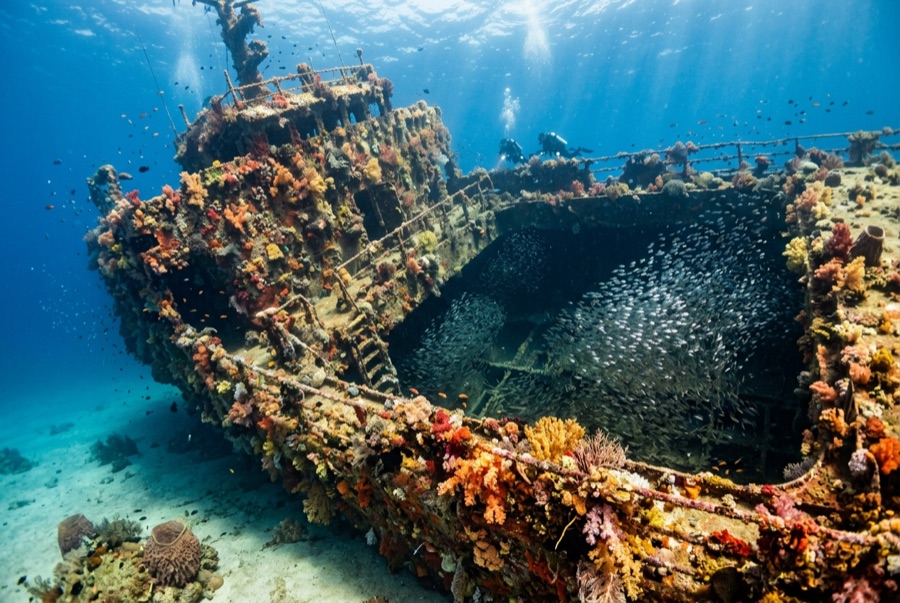
Superior Producer
La profondeur correspond à la plage allant du sommet du site jusqu'à son maximum habituel ; le « niveau recommandé » est le niveau demandé en général par les opérateurs auprès des grandes agences, pas une règle légale. Les courants et la visibilité varient chaque jour, traitez donc tout cela comme des plages indicatives de planification.
Curaçao's flagship wreck went down in 1977, a small freighter that left Willemstad overloaded and foundered within sight of the harbor lights. She stands upright and complete on sand at thirty-plus meters, wheelhouse open to careful visitors, and nearly five decades have upholstered her rails and ladders in orange cup corals that transform the ship after dark. Barracuda hold rank above the mast, tarpon slide through the shadowed companionways, and the deck at twenty-plus meters keeps the dive brisk. Many rate her among the Caribbean's finest wrecks, and at night she has few rivals anywhere.
Le moment pour lequel vous venez: Upright intact freighter, cup-coral bloom on night dives, tarpon in the companionways
Topographie: Sand at the base of the reef slope outside the harbor entrance
Courant: Harbor-mouth currents can run along the hull; dives are timed around ship movements and flow.
Entrée: Usually dived by boat just west of the Willemstad harbor mouth; experienced locals also run it as a guided shore dive in calm conditions.
À savoir avant de plonger
Dangers: Depth, harbor traffic, and current; interior penetration only with wreck training and lights.
Nitrox: Pertinent ici : les profils se situent dans la plage où le nitrox prolonge significativement le temps sans palier (avec la formation pour l'utiliser).
Qui vous croiserez
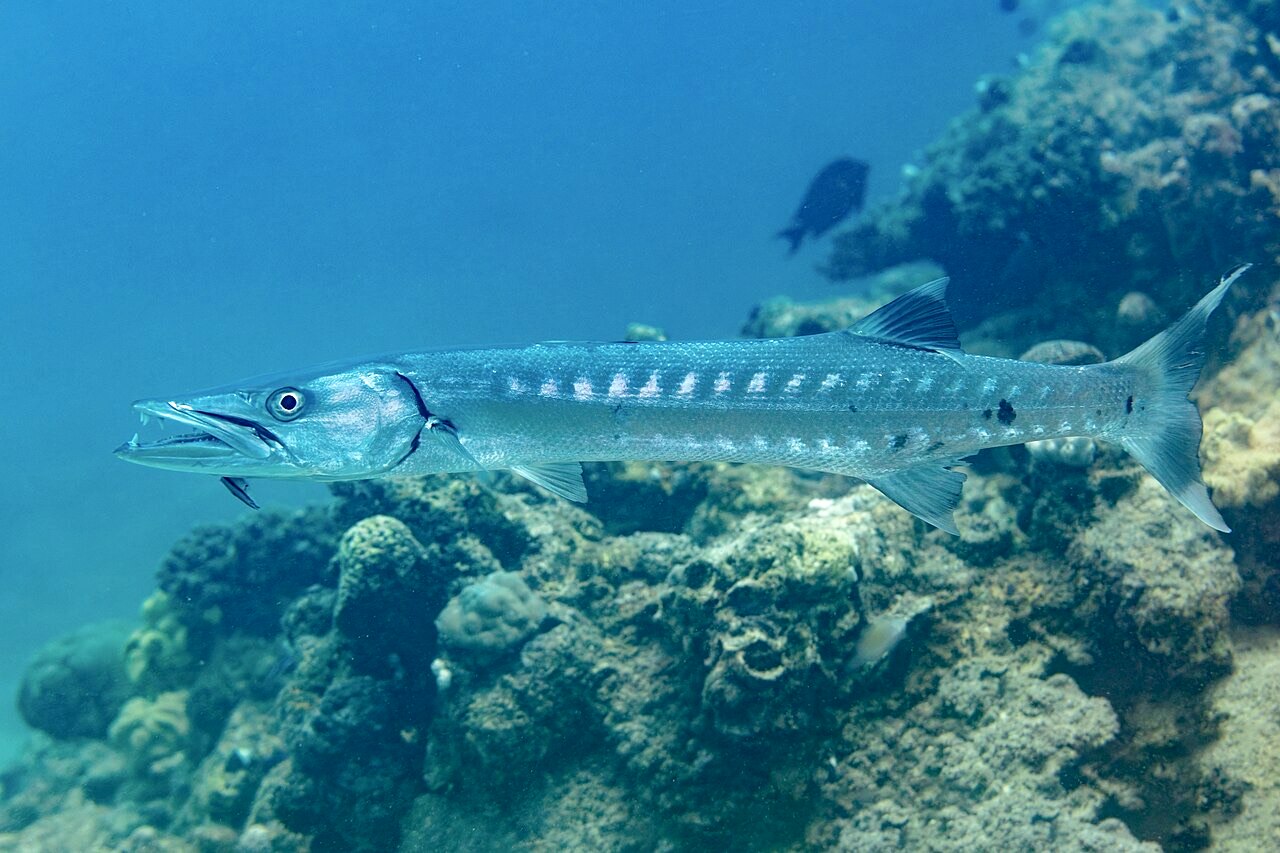
Great Barracuda
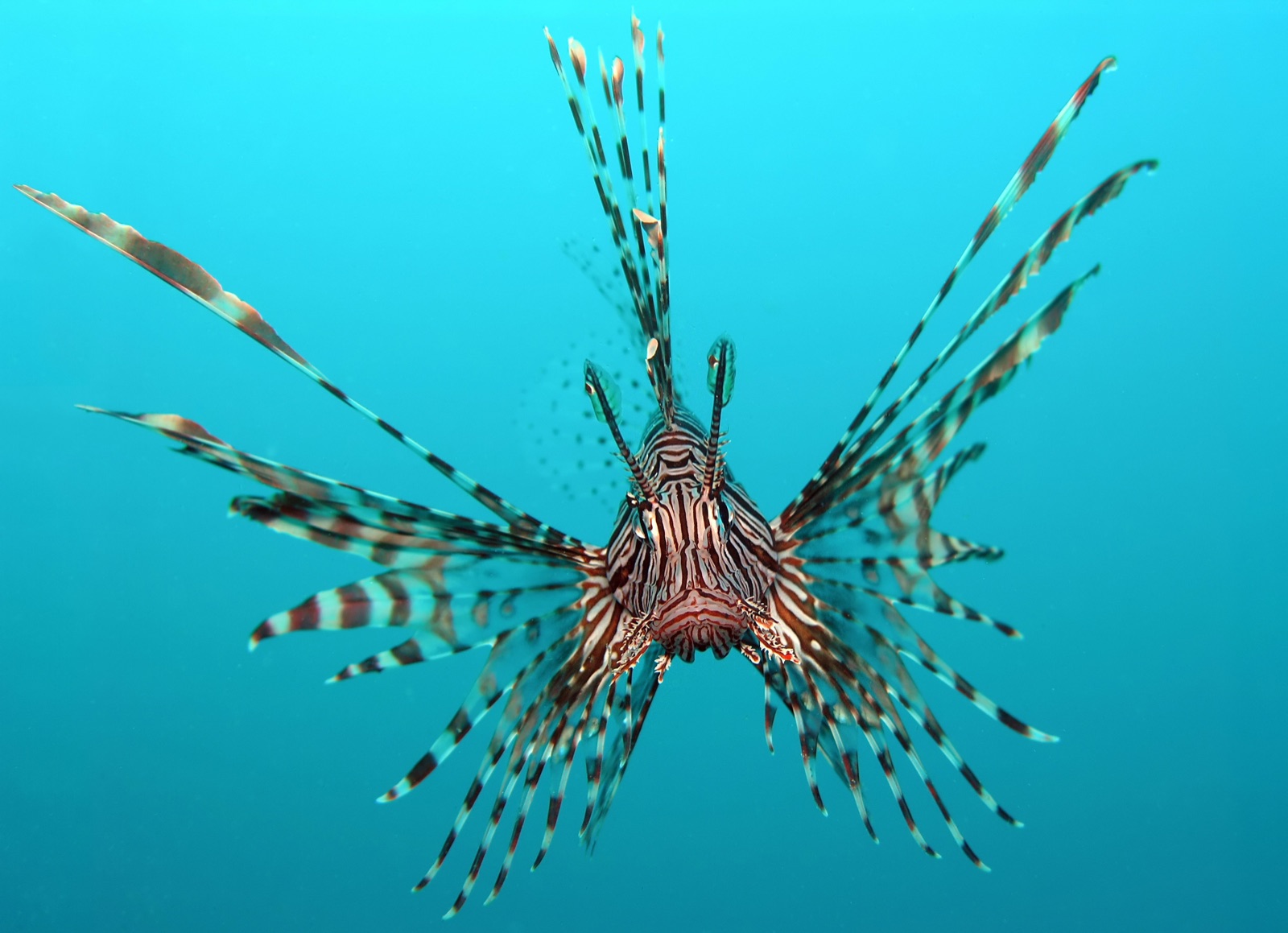
Lionfish
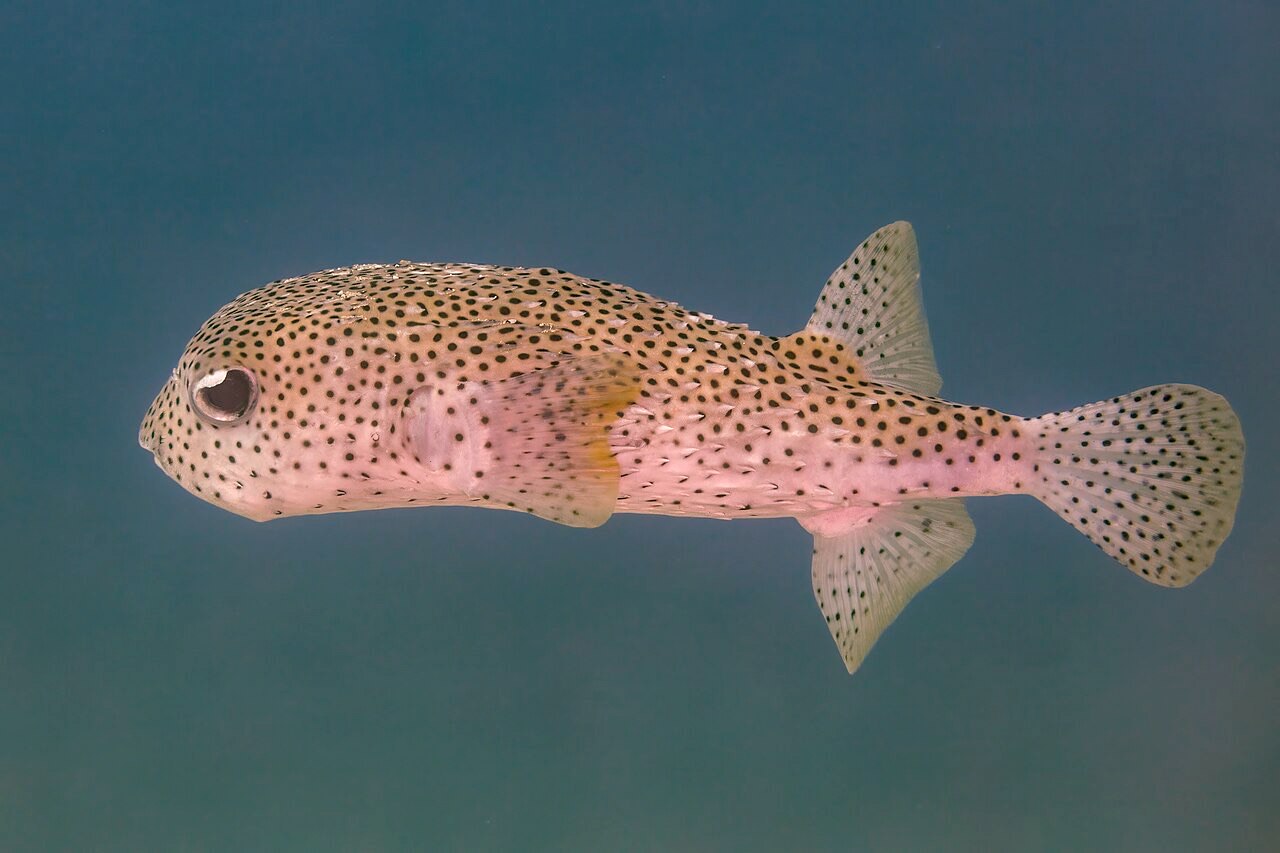
Porcupinefish
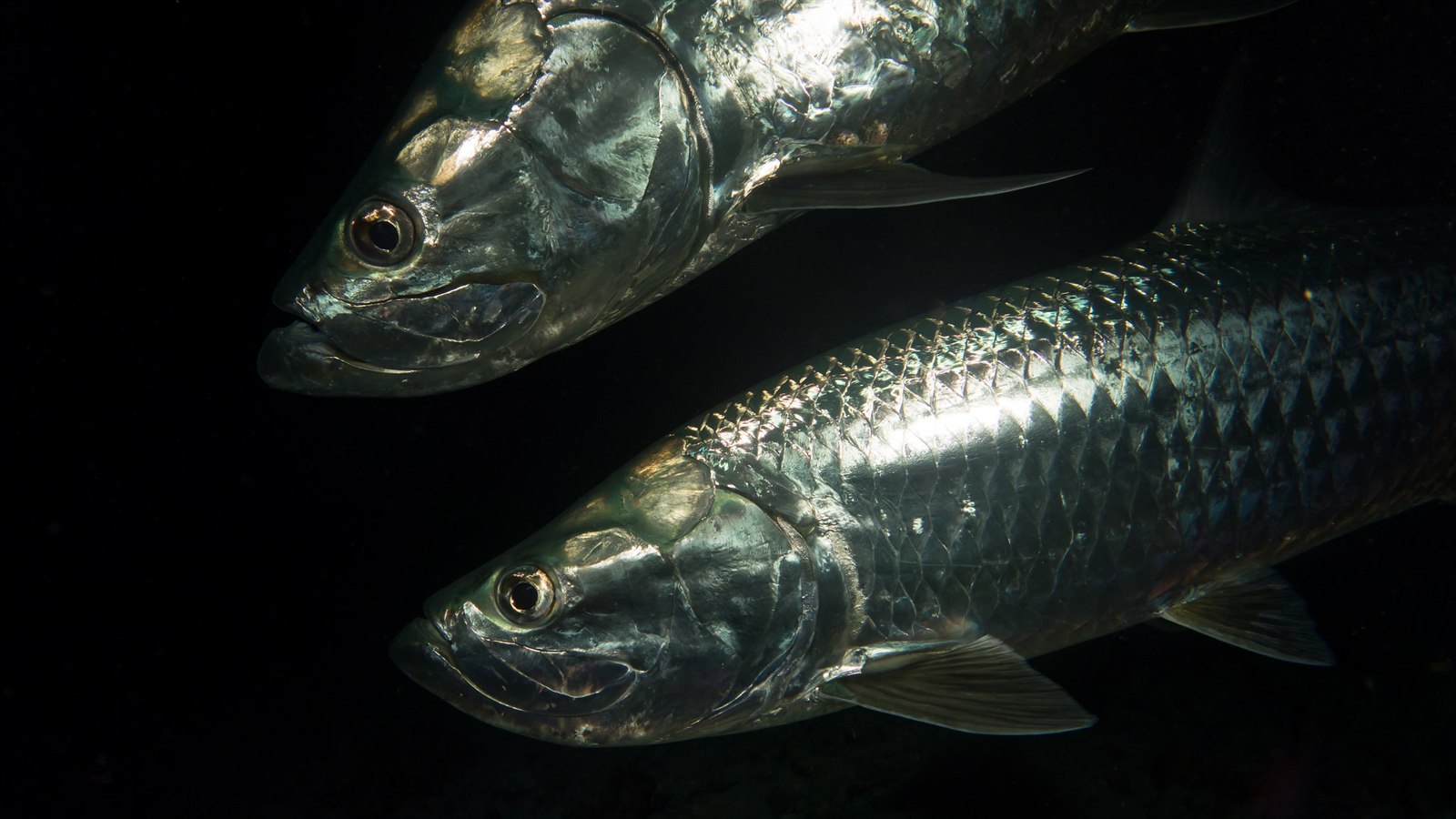
Atlantic Tarpon
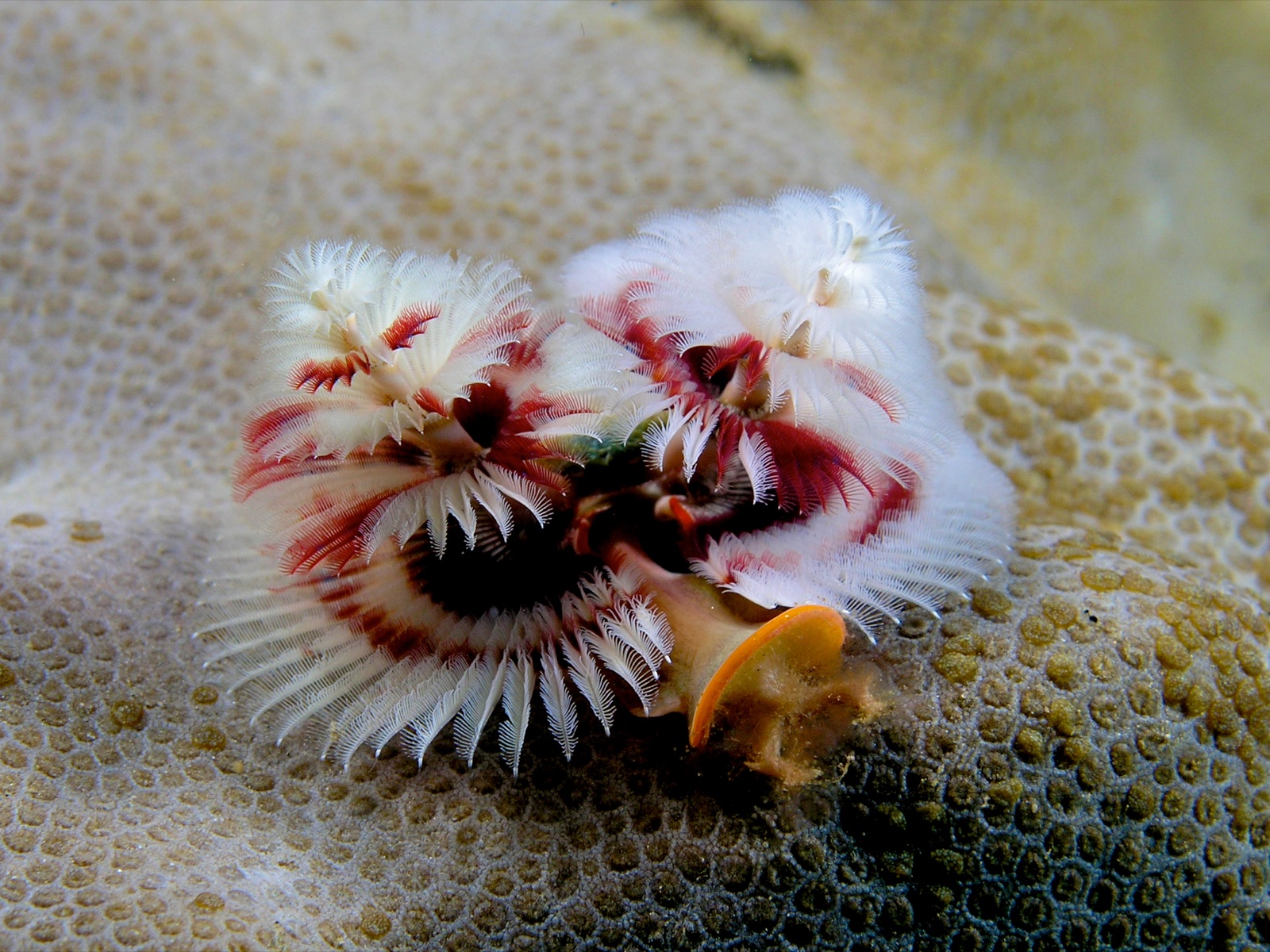
Christmas Tree Worm
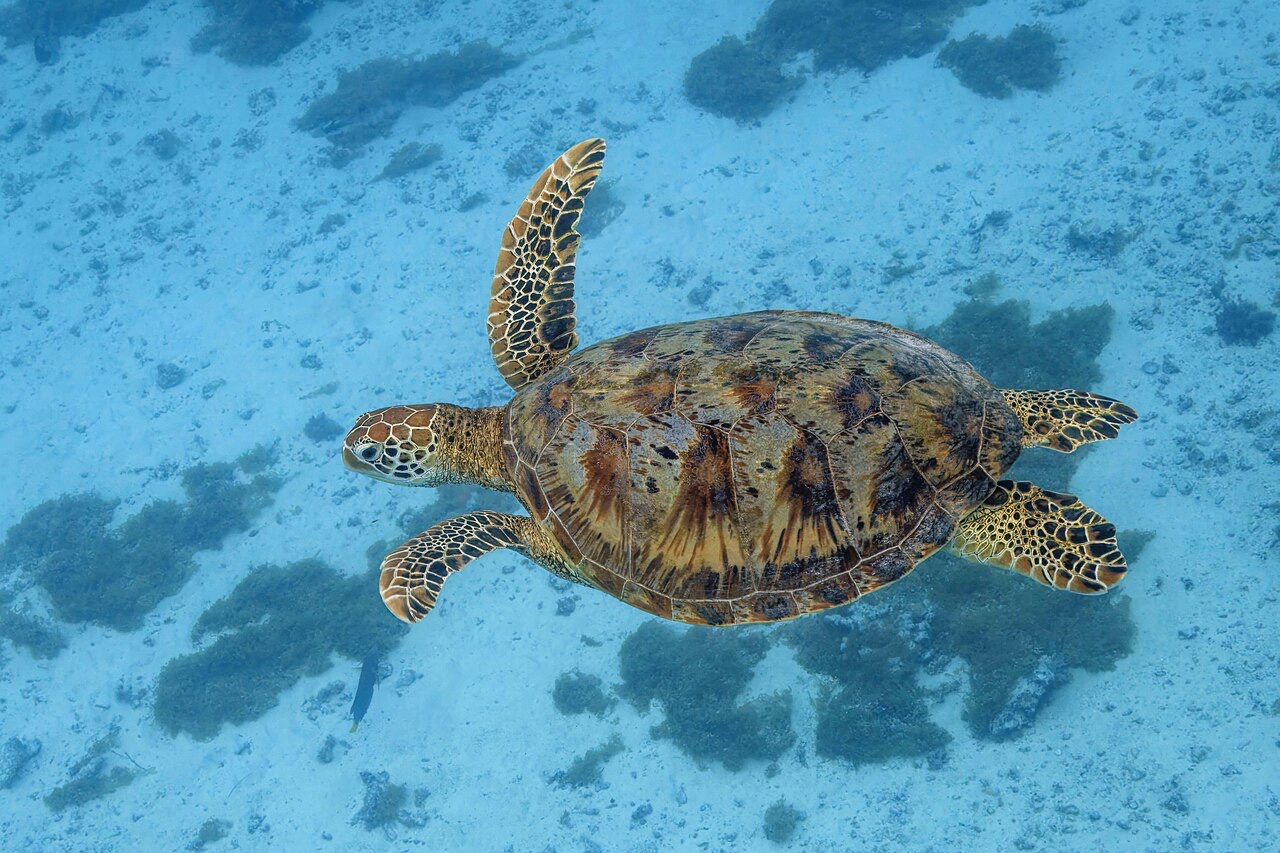
Green Sea Turtle
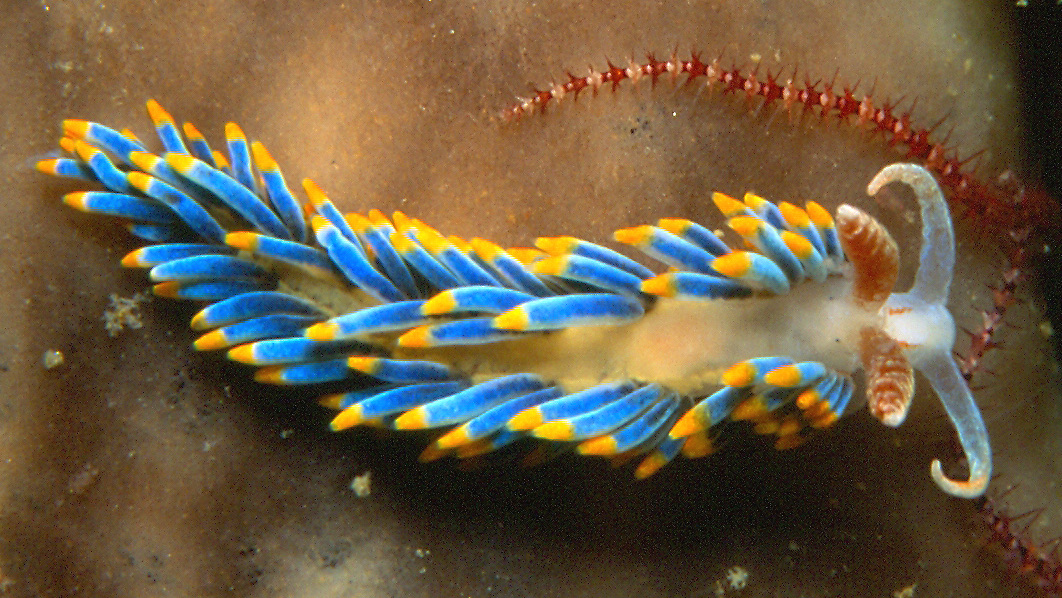
Nudibranchs
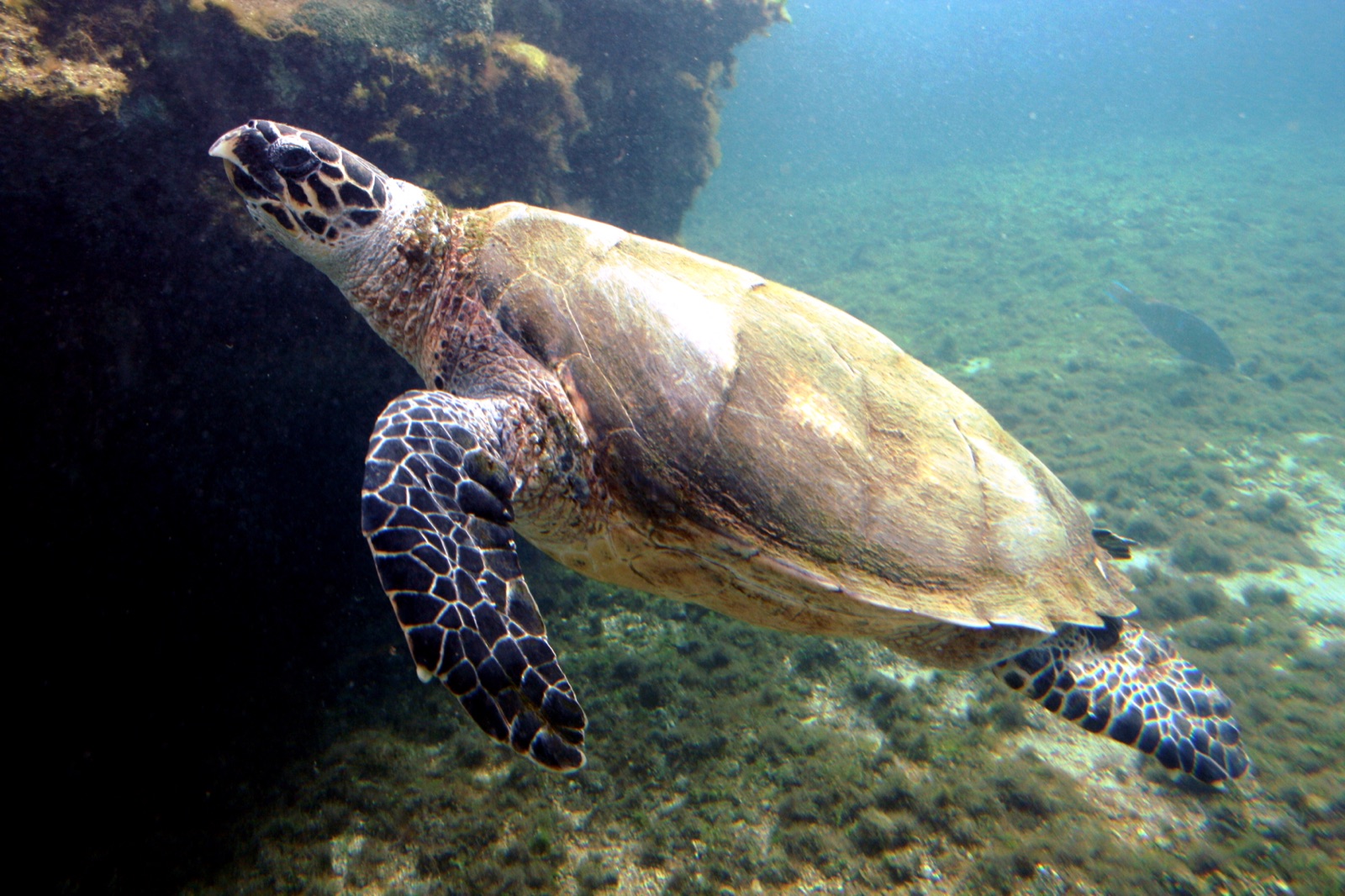
Hawksbill Turtle
Également observé à proximité
Les espèces « cartographiées ici » ont été répertoriées par nos éditeurs à partir des sources indiquées sur cette page. Les comptages correspondent aux occurrences GBIF : observations enregistrées dans un rayon d'environ 5 km autour de la position cartographiée depuis 1990, comparées uniquement aux espèces de notre catalogue. Ils indiquent ce qui a été observé à cet endroit, sans garantir ce que vous y verrez.
Pour les photographes
Grand angle: ★★★★★ · Macro: ★★★☆☆ (note 1–5 des éditeurs sur ce que ce site offre à chaque style de prise de vue)