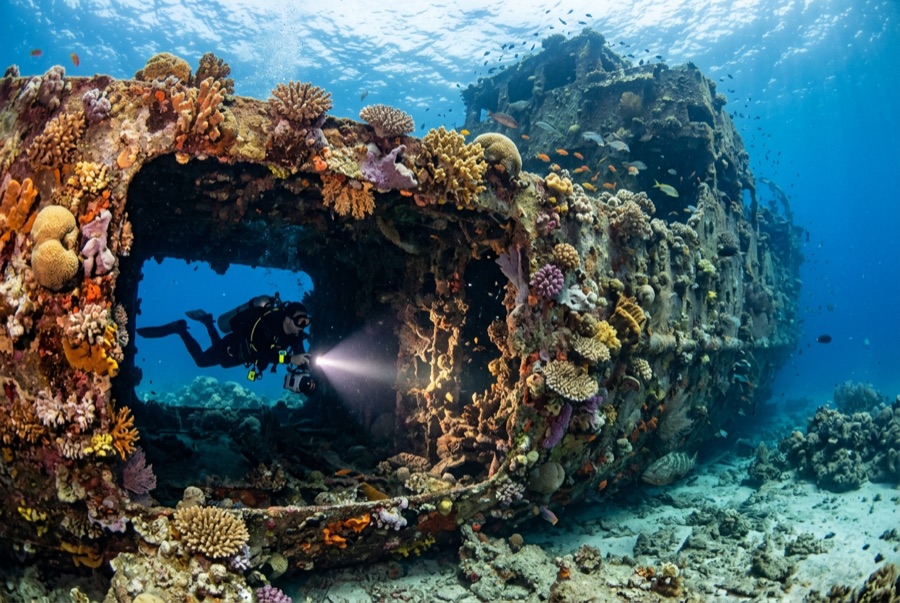
Zero Fighter Wreck
La profundidad es el rango desde la cima del punto de buceo hasta su máximo habitual; la "certificación recomendada" es el nivel que los operadores suelen pedir según las agencias principales, no una norma legal. Las corrientes y la visibilidad cambian a diario, así que trata todo esto como rangos de planificación.
A Japanese A6M Zero fighter sits upright and startlingly complete on the sand of Kimbe Bay, ditched during the war and found by chance decades later when a local spotted it from a canoe. The propeller blades bend back from the hub where they struck the sea, the canopy frame stands open, and coral has begun quiet work on the wingtips. It is a fifteen-minute aircraft on a one-hour dive, so guides pair it with nearby reef, but few dives in PNG deliver more history per meter of depth. Photograph it low and wide, and mind the silt that holds the scene together.
El momento por el que vienes: An intact Zero at recreational depth; bent propeller frozen mid-ditching; easy conditions for deliberate photography.
Topografía: Flat silt-and-sand seabed at about 17 m with the aircraft resting upright
Entrada: Short run along the coast near the Walindi area; descend onto sand beside the airframe.
Lo que debes saber antes de tirarte al agua
Riesgos: Silt-out spoils the site for everyone behind you; approach finning high and slow.
Conservación: The airframe is a war relic protected by PNG law and local custom: no touching, no souvenirs, and keep fins off the silt bed around it.
A quién encontrarás
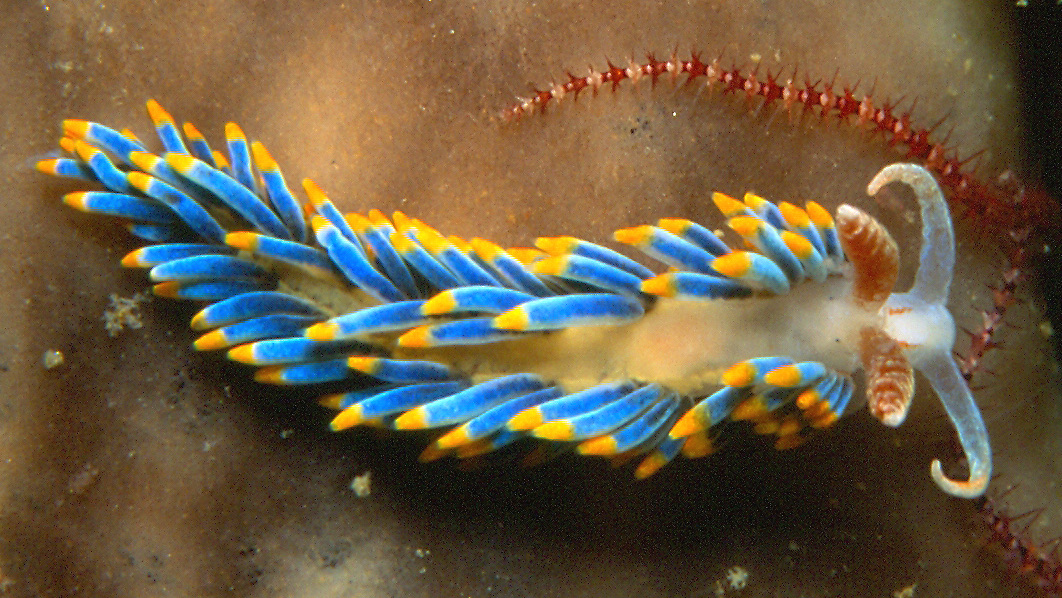
Nudibranchs
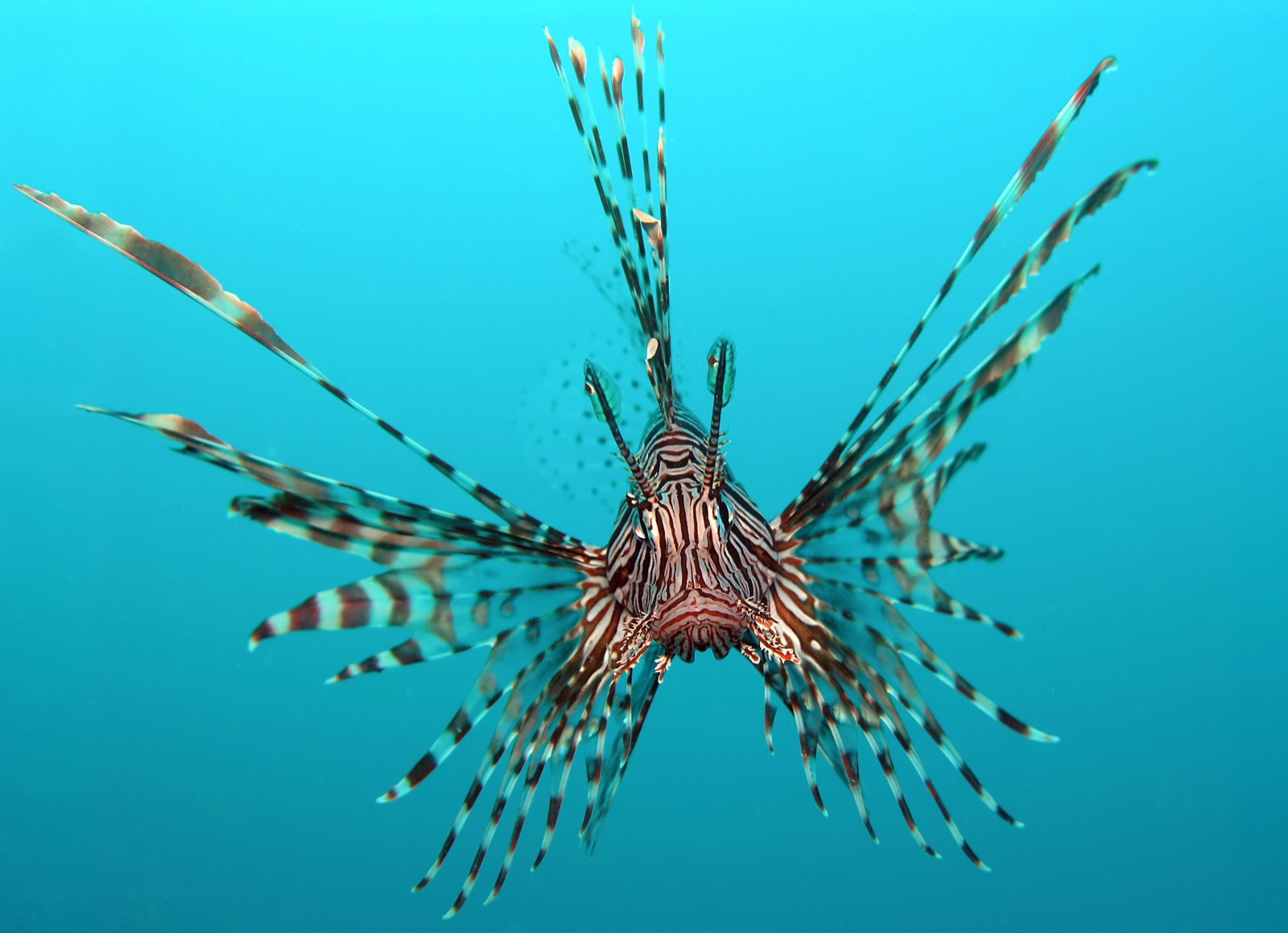
Lionfish
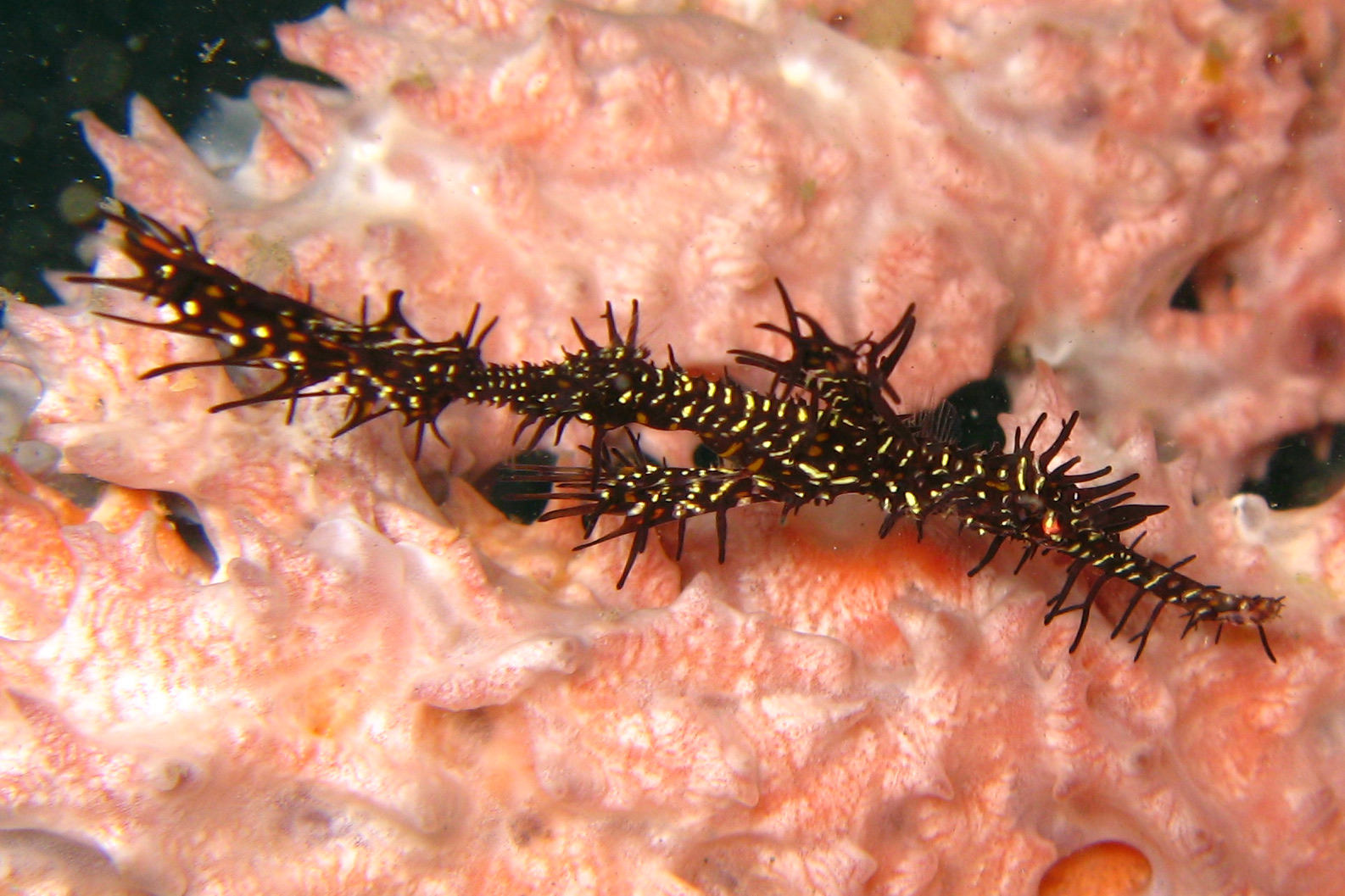
Ornate Ghost Pipefish
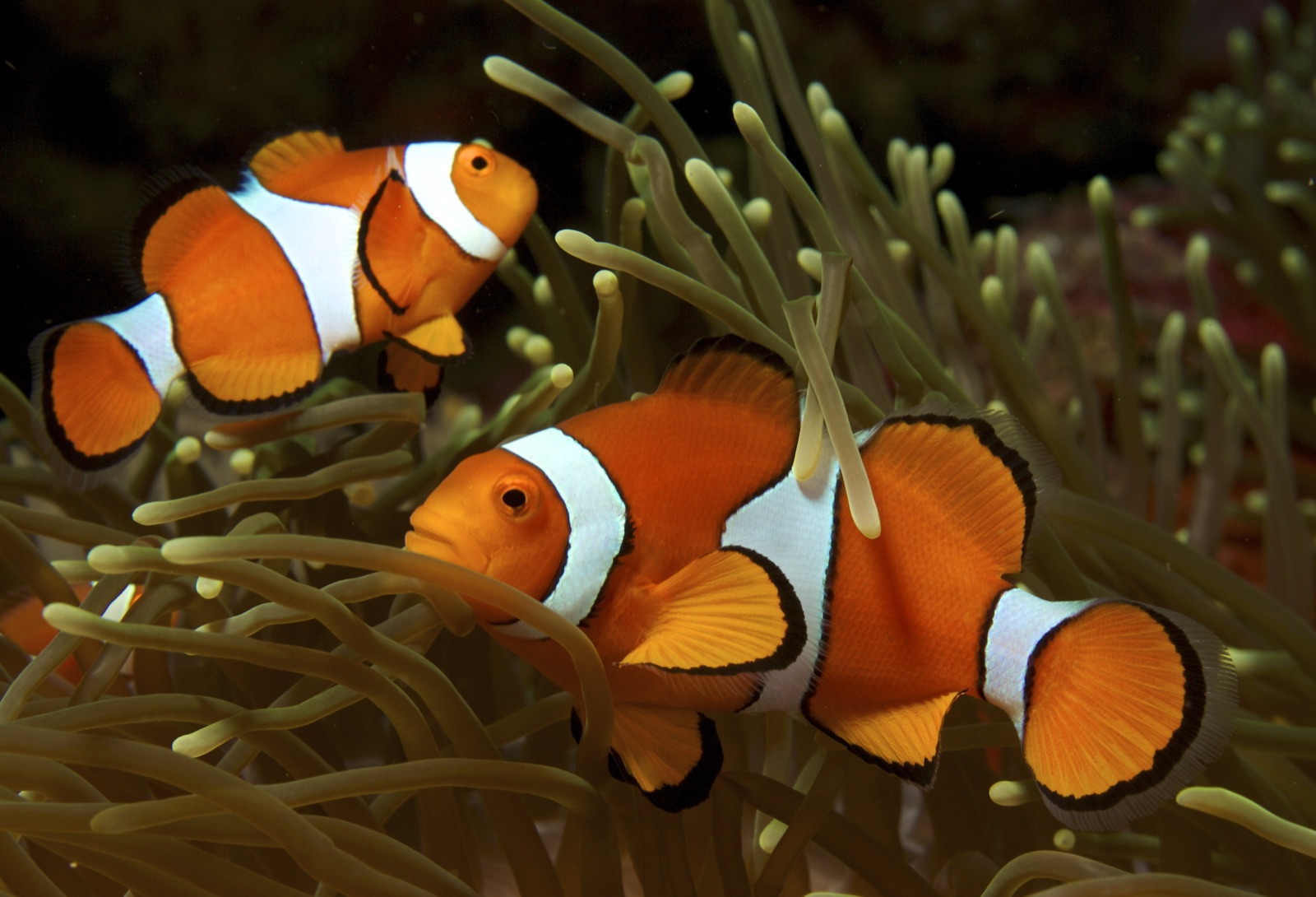
Clownfish & Anemonefish
Las especies "aquí registradas" fueron añadidas por nuestros editores a partir de las fuentes de esta página. Los recuentos son registros de ocurrencia de GBIF: observaciones anotadas en un radio de unos 5 km de la posición registrada desde 1990, cotejadas únicamente con las especies de nuestro catálogo. Muestran lo que se ha avistado allí, no una garantía de lo que verás.
Para fotógrafos
Gran angular: ★★★★★ · Macro: ★★☆☆☆ (valoración de 1 a 5 de los editores sobre lo que ofrece este sitio para cada estilo de fotografía)