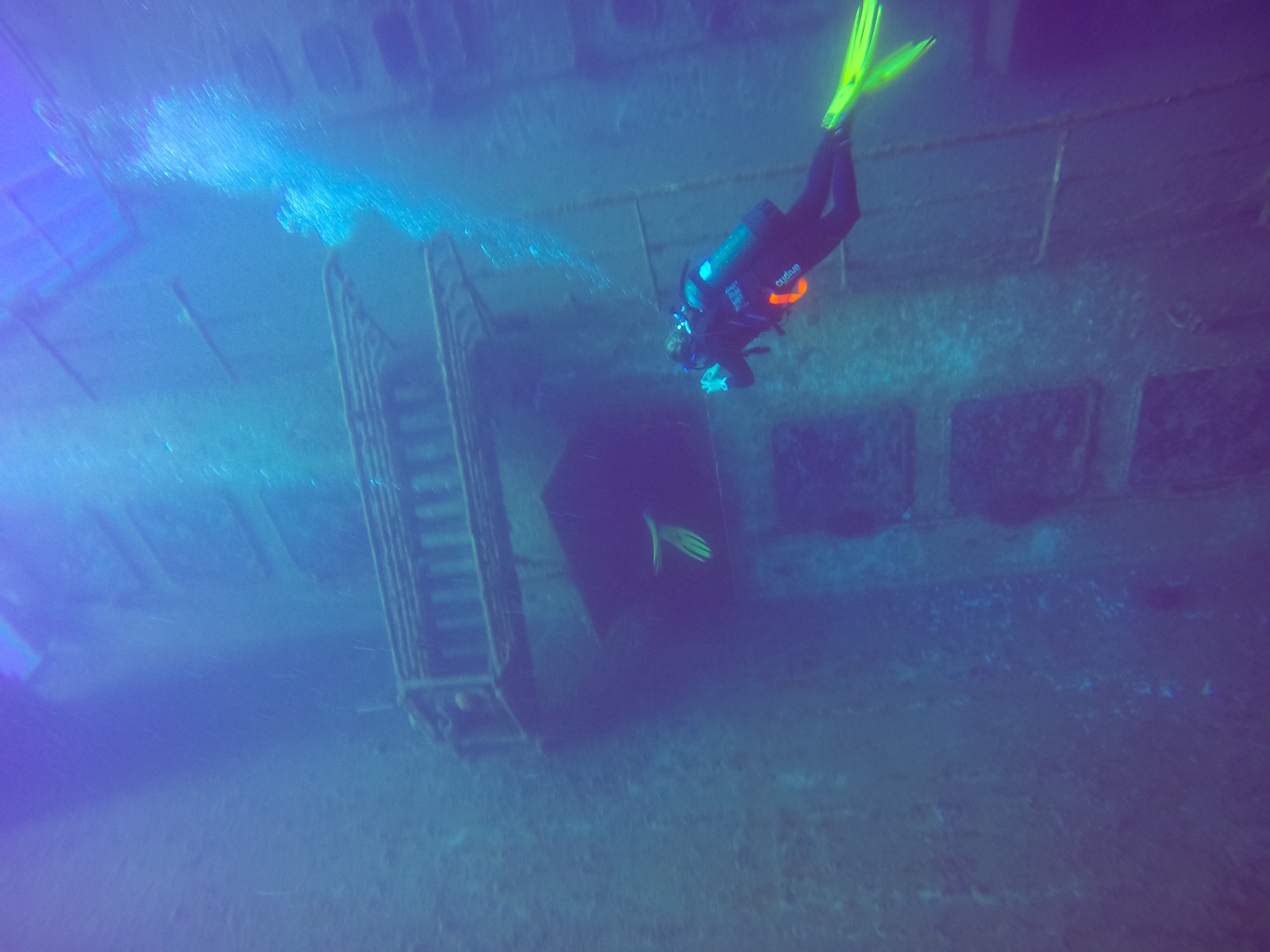
MS Zenobia
Die Tiefe gibt den Bereich von der Oberkante des Tauchplatzes bis zur üblichen Maximaltiefe an; „empfohlene Zertifizierung" ist das von Anbietern üblicherweise geforderte Mainstream-Agenturniveau – keine gesetzliche Vorschrift. Strömungen und Sichtweite ändern sich täglich – behandle alle Angaben hier als Planungsbereiche.
The Zenobia sank in June 1980 on her maiden voyage, listing fatally after ballast-system failures and going down outside Larnaca with more than a hundred articulated trucks chained to her decks (and, mercifully, no one aboard). She has since become the Mediterranean's benchmark wreck. First dives trace the vast starboard hull and railings from 16 m; later ones drop along the accommodation block, peer into the cafeteria, and follow the truck cargo hanging in slow-motion avalanche. Full penetration of the vehicle decks and engine room is committed technical diving in silt and suspended cargo. Groupers, barracuda and now lionfish work the hull. A week is barely enough.
Der Moment, für den du kommst: One of the world's great wrecks: trucks on their chains, cavernous car decks, endless route options
Topografie: A 172 m RO-RO ferry on her port side on flat sand, starboard hull at 16–18 m, seabed at about 42–43 m
Einstieg: Ten minutes by boat from Larnaca's marina to permanent mooring lines; multiple boats rotate over the wreck daily in season.
Was du wissen solltest, bevor du ins Wasser gehst
Gefahren: Scale and overhead: the interior has claimed experienced divers, and depth accumulates fast on the lower routes. Stay on planned lines and outside the hull without wreck training.
Naturschutz: The wreck is Larnaca's economic reef: established mooring lines protect it, and nothing is removed.
Nitrox: Hier lohnt es sich – die Profile liegen in einem Bereich, in dem Nitrox die Nullzeiten spürbar verlängert (mit der entsprechenden Ausbildung).
Wen du triffst
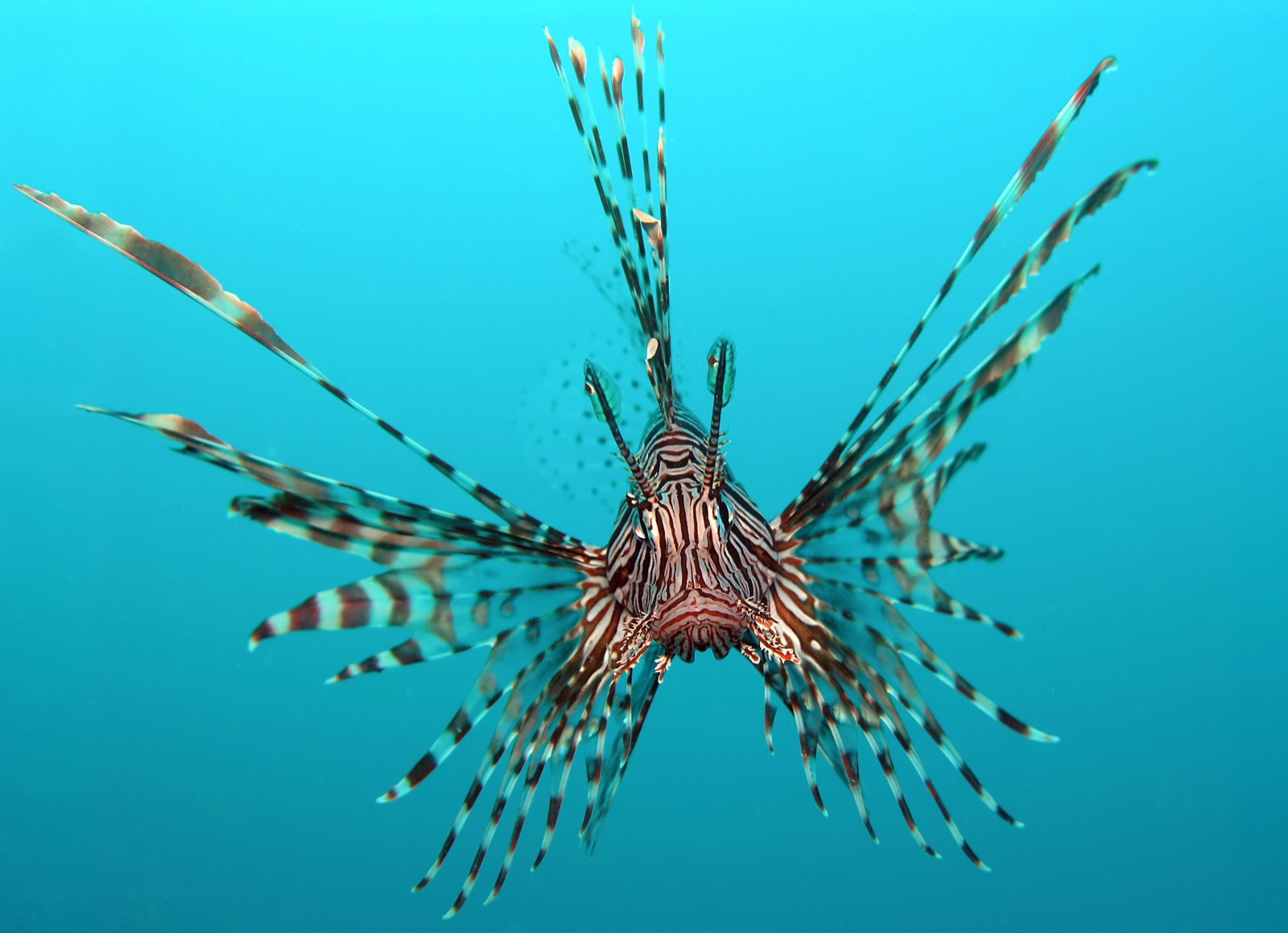
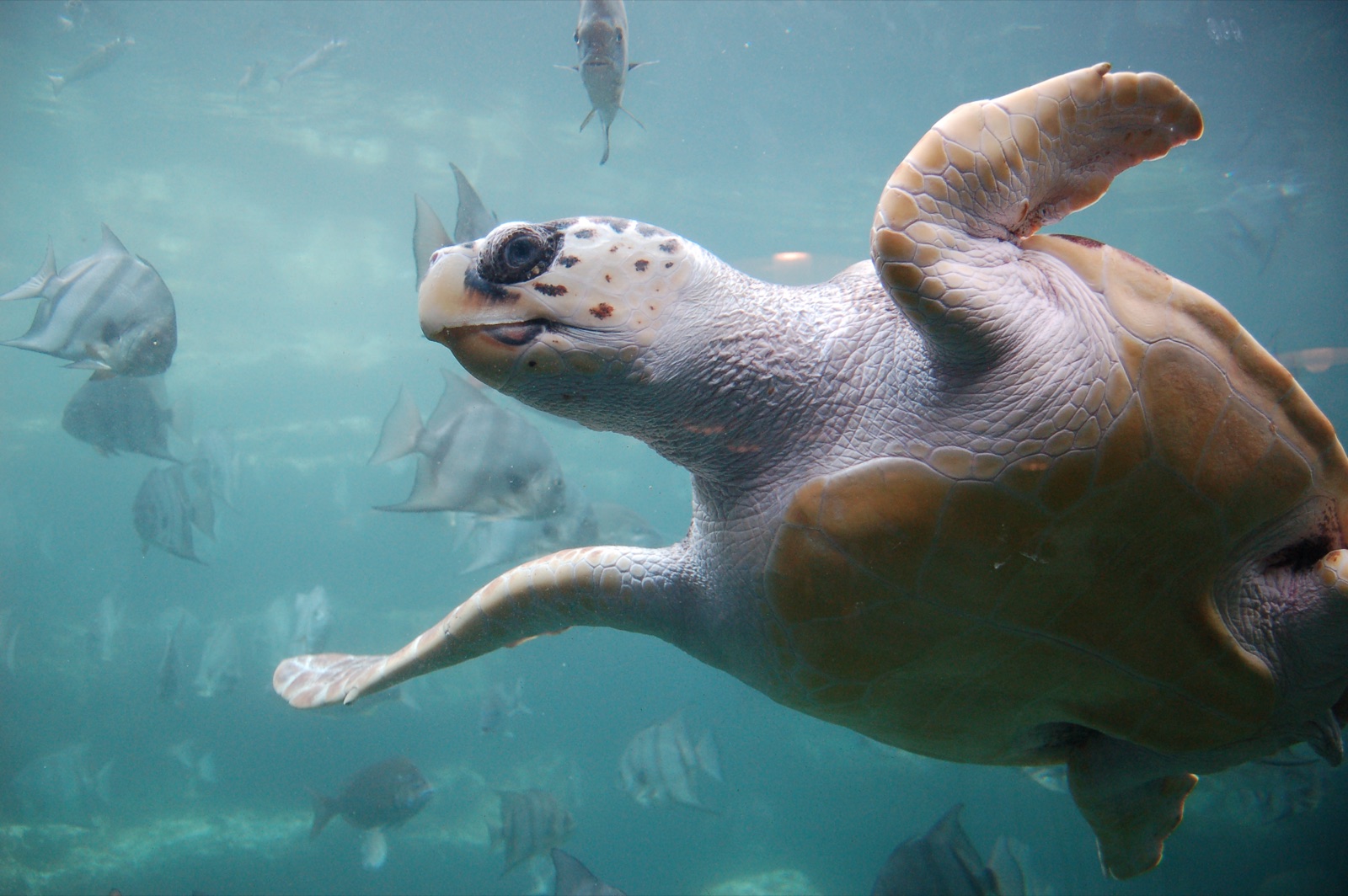
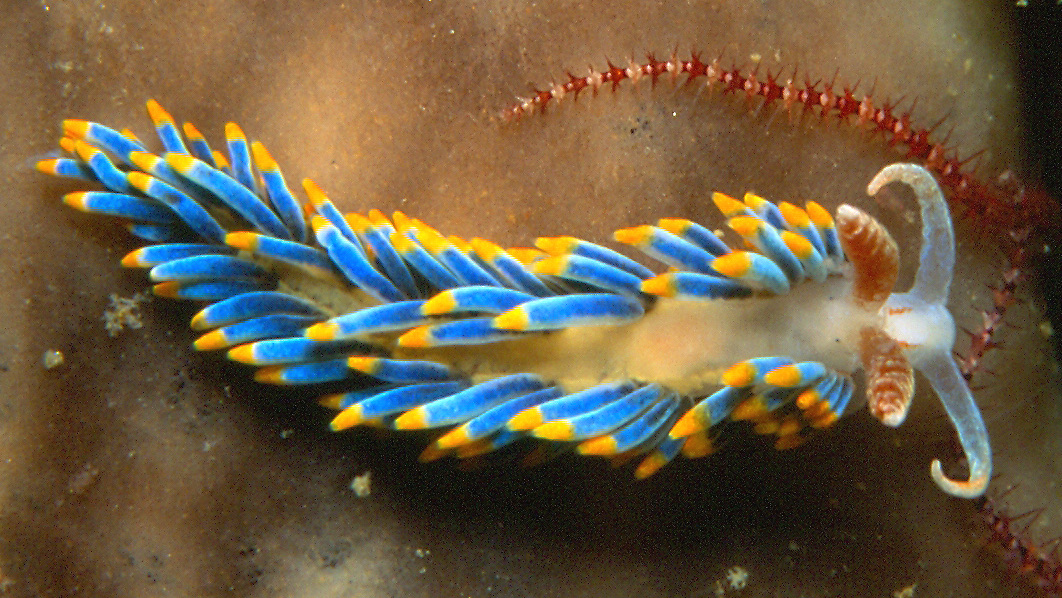
„Hier kartiert" – Arten wurden von unseren Redakteuren anhand der Quellen auf dieser Seite erfasst. Die Zahlen sind GBIF-Vorkommensdatensätze: Beobachtungen, die seit 1990 im Umkreis von etwa 5 km um die kartierte Position protokolliert wurden, ausschließlich abgeglichen mit den Arten in unserem Katalog. Sie zeigen, was dort gesichtet wurde – keine Garantie, was du sehen wirst.
Für Fotografen
Weitwinkel: ★★★★★ · Makro: ★★☆☆☆ (Redaktionelle 1–5-Bewertung, was dieser Platz für jeden Fotografie-Stil bietet)